Hello, I’m Anna König and I’m new this year to seam collective. I’m a relative newcomer to exhibiting my work, but I have been stitching, collaging, knitting, printing, and making for most of my life. Here I’ll guide you through my circuitous route to becoming a member of this exciting creative community.
My first degree was in Psychology, followed by time studying at Central Saint Martins and the London College of Fashion. The switch from practical making (I’m a very slow pattern cutter) to a Masters in Fashion History led to an academic career in Contextual Studies, lecturing at institutions including University of the Arts London and Arts University Bournemouth, which is where I currently teach.
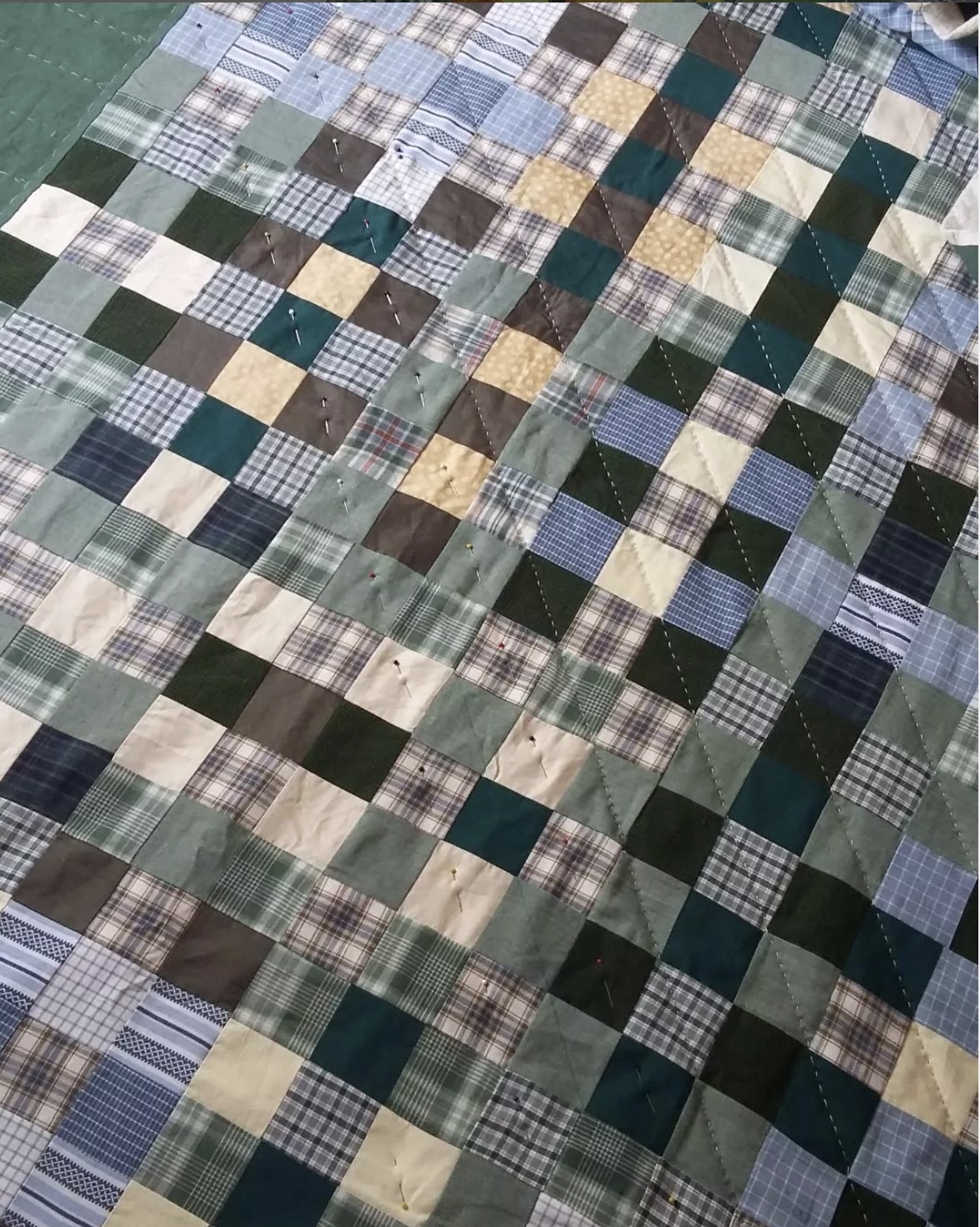
In terms of my creative practice, I initially thought I was a painter, for no better reason than it seemed most obviously ‘art’. I painted big, colourful abstract canvases, a few of which are out there in the world. I dabbled with fashion design, briefly worked in the fashion industry, and for several years I made nothing at all. It’s no coincidence that this was when I worked as a journalist and was starting my academic career: all of my creative energy was going into words. But my mother’s death and a relationship breakdown in quick succession left me unable to work for several months, which is when I made my first patchwork quilt. And that was the start of my re-engagement with the crafts I had learnt as a child, primarily sewing, knitting, and crochet. The joy of the colour combinations, the required focus, and not least the material outcomes of this work reignited something in me: there’s nothing quite so empowering as making something useful from scratch!
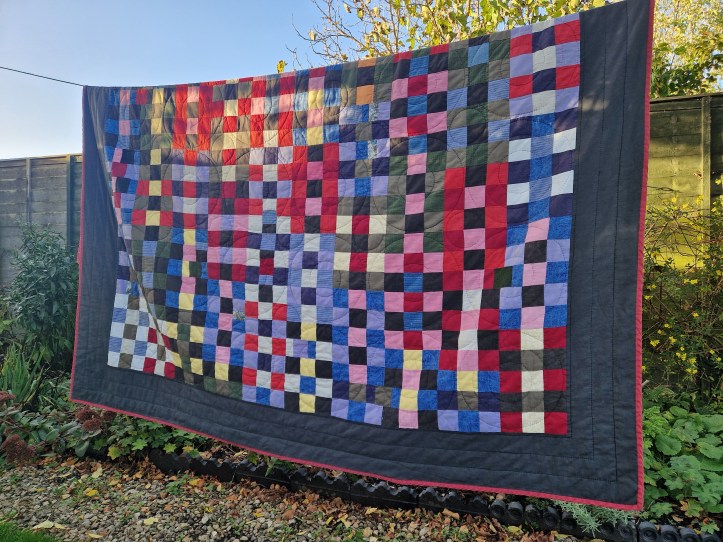
This practical rediscovery of craft coincided with my academic interest in mending, which I now see as the starting point for my current relationship with stitch. I gave my first conference paper on mending and craft in 2012, long before ‘visible mending’ was a trend on Instagram. Reading about the origins of techniques such as boro encouraged me to experiment with mending techniques and this is where I learnt the value of plain, practical ‘working’ stitches. When you routinely use vintage fabrics in your everyday life, repair simply becomes a quotidian activity, as the history of mending testifies. Some of my pieces – such as Work / Wear I and Work / Wear II – are the direct outcome of garments repaired until they no longer functioned as gardening trousers. So now the fabric is a testimony to my physical labour, with a nod to the traditions of Japanese mending techniques including boro and sashiko.
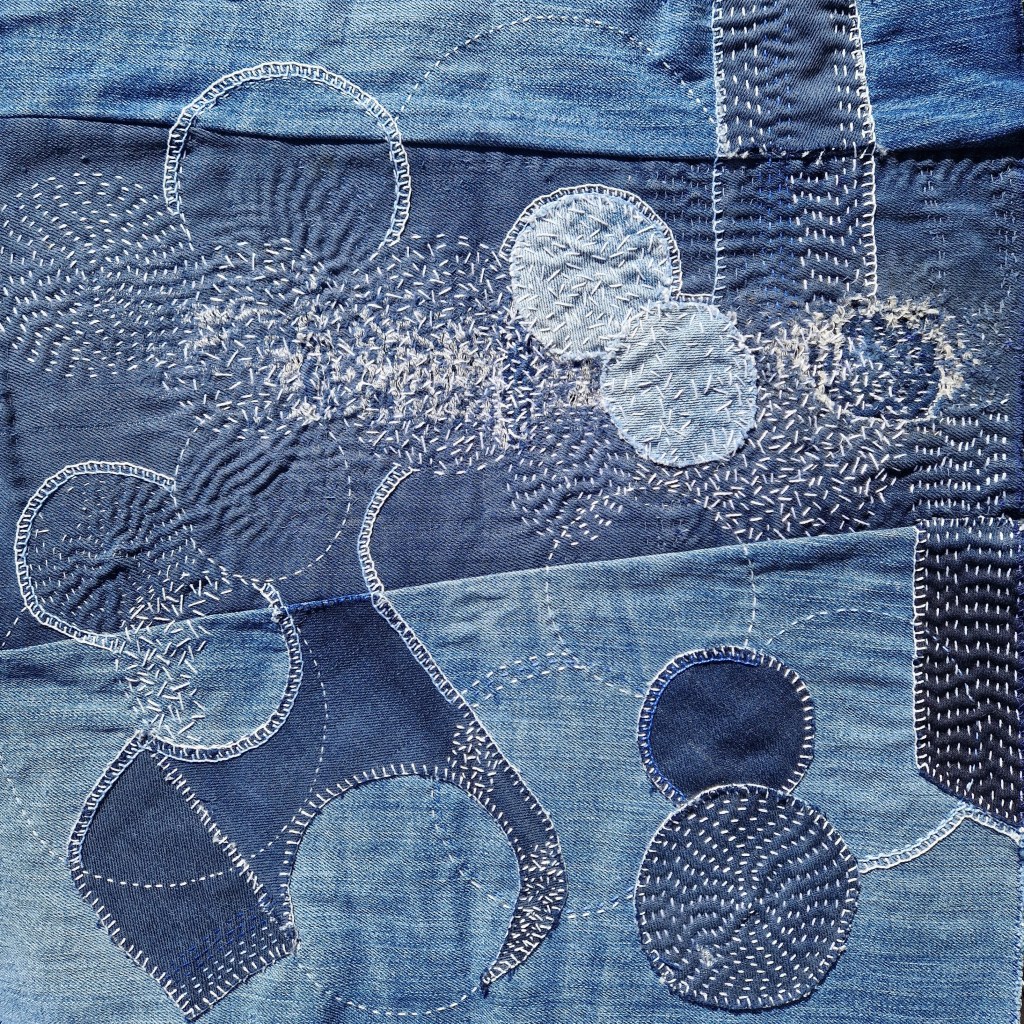
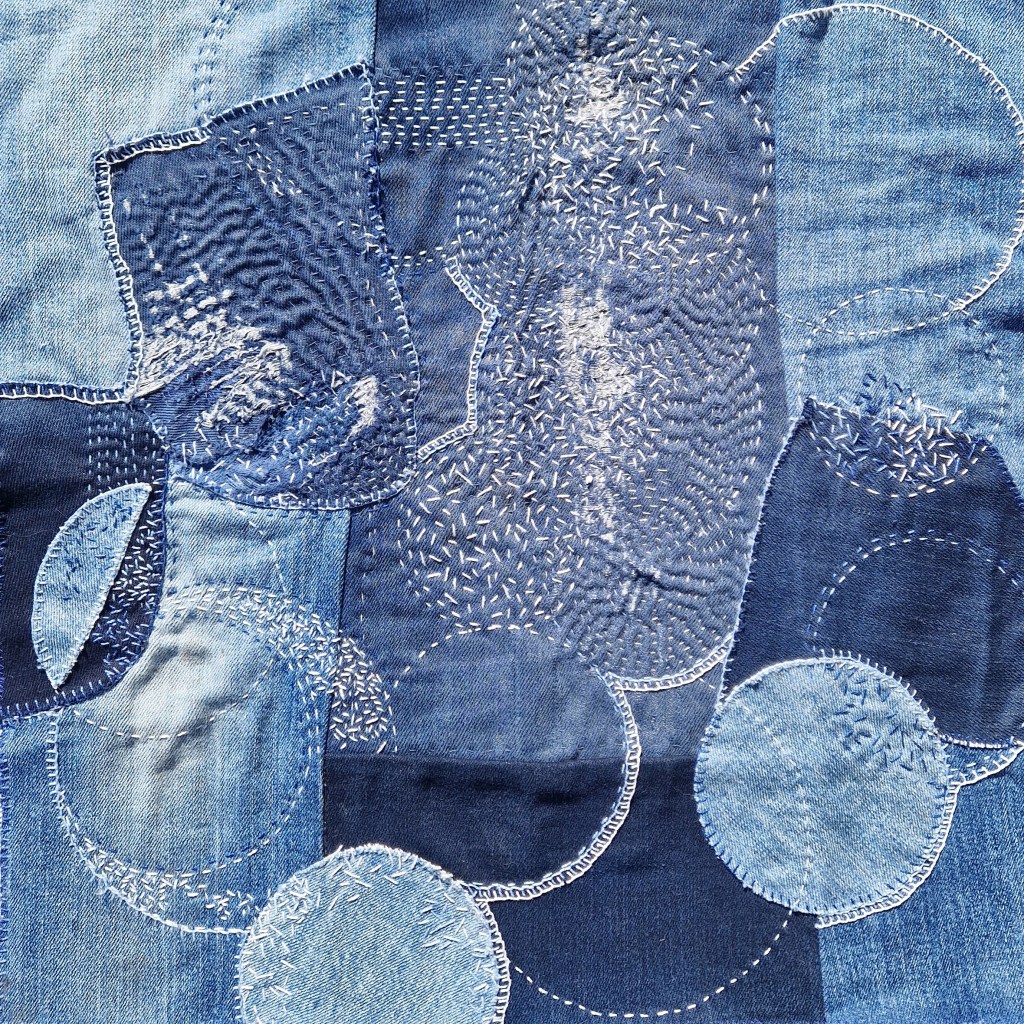
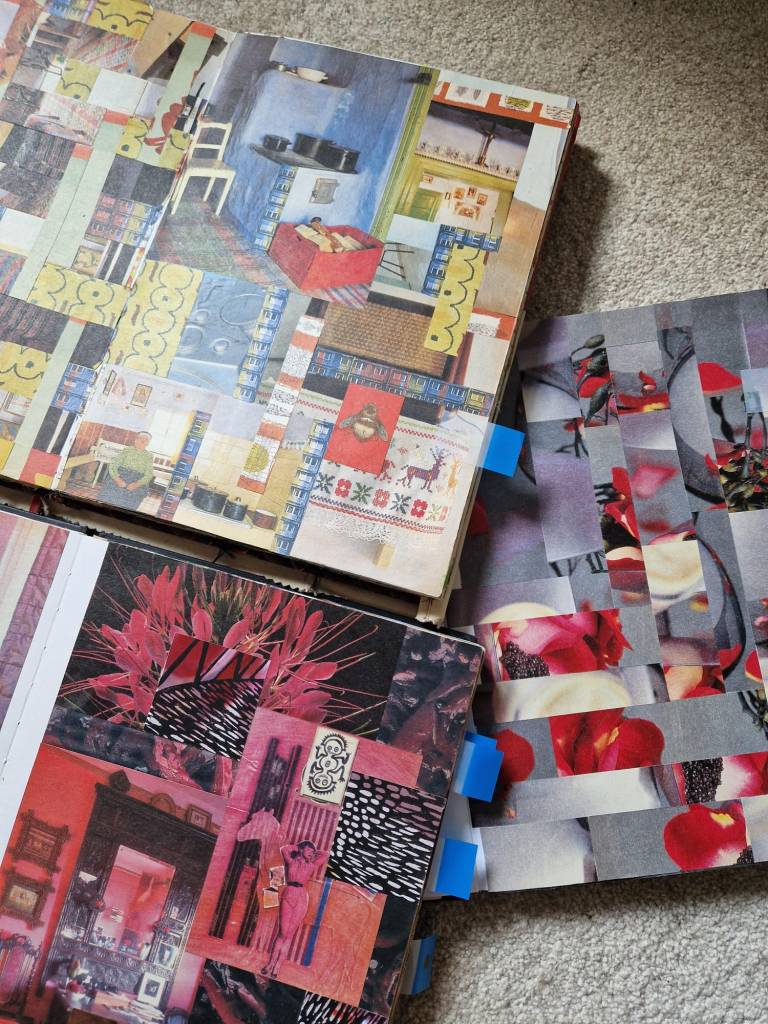
Working with repetitive, plain stitching prompted me to experiment, and I started to combine stitch with the collages that I have created – always in A4 sketchbooks – over a period of about thirty years. I never really knew why I was making these collages, but they felt like a convenient way of storing colour combinations and random visual information. They form a unique archive of what was available to me culturally and now they have finally come into their own: I make use of pages I put together decades ago to inform the colour choices and compositions I work with today.
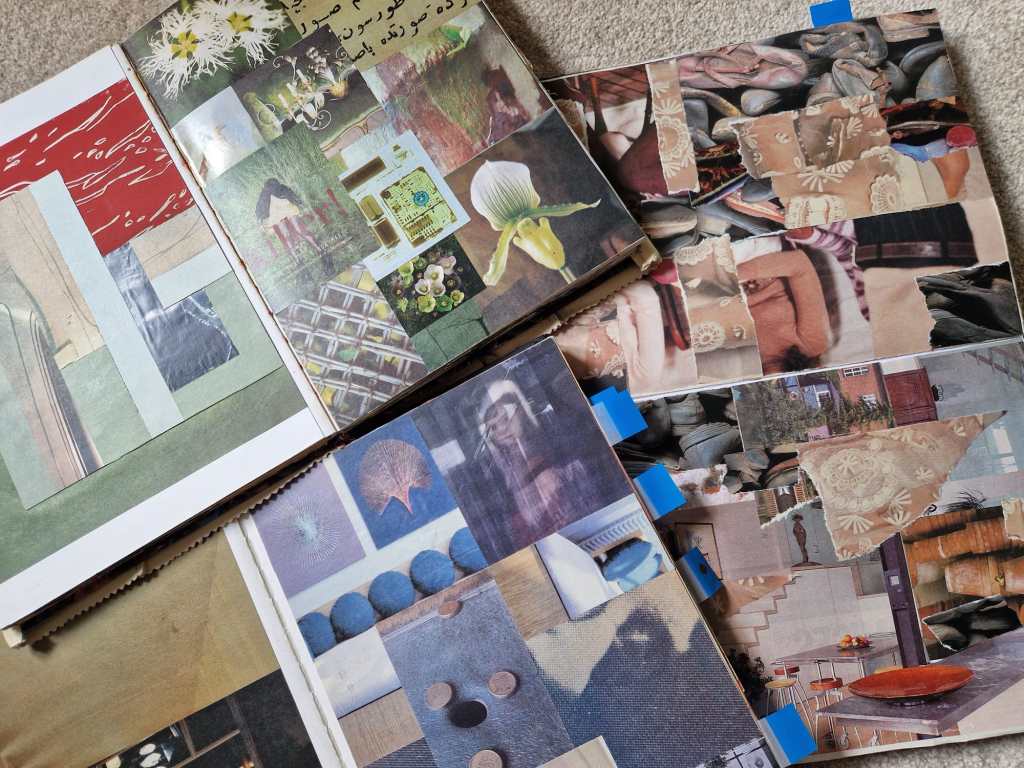
My larger, most recent pieces are considerably more ‘designed’ than my first tentative experiments with stitch and collage. The work now moves between my favourite craft processes: stitching, patchwork, collage and lino print. I slowly realised that I could use whichever aspects of whichever processes I enjoyed without following their strict codes. This has been a revelation: I don’t have to be an expert quilter to make use of techniques or patterns that are the heritage of that craft. Similarly, the rich, diverse universe of stitch is not confined to the exquisite, fine work traditionally associated with the word ‘embroidery’. The stitches I work with are plainer, the materials less refined – perhaps more in the folk tradition, and I would say that my skill level is competent but fairly elementary. For this reason, I never refer to myself as an embroiderer. I have recently been working with blanket stitch and herringbone stitch as they are surprisingly versatile and give good coverage whilst allowing the colours of the foundation collages underneath to be seen.
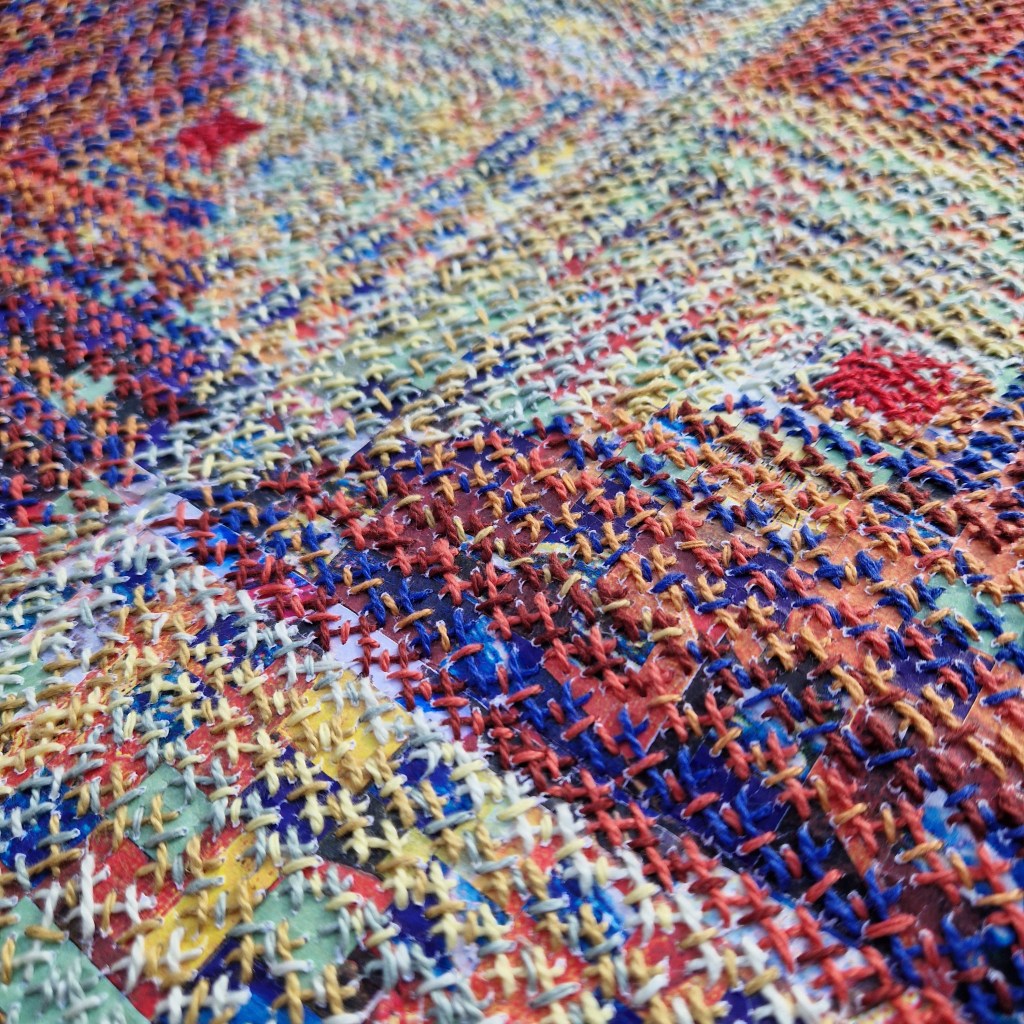
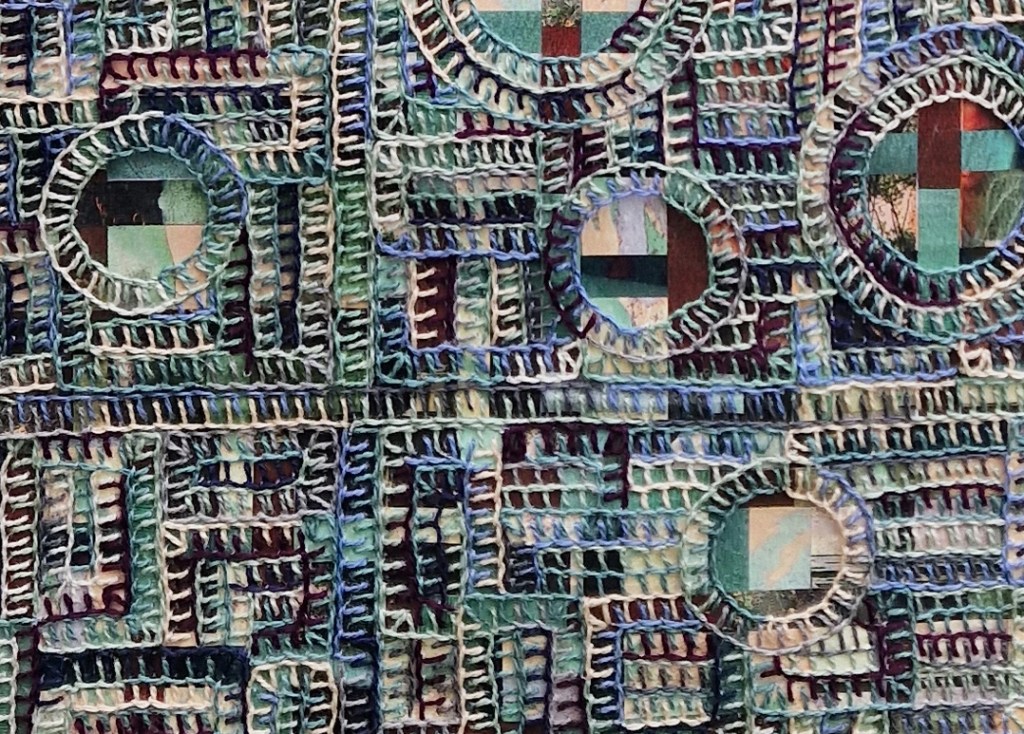
I often get ‘why do you do x?’ questions about my work. Paper collages are invariably the foundation of my stitched pieces, but using the original pieces is impractical: they disintegrate, so I simply photocopy them. This allows large ‘patchwork’ pieces to be assembled: in theory they can be any size, any number of reproduced ‘patches’. Why don’t I print digitally onto fabric? This may yet happen! My work usually starts out as an experiment, so a simple paper foundation makes economic sense when testing out a new idea. I’m also reluctant to use processes that are unnecessarily complex and environmentally wasteful.
Handling the materials is an important part of my creative process. I work slowly, always – to date – with hand-stitch, so I want the yarn to feel pleasant in my hands, and cotton yarn rather than traditional embroidery thread fits the bill for me. When I’m ‘between’ projects I have developed the habit of working on Sidequests, pieces where I stitch onto old Irish Linen tea towels. There is something about the ease with which the needle slips through the loosely woven linen, the familiarity and limited scale of the tea towel which acts like a palate cleanser for planning new work. I will quite possibly never finish my Sidequests, but they have become an important part of the rhythm of my making and thinking.
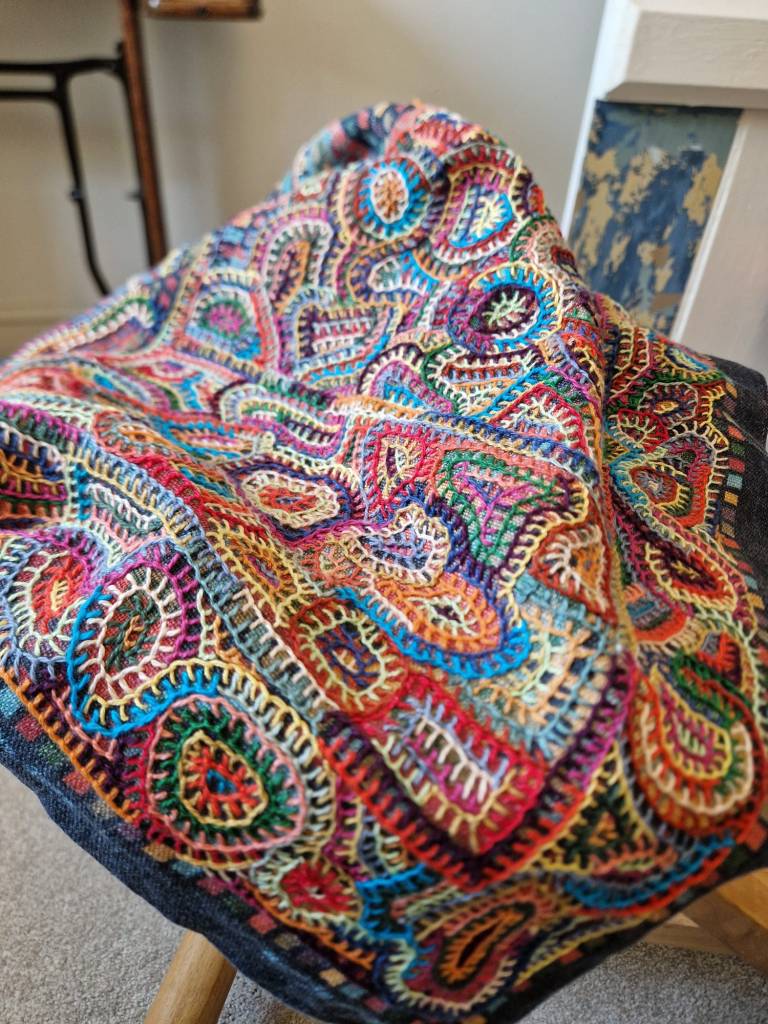
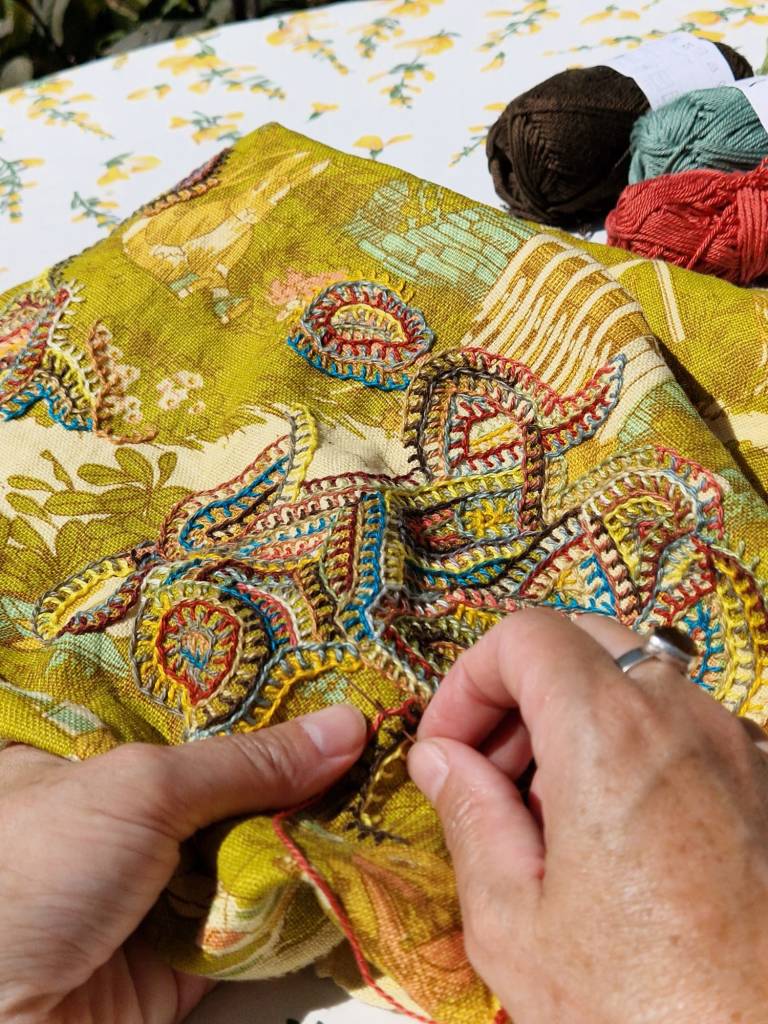
The work I make is process driven, and I hope that anyone viewing the pieces finds the space to think whatever they need most in that moment: to get lost in the colour and detail; to follow a double track of blanket stitch as it loops around. Perhaps the technically minded will wonder how a particular piece was constructed; someone else might be reminded of the simple sewing skills they learned as a child. All of these are good outcomes – that is the freedom that abstraction allows. I don’t wish to impose a narrative, and I’m thrilled that after decades of my creative work being seen only by friends and family, it is now out there in the world. In particular, I am hugely grateful to ACEarts, Somerton for selecting me as their Open Exhibition winner last year, and inviting me to have my first solo show this summer. Despite being in my sixth decade, I feel that I’m just at the very beginning of my creative journey: the combinations are infinite and there are so many ideas to explore. I’ll be using the summer break to develop ideas and take full advantage of the good stitching light – if you know you know.
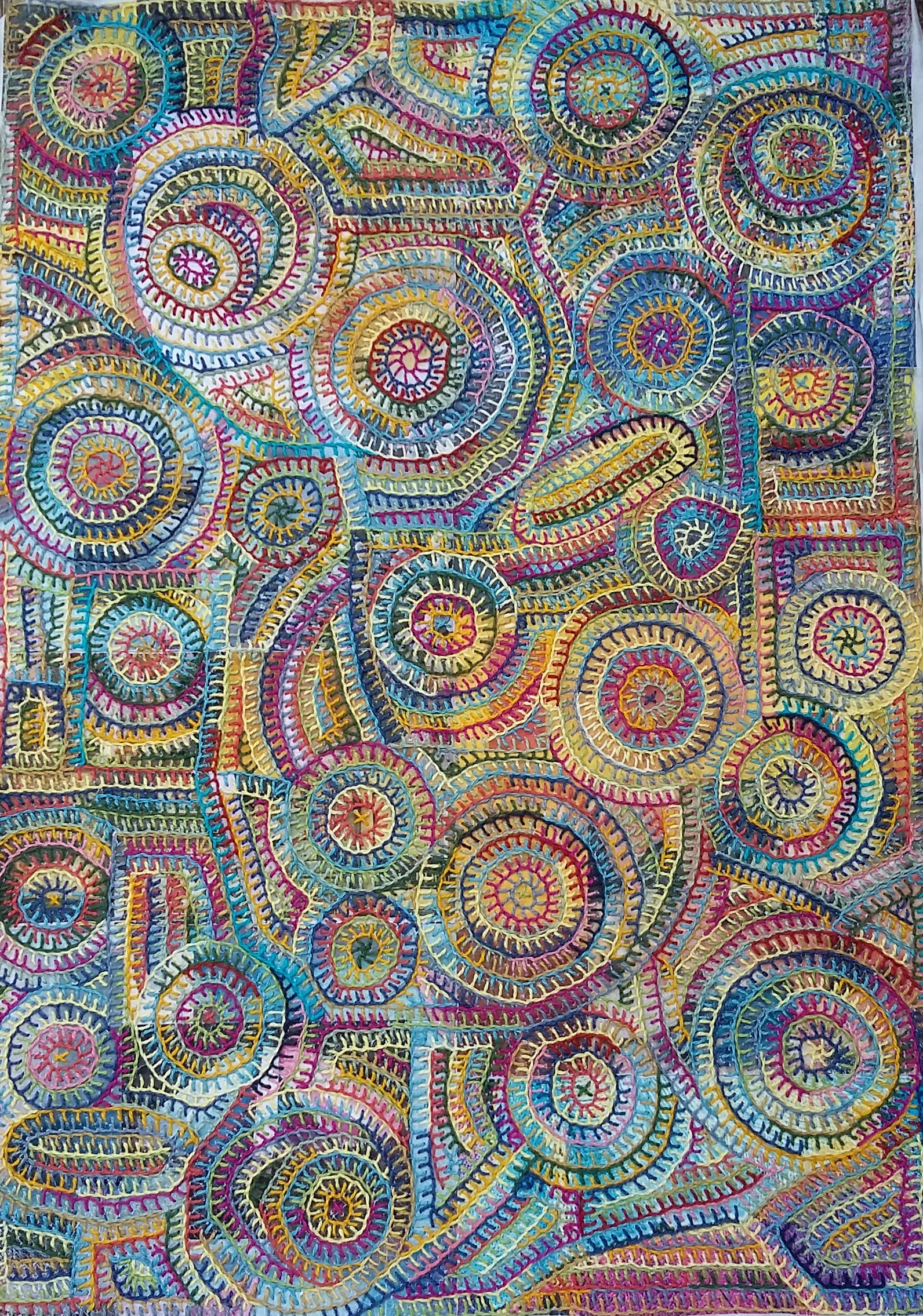
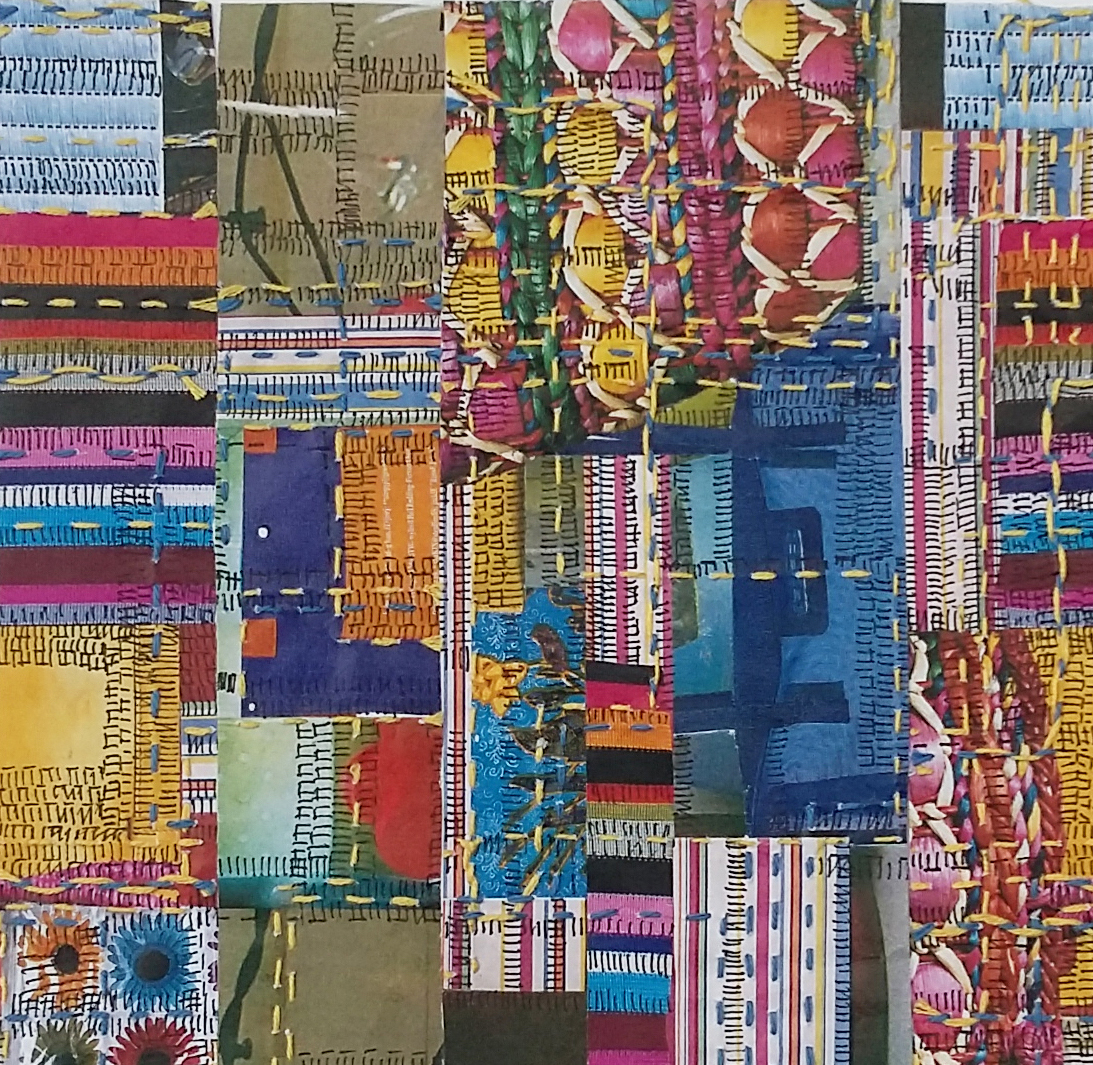
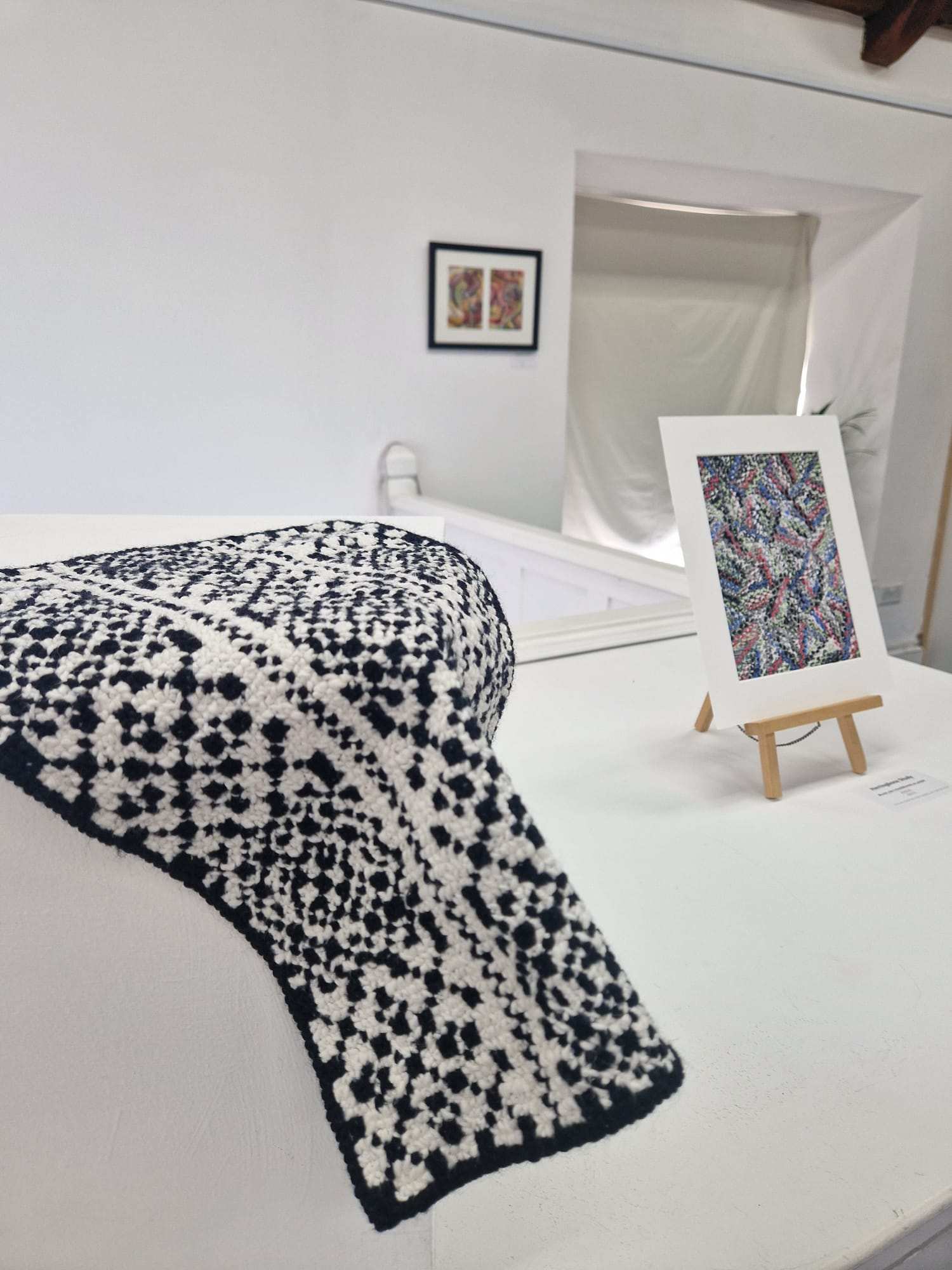
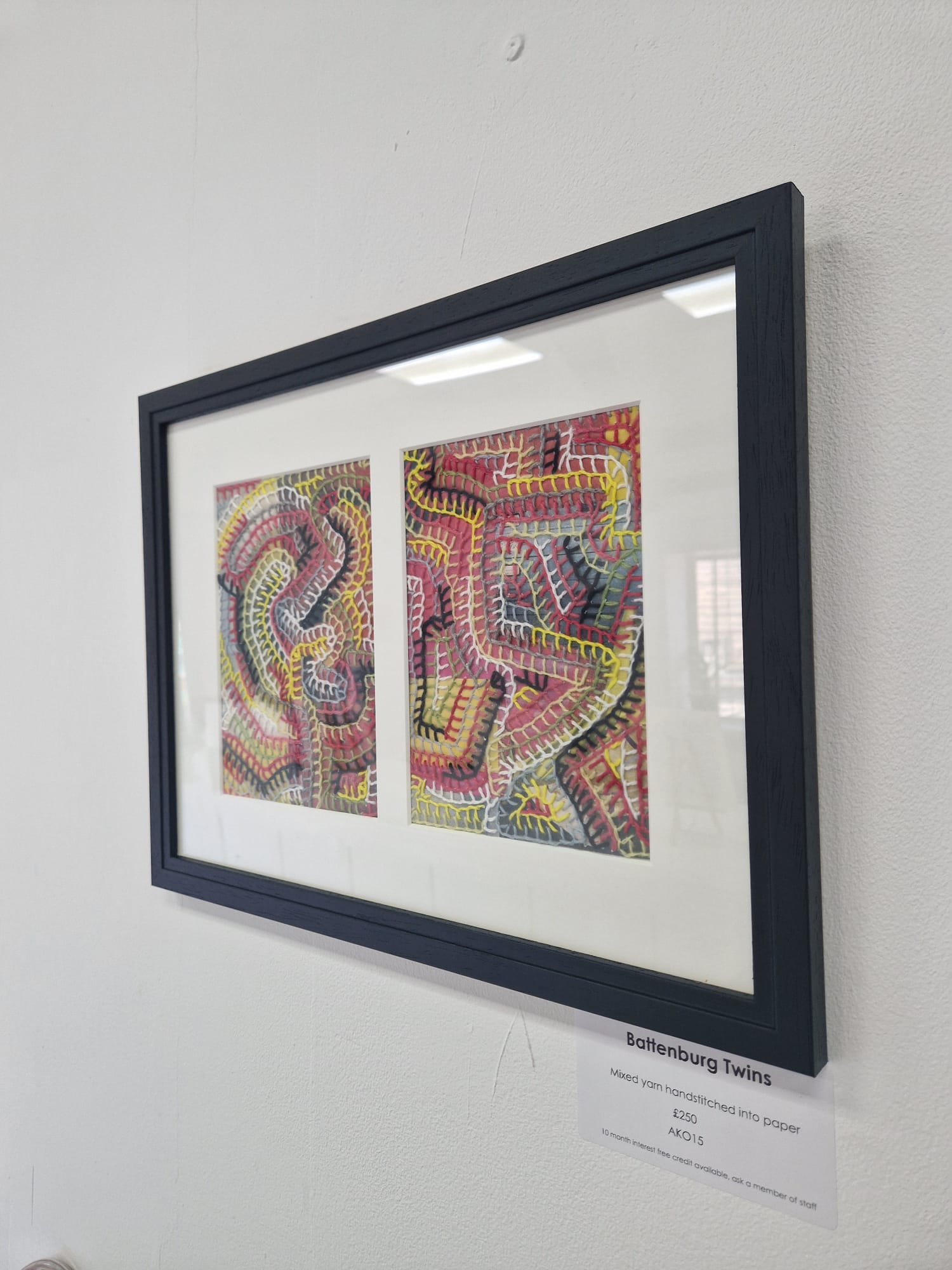
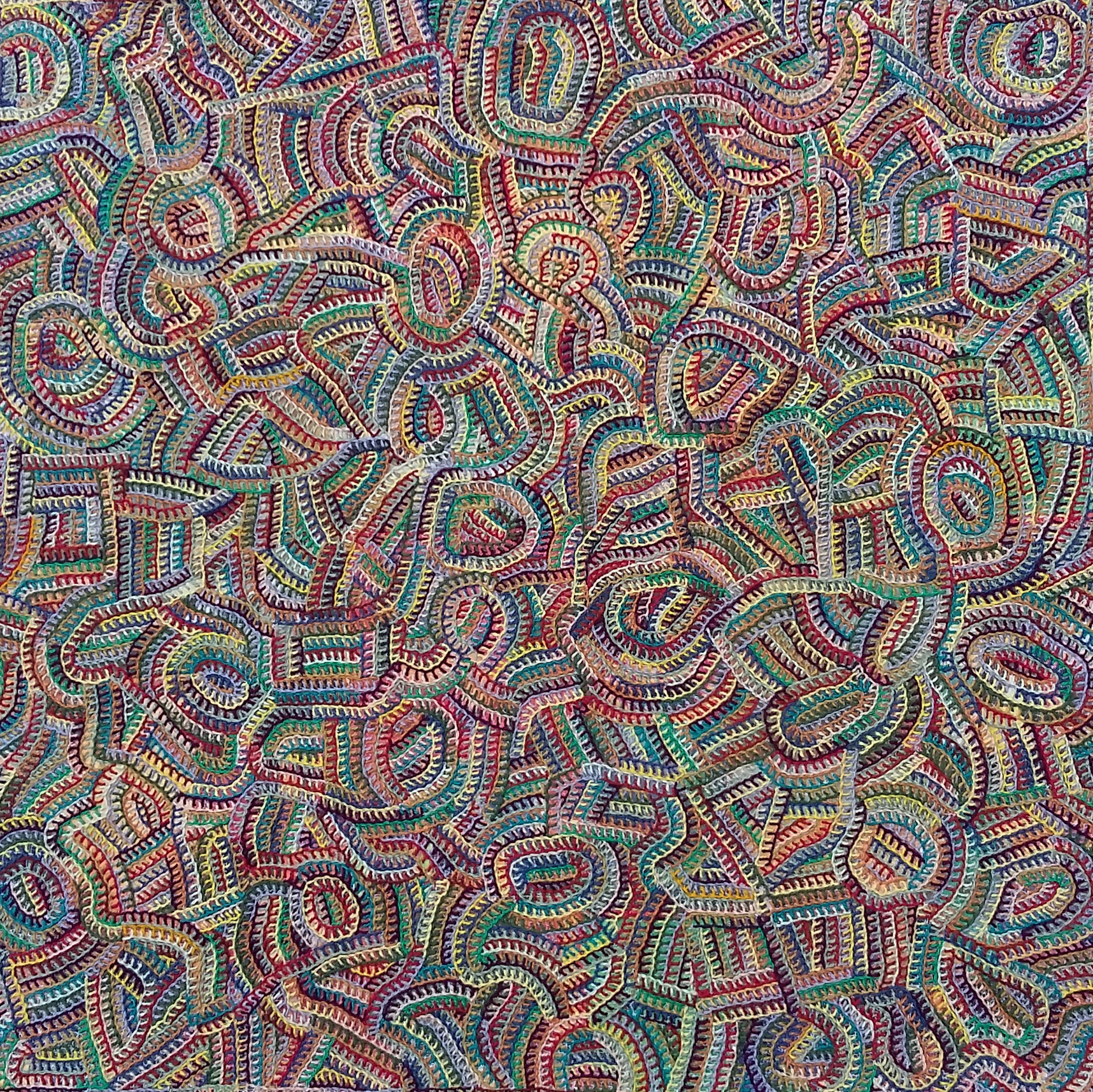
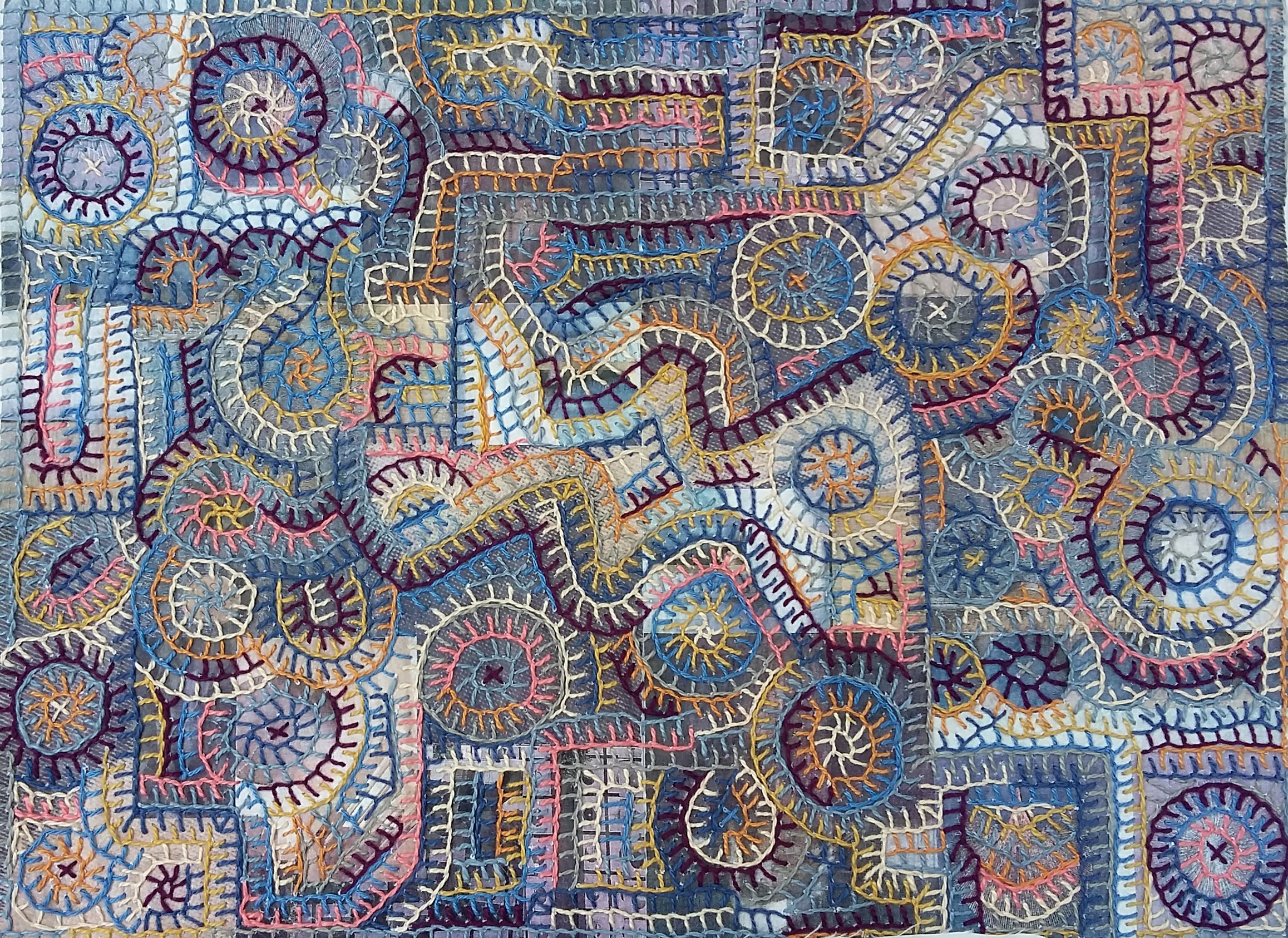
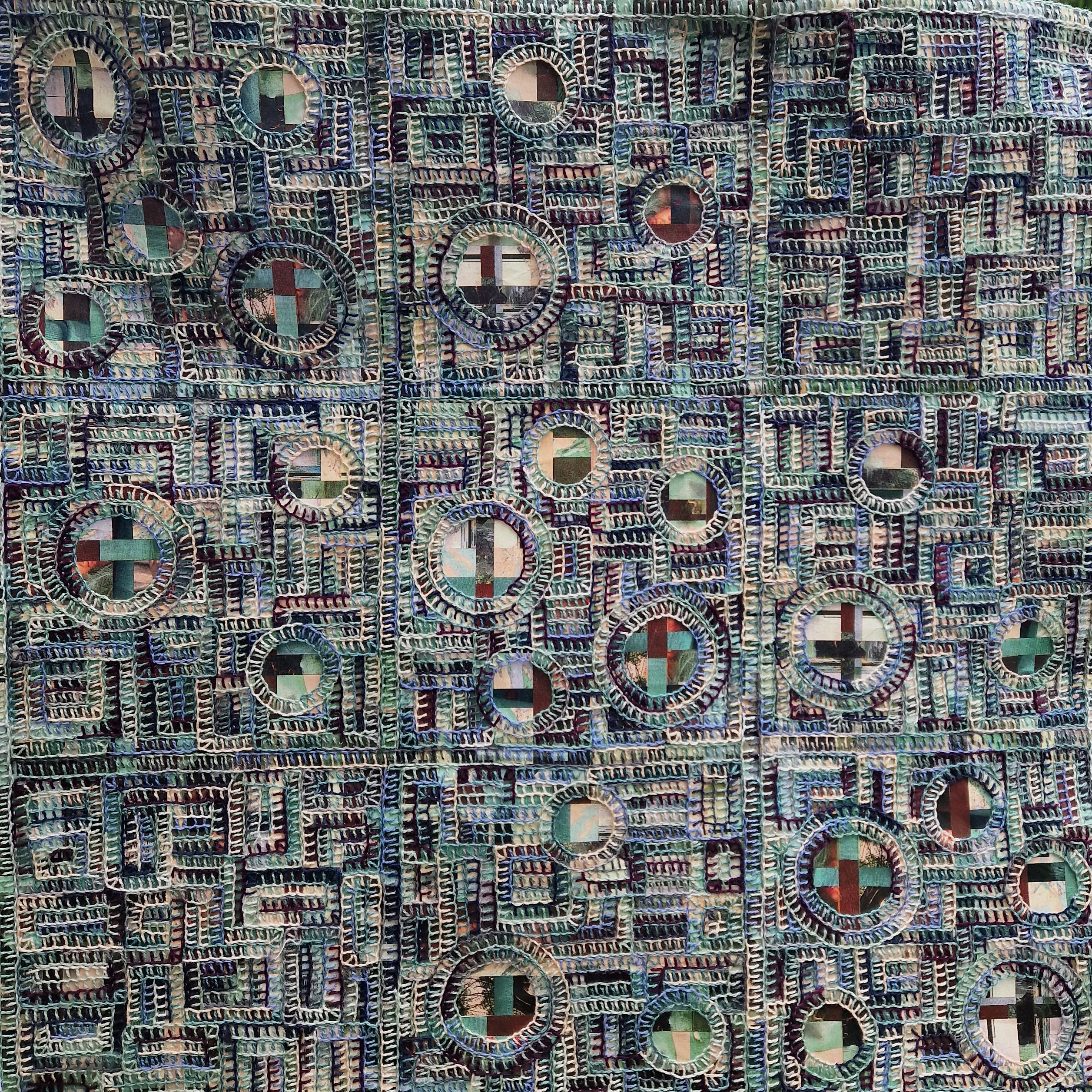
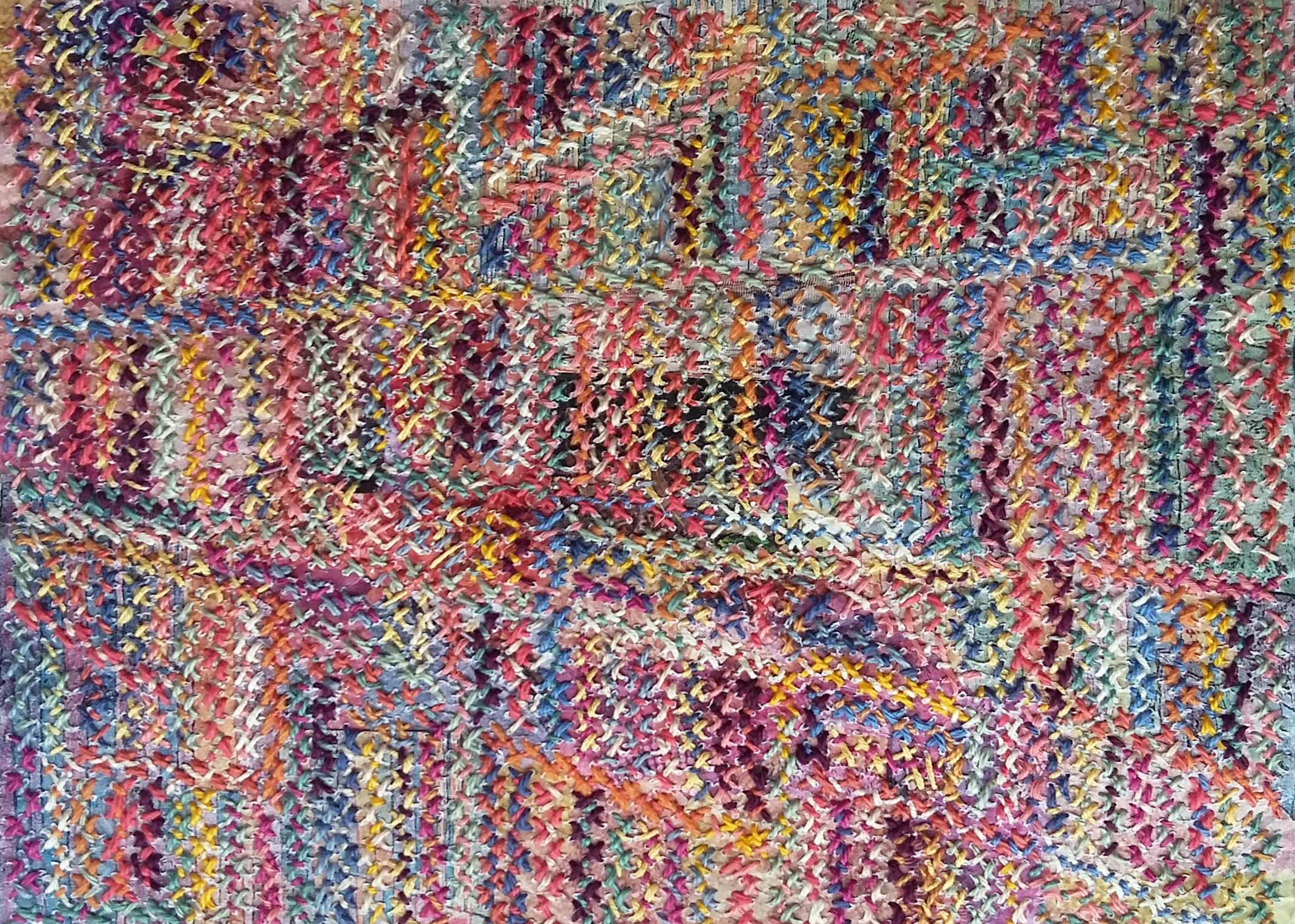
Do please come and see my solo exhibition Stitches, Patches and Glitches at ACEarts, Somerton on now until 22 August. In the autumn you will also be able to catch my work at Conceal / Reveal at the Atkinson Gallery, and at the RWA 173 Open Exhibition in Bristol.
You can follow me on Instagram for updates @adkonig and I’m also on LinkedIn
Anna König
Selected publications
König, A. (2013), ‘A Stitch in Time: Changing Cultural Constructions of Craft and Mending’, in Culture Unbound, 5, pp. 569-585 available at https://doi.org/10.3384/cu.2000.1525.135569
König, A. (2023). ‘Mending and Repairing.’ In Véronique Pouillard and Vincent Dubé-Senécal (Eds.), The Routledge History of Fashion and Dress, 1800 to the Present. Routledge available at https://doi.org/10.4324/9780429295607

