Hello my name is Divya Sharma. I am new to seam collective and I am very excited and pleased to be part of this collective! I graduated with an MA in Sculpture from the Royal College of Art, London in 2021 and in 2019 I got my BA in Painting from the Wimbledon College of Art, University of Arts London.
I really enjoy collaborations and have co-founded a collective called Neulinge (meaning ‘Fledgelings’ in German) in 2018 with four women from three countries of the Indian subcontinent, Pakistan, Sri Lanka and India. I have collaborated with a British Ghanaian textile artist for over five shows and really learnt a great deal from this. Knowing how solitary and individualistic our art practises can be; I think collectives and the community it brings with it, along with new ideas and opportunities, are the way forward. I have a podcast called ARTiculate on Apple Podcasts that I had started during the pandemic and hope to restart at some point again!
My practise is a way into tapping into my subconscious that typically is chaotic, unknowing, and difficult to pin down. Manifesting art out of thin air is daunting for me and requires resolve to keep powering through the layers of insecurity and self-doubt. Though having said that I am grateful for that same self-doubt because it is this fragility which creates that shimmering mirage surrounding a work of art!
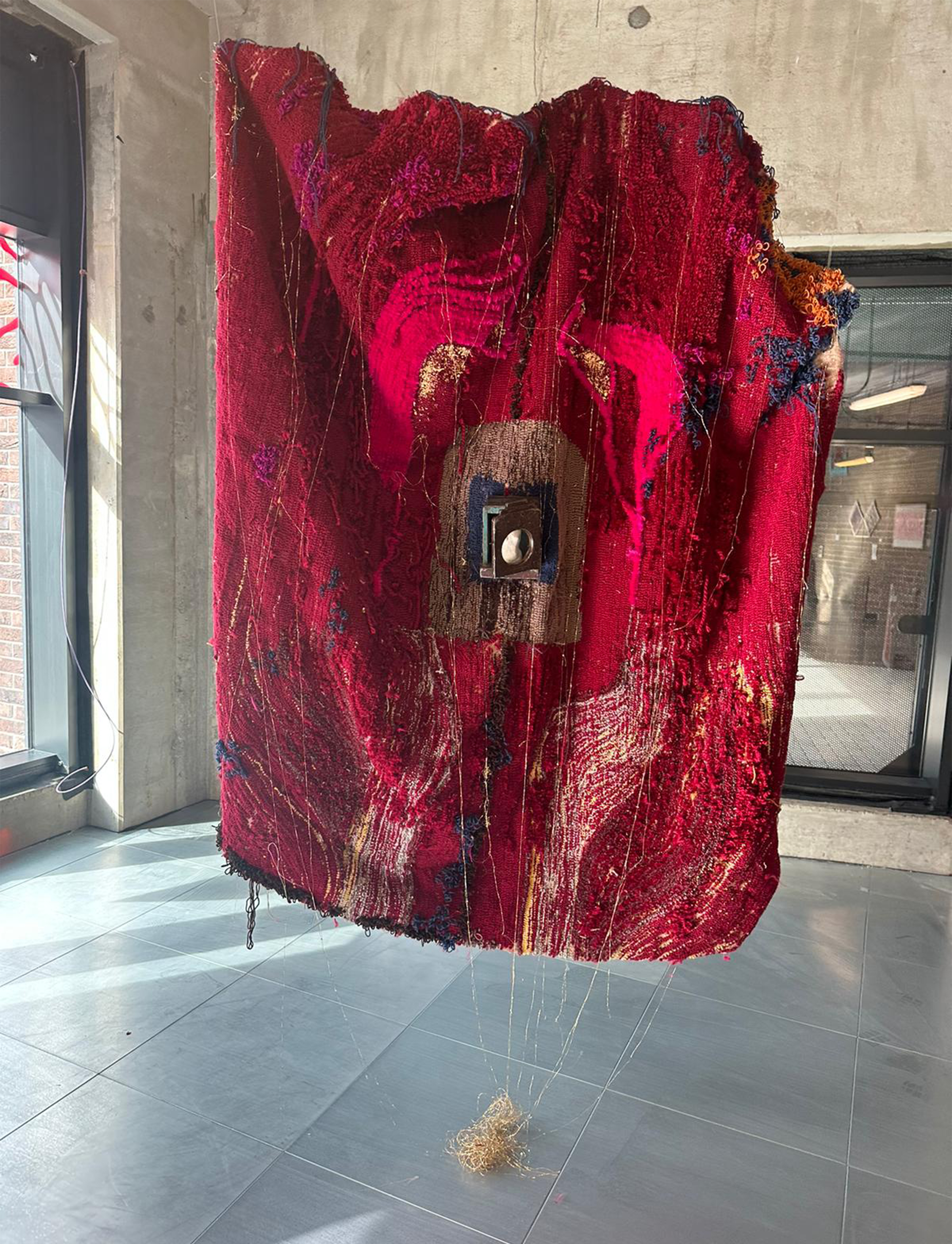
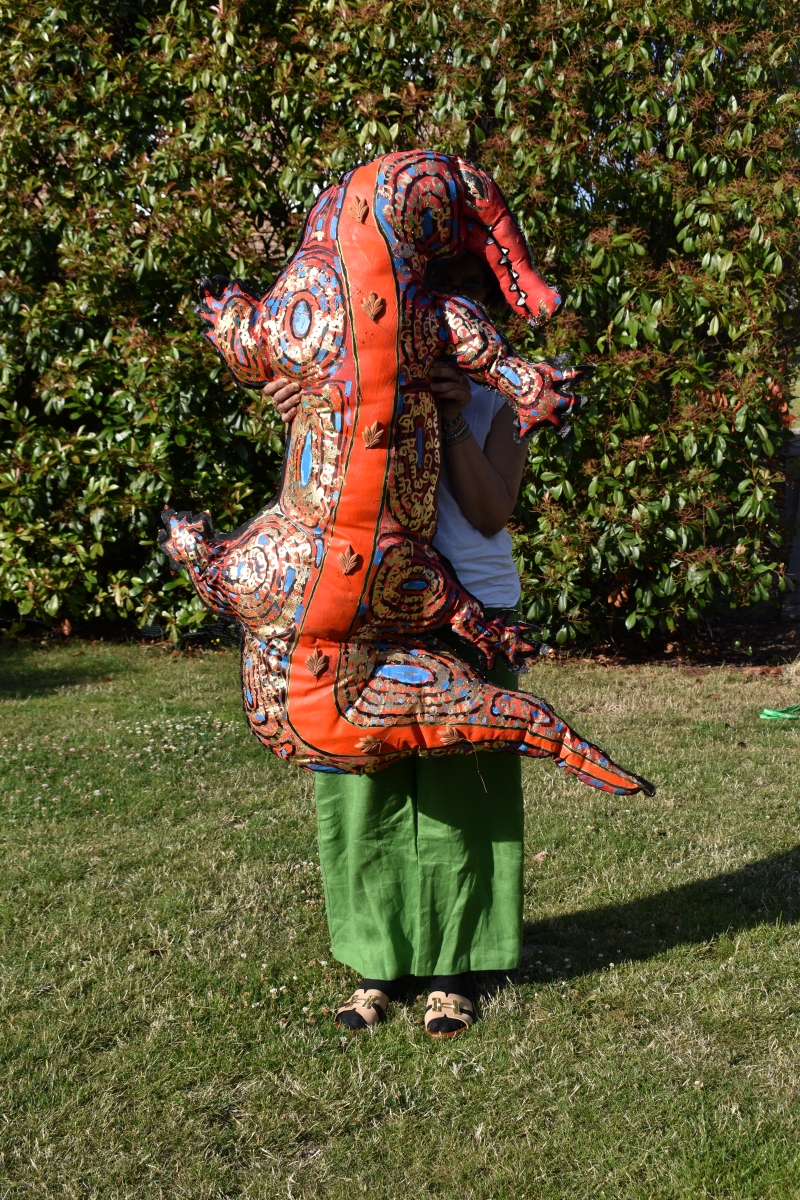
I grew up around my mother, the artist, diligently working on her sewing machine to create beautifully ornate miniature fabric sculptures. Her attention to detail for every tiny centimetre of the sculpture would annoy me as I would wait patiently for the finished piece. She never did show her work to the outside world. I had experienced a world in which femininity was considered a weakness, characteristics that needed to be ‘ironed out’, we had to be neither seen nor heard, so I experienced how unpalatable femininity was to the world I grew up in. There is an expectation that women artists are expected to deal with the body, with domesticity, with craft, and certain expectations as to what is deemed a feminine practise. I wanted to subvert this to create monumental immersive pieces to imagine interiority as an endless space. The flexibility, the tactility, and the ability to work with scale, the intuitive nature of it, the idea of ‘channelling’ something much bigger than me, through me, that reveals itself to me at the end is irresistible.
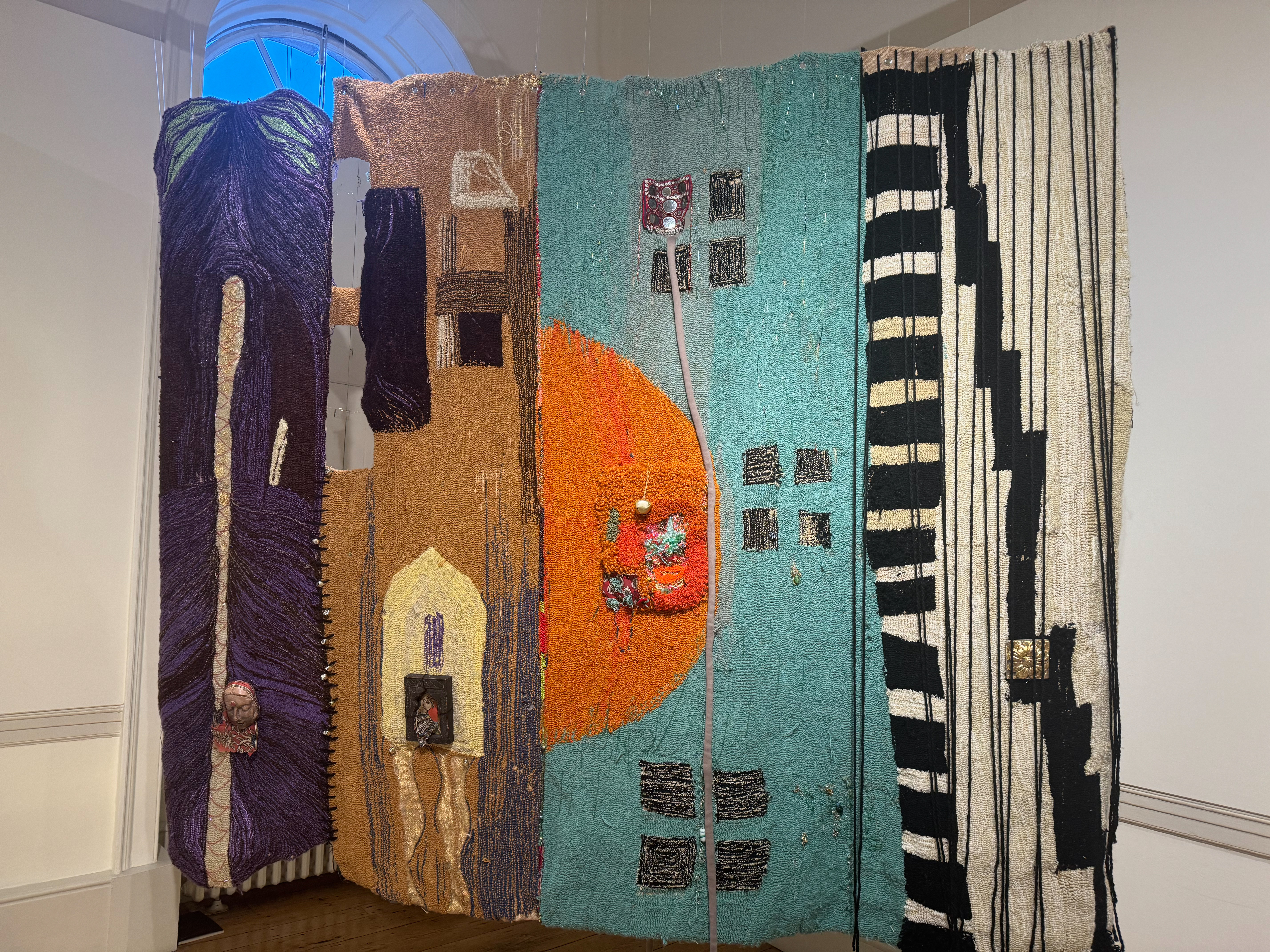
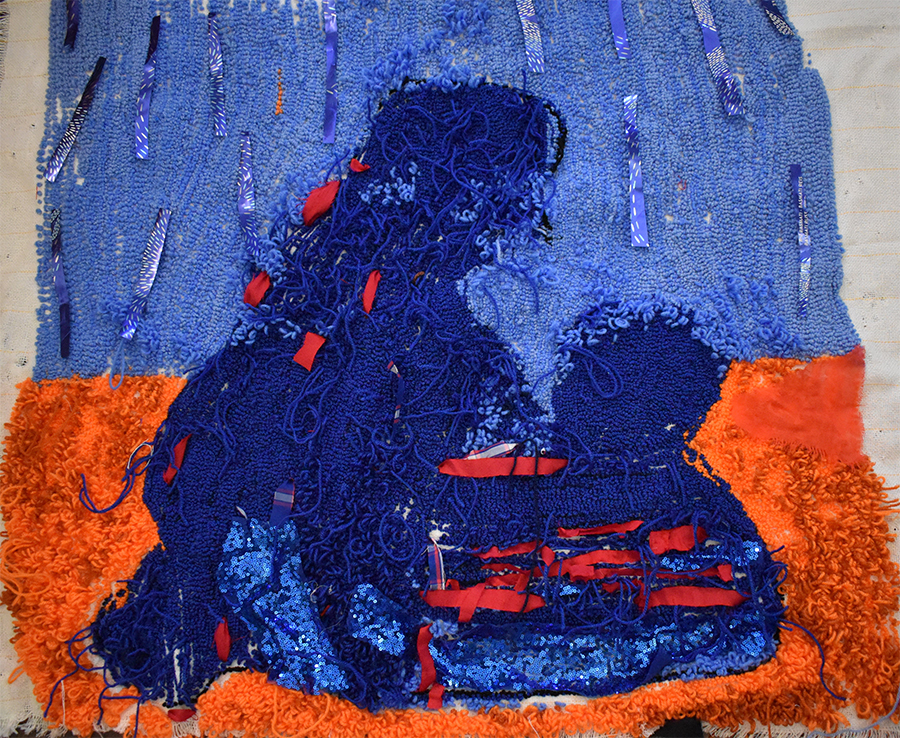
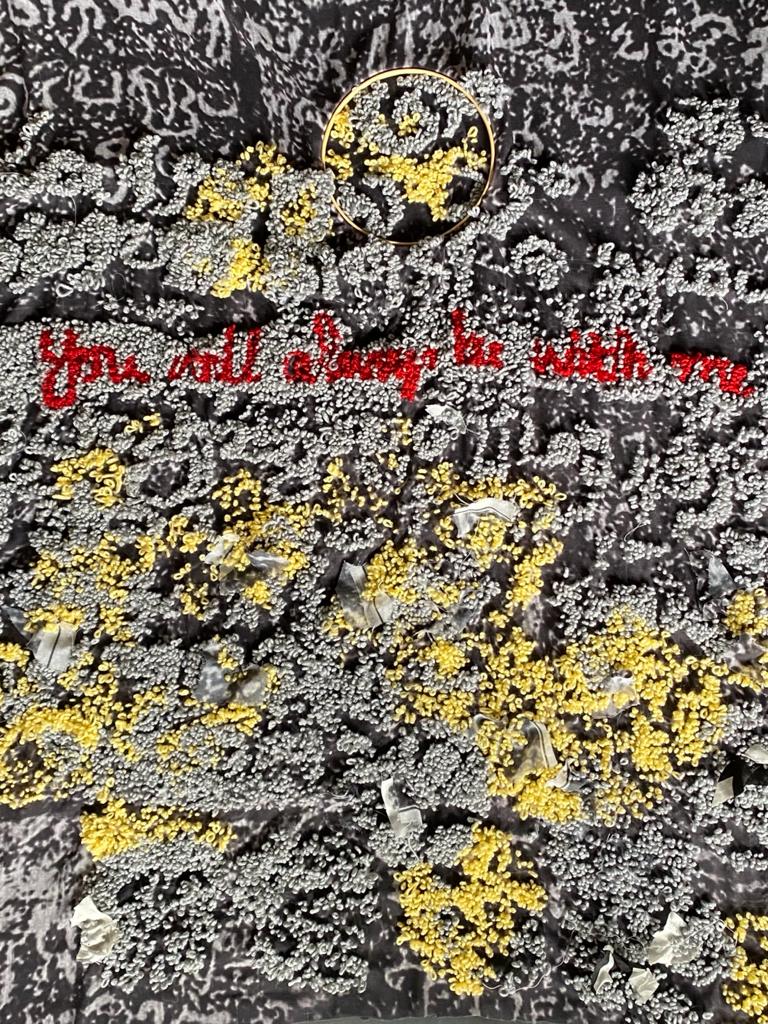
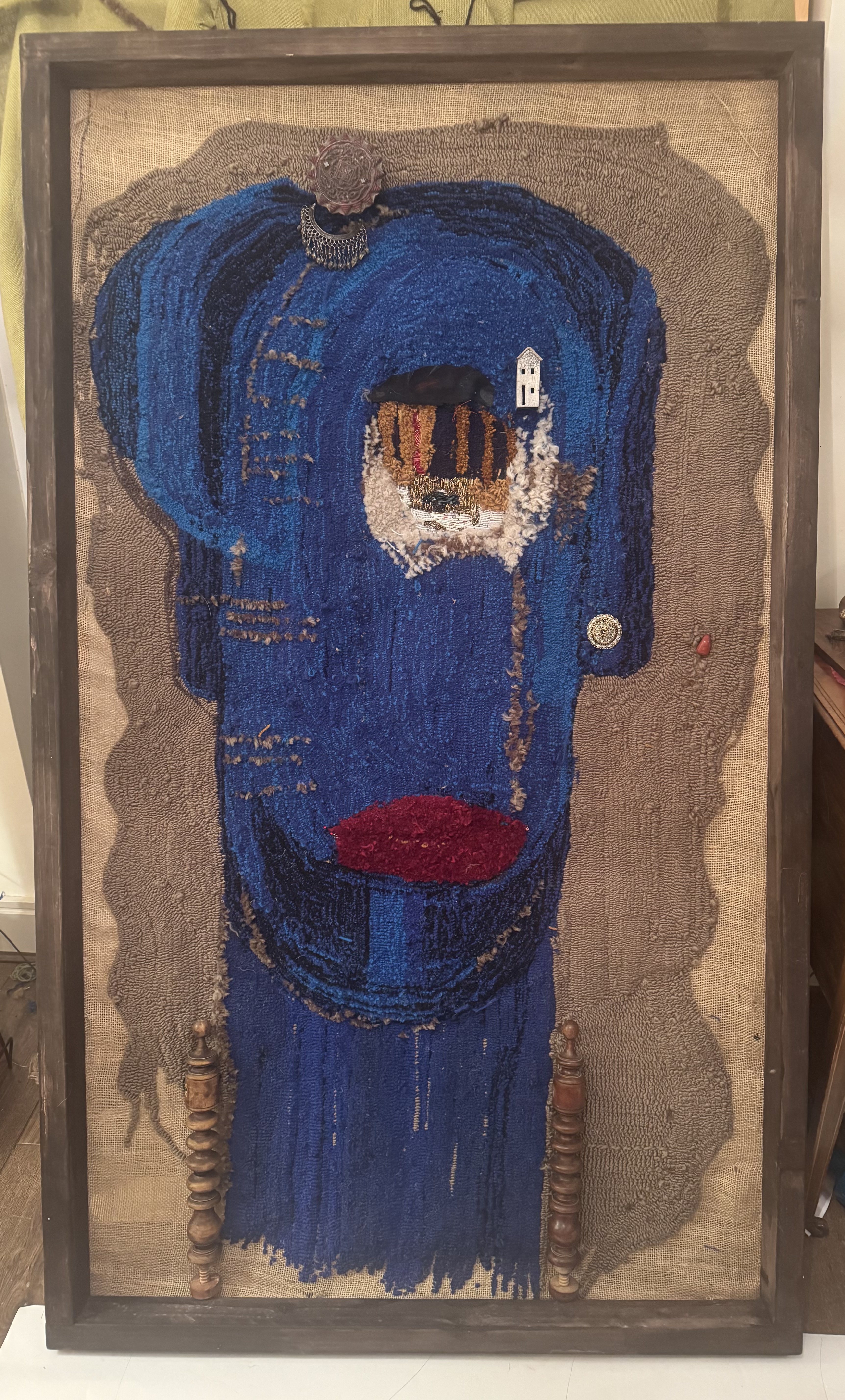
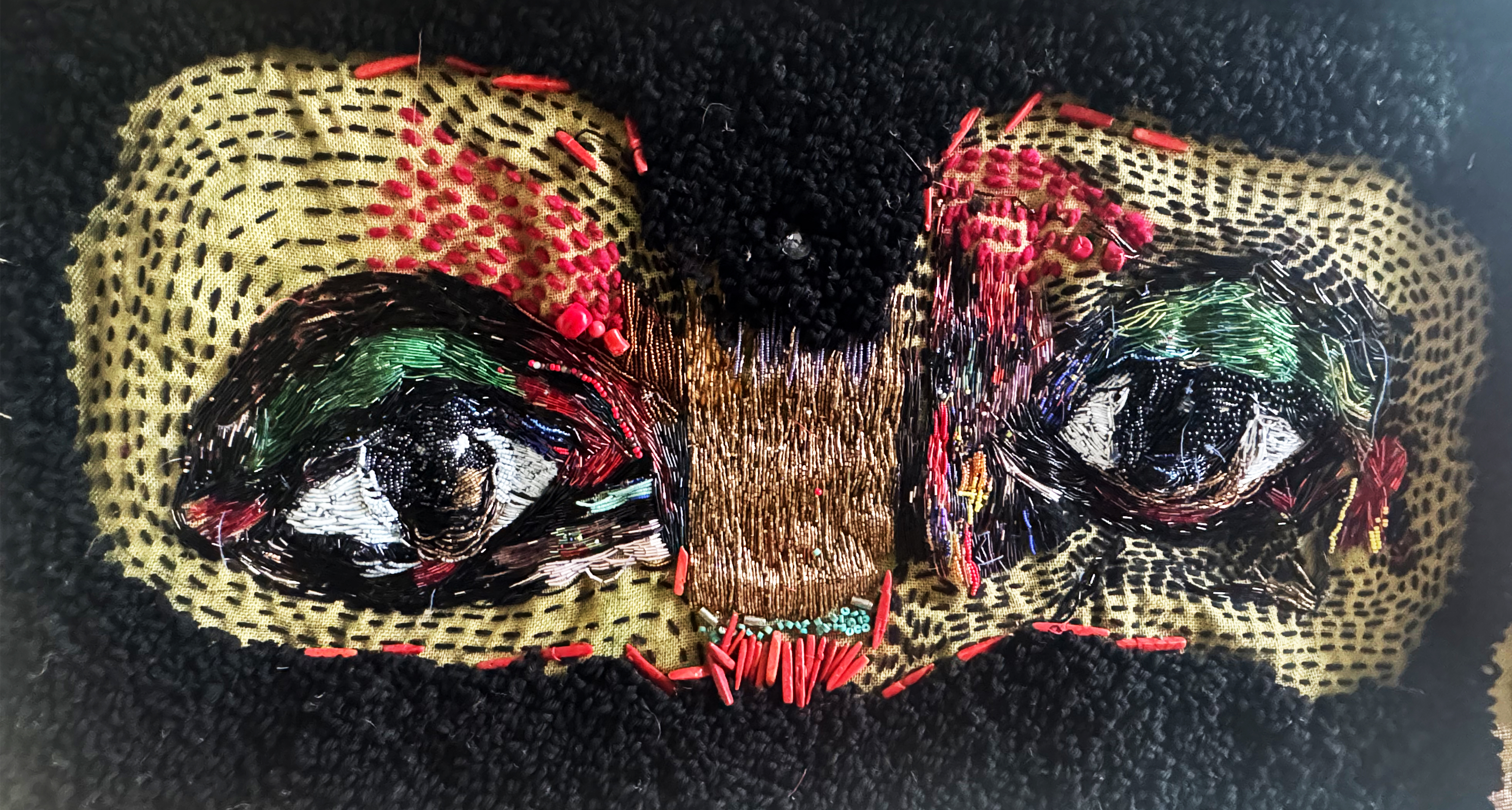
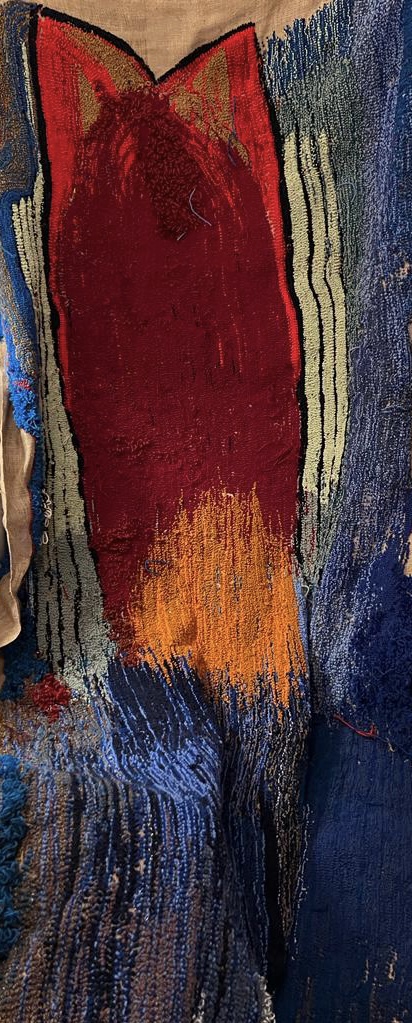
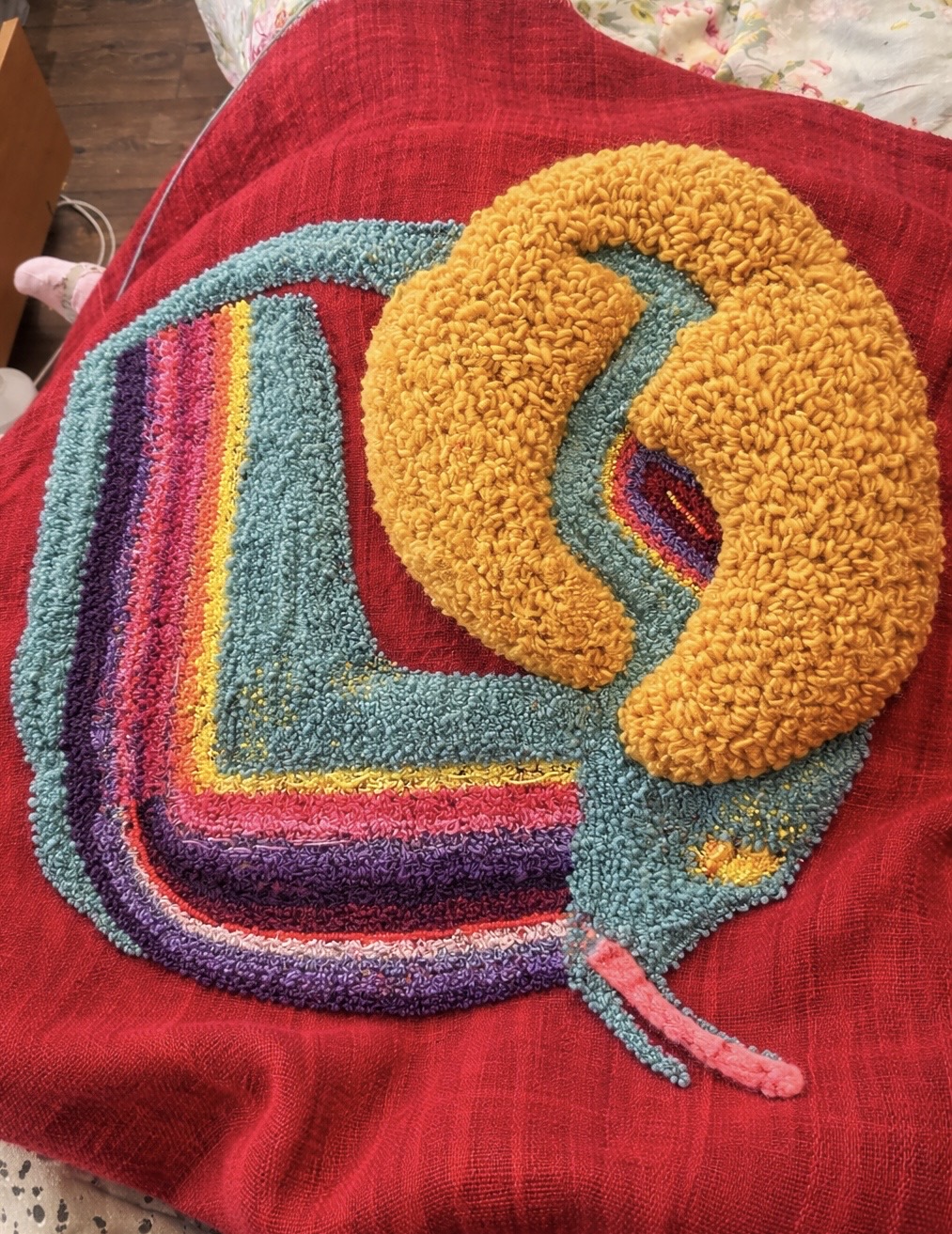
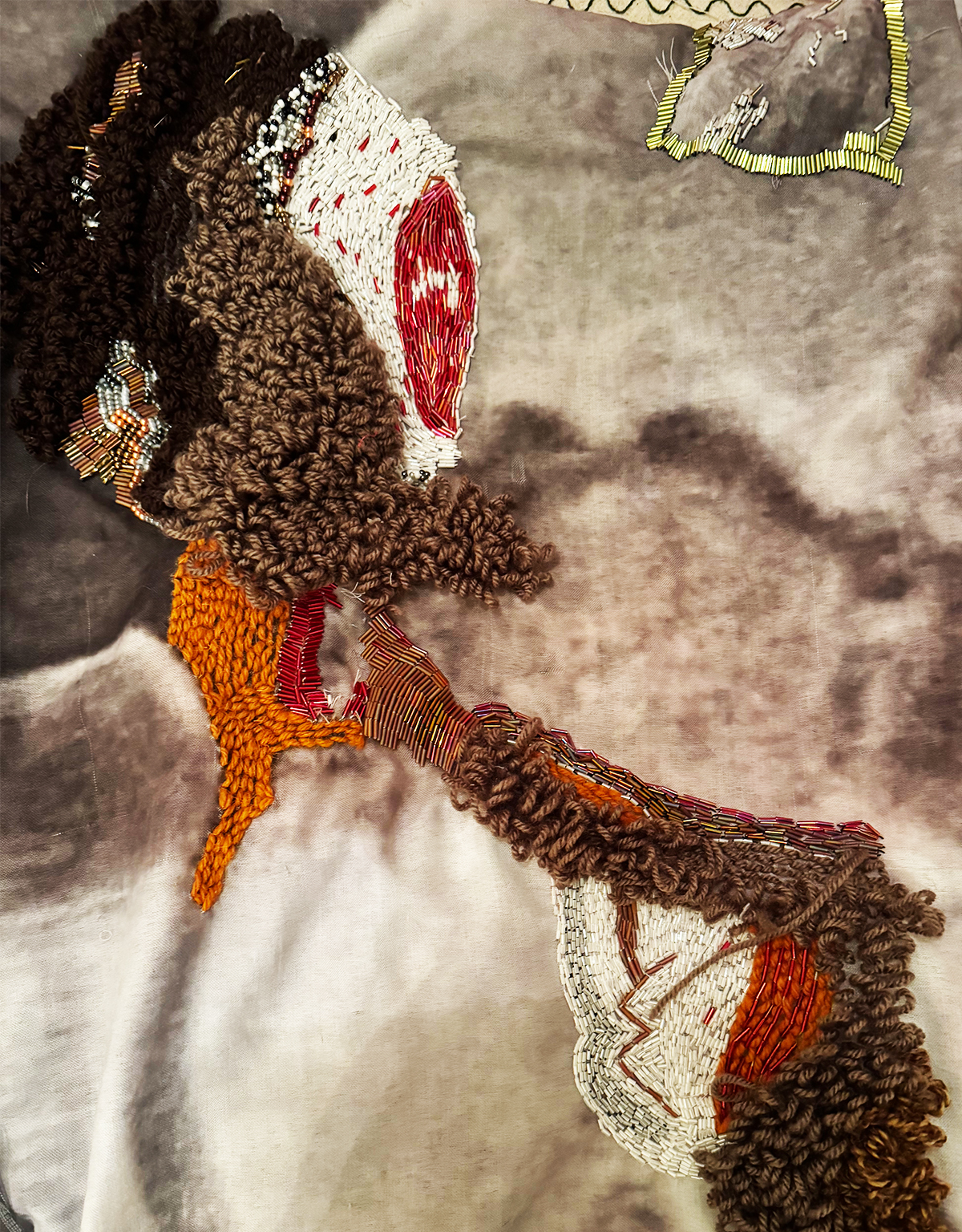
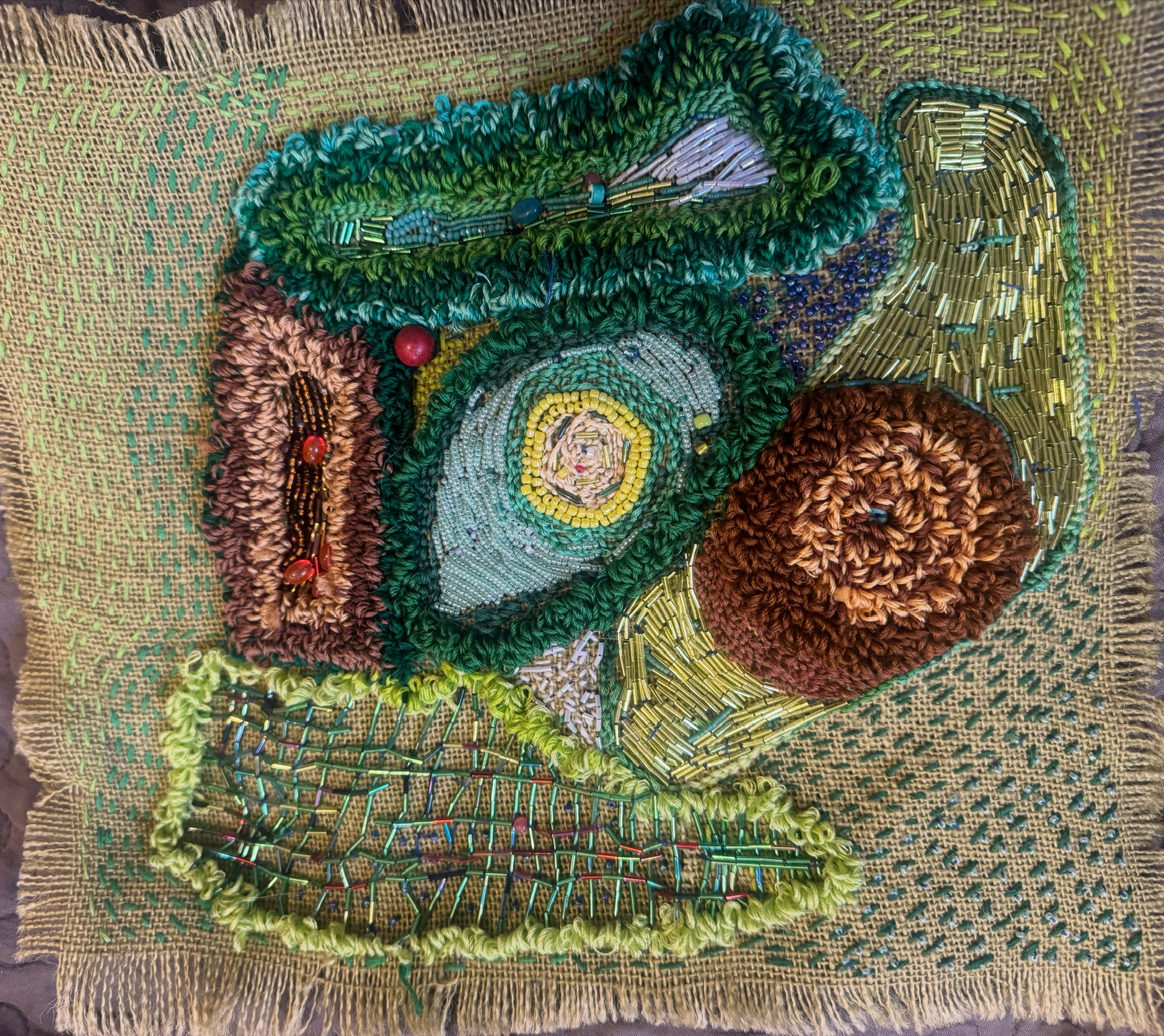
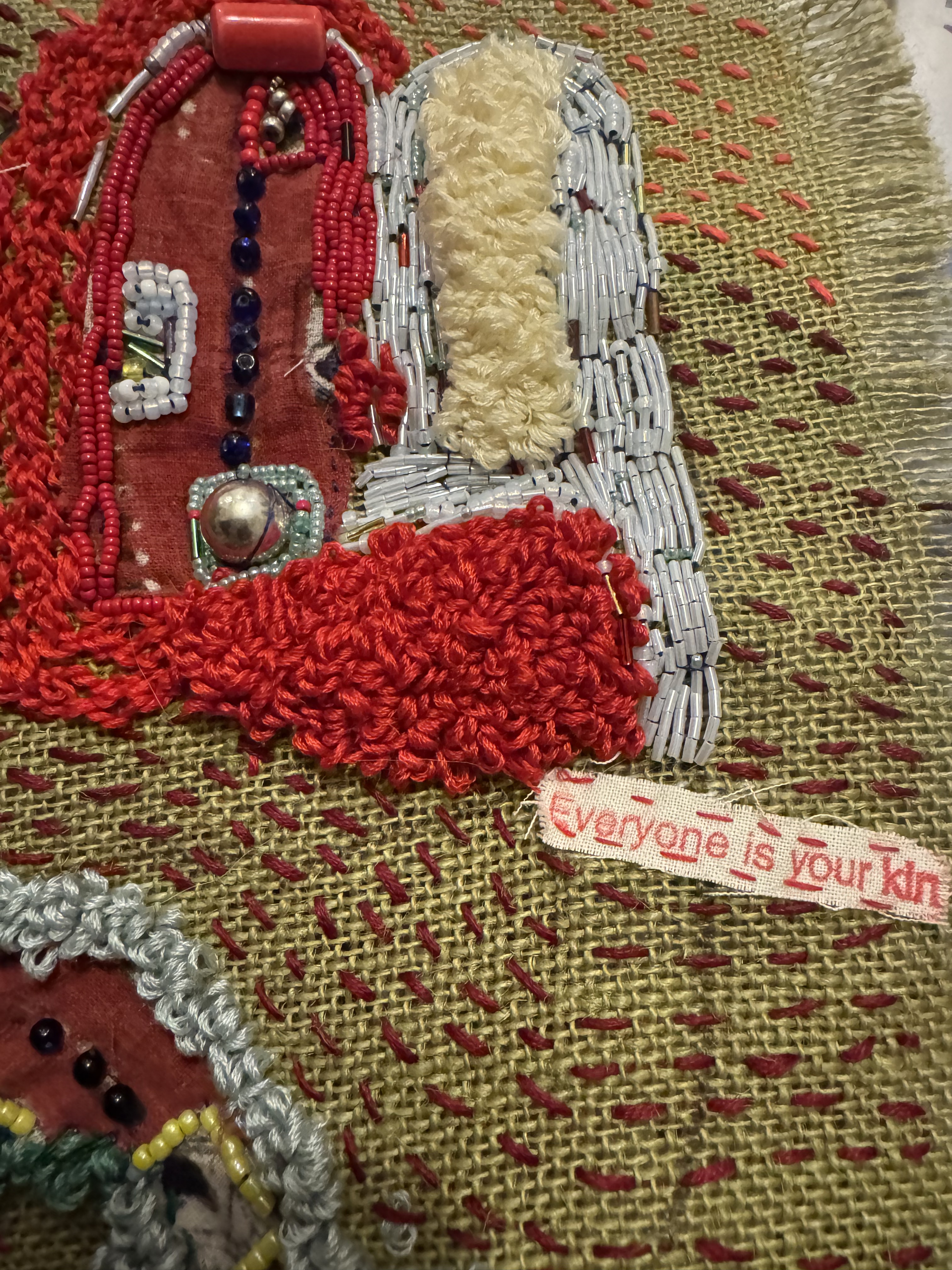
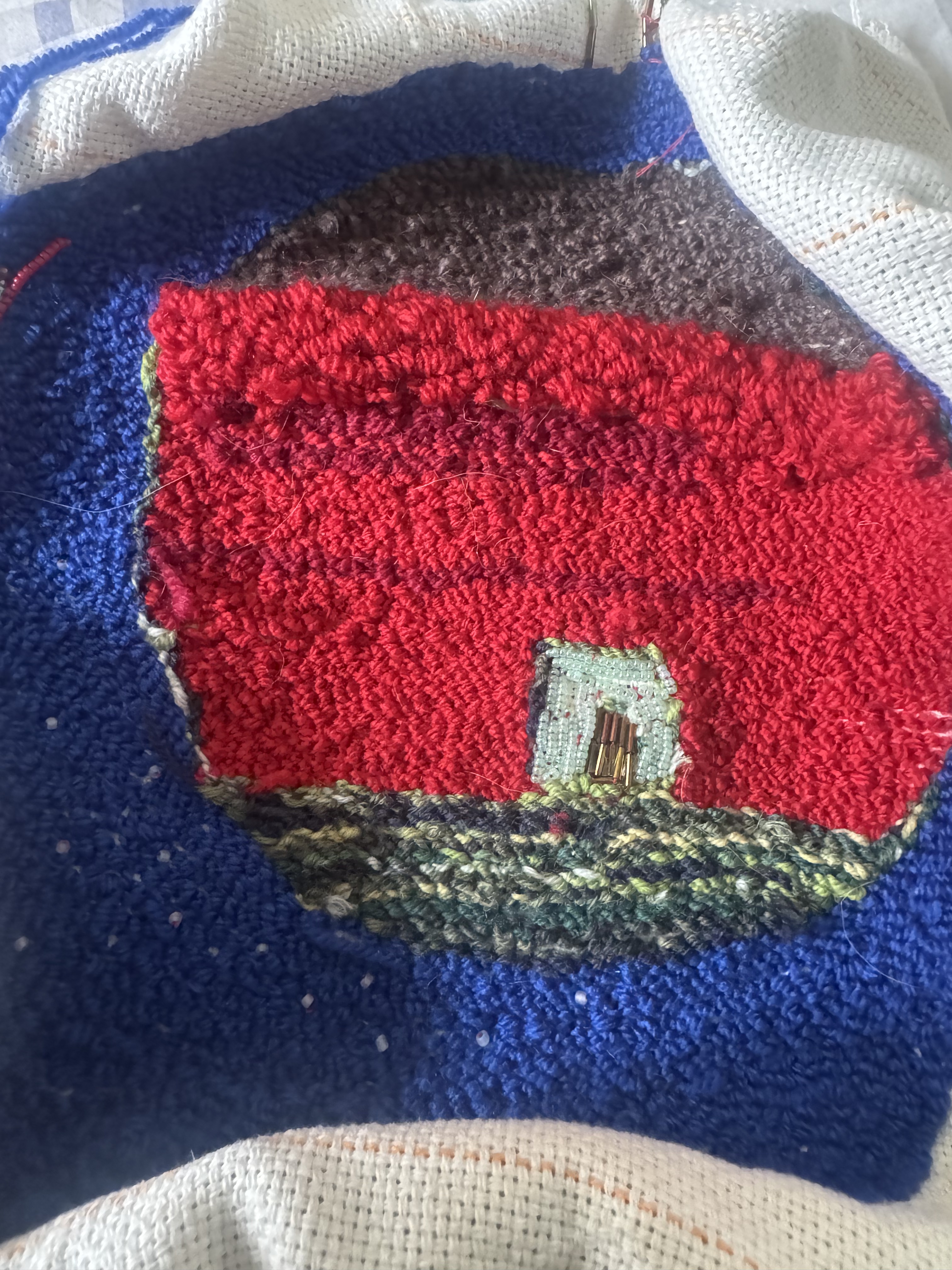
Thinking for me comes with doing, working with my hands. I look forward to being in the studio every day, it’s my cave, my hideout my friend. I love tufting and the way it makes me feel. My works grow slowly through the rhythm of my breath, the rhythm of my thoughts, and the limits of my capacity to do work. The patterns are like a diary, and mark my emotions in that moment in the works forever. I do not use any rules or instructions for my process and make use of the techniques of hand tufting by adapting it to my own ideas. Tufting, in its decorative tradition does not interest me, I just use this material to keep pushing to see how far I can go by constructing, mixing and matching, adding other elements to the piece and finally see how this constructed piece gets to develop its own skin and mystery. My practise reflects my thinking, my influences, and the experiences that I am part of in this moment in time.
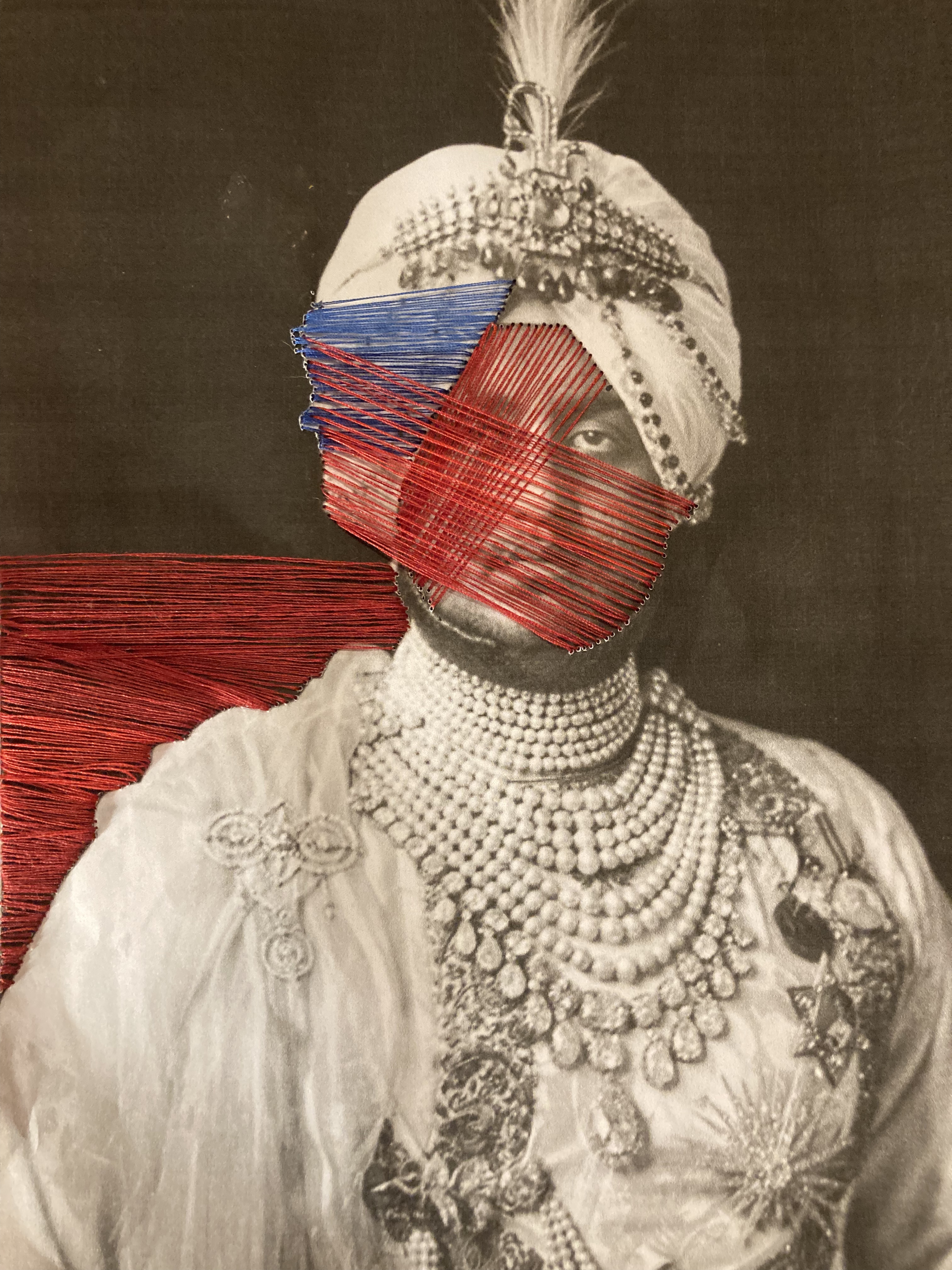
As a woman born and brought up in post-colonial India, as an immigrant living as part of a larger diaspora in the UK, and as an artist trying to find synchronicities and connections, I try to unpick words, norms, that typecast me. I feel the need to make my art practice a canopy that represents people who relate to me and at the same time explains to people who do not. Do I want to stand out or do I want to fit in? Many times, it could be a combination of both and that’s ok. I would love, for example, people of my heritage to look at my massive tufted brown lady and think ‘Yeah finally we are being seen’. Does that make me a ‘diaspora artist’? Drawing from my own journey as a migrant, I find myself irresistibly drawn to the exploration of narratives that transcend boundaries and geographies. The diasporic experience is a constant reminder of the interplay between the past, present, and future, evoking emotions of nostalgia, belonging, and displacement.
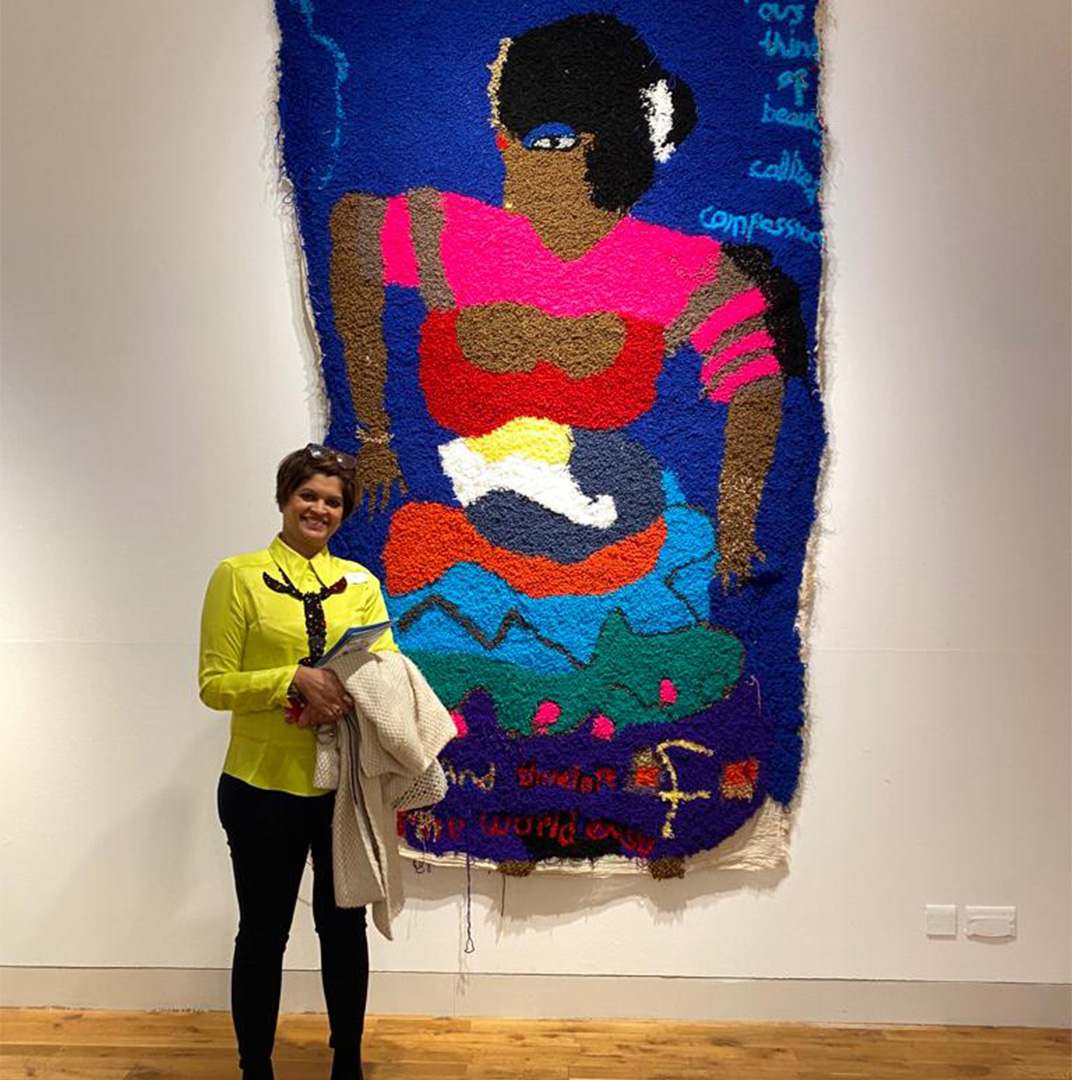
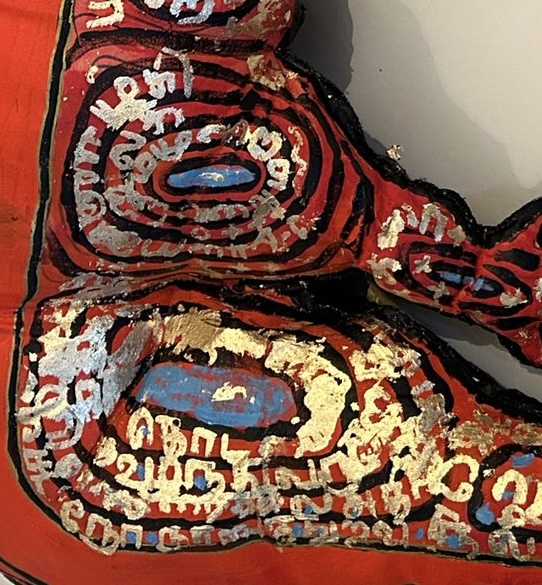
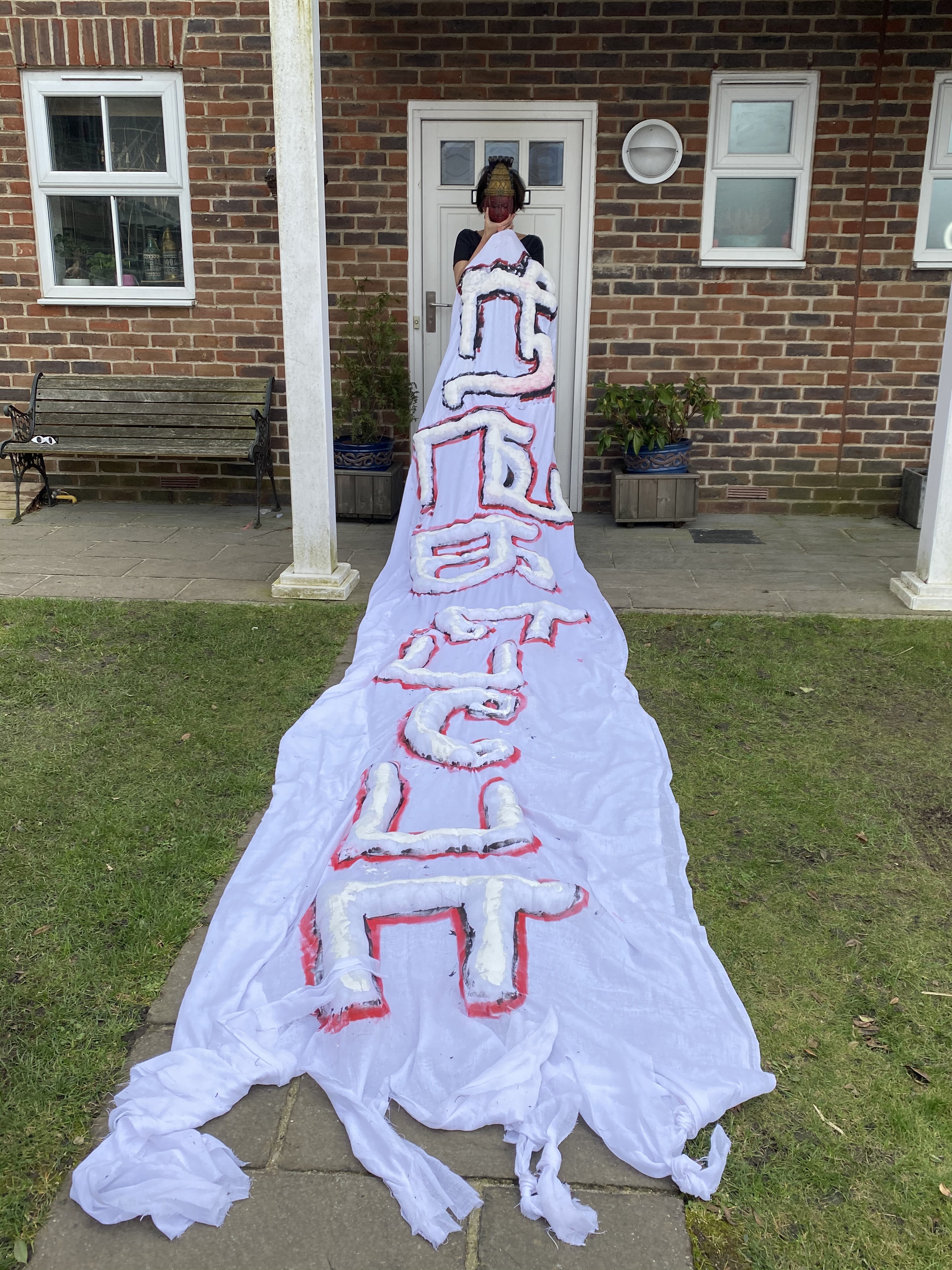
During the lockdown, I had decided to learn how to read and write Tamil ( due to the geo-political nature of language teaching in India I never did learn to read or write my mother tongue ) but when I started writing the rounded letters during my lessons, it felt like it had opened a portal into another world. As artists we are always looking for a sign that points us to something that explains this ‘calling’ we have to work on our ideas! As an artist born into the Tamil diaspora, my work has been deeply influenced by the intricate tapestry of my personal experiences, cultural heritage, and post post-colonial identity. Migration is an integral part of my family’s history, and it has shaped my perspective on the world and the importance of interconnectedness. Through my art, I strive to explore the significance of diaspora, migration, the status of women, and the preservation of my Tamil mother tongue within the context of speculative futures. In the context of speculative futures, I started reading up about this idea of Lemuria. In the book by Sumathi Ramaswamy called ‘The Lost Land of Lemuria: Fabulous geographies, Catastrophic Histories’ she writes
‘This fantastical land was supposed to have been in the pacific and Indian oceans. It is said in Tamil legend to have been civilised for over 20000 years with its population speaking Tamil. It is a land connecting Madagascar, south India and Australia covering most of the Indian ocean. It is also called Kumari Kandam by some Tamil writers. I consider Lemuria to be the work of its “place-makers,” a motley crowd whose main objective is to speak the past into being, to summon it with words and give it dramatic form, to produce experience by forging ancestral worlds in which others can participate and readily lose themselves.’
Sumathi Ramaswamy ‘The Lost Land of Lemuria: Fabulous geographies, Catastrophic Histories’
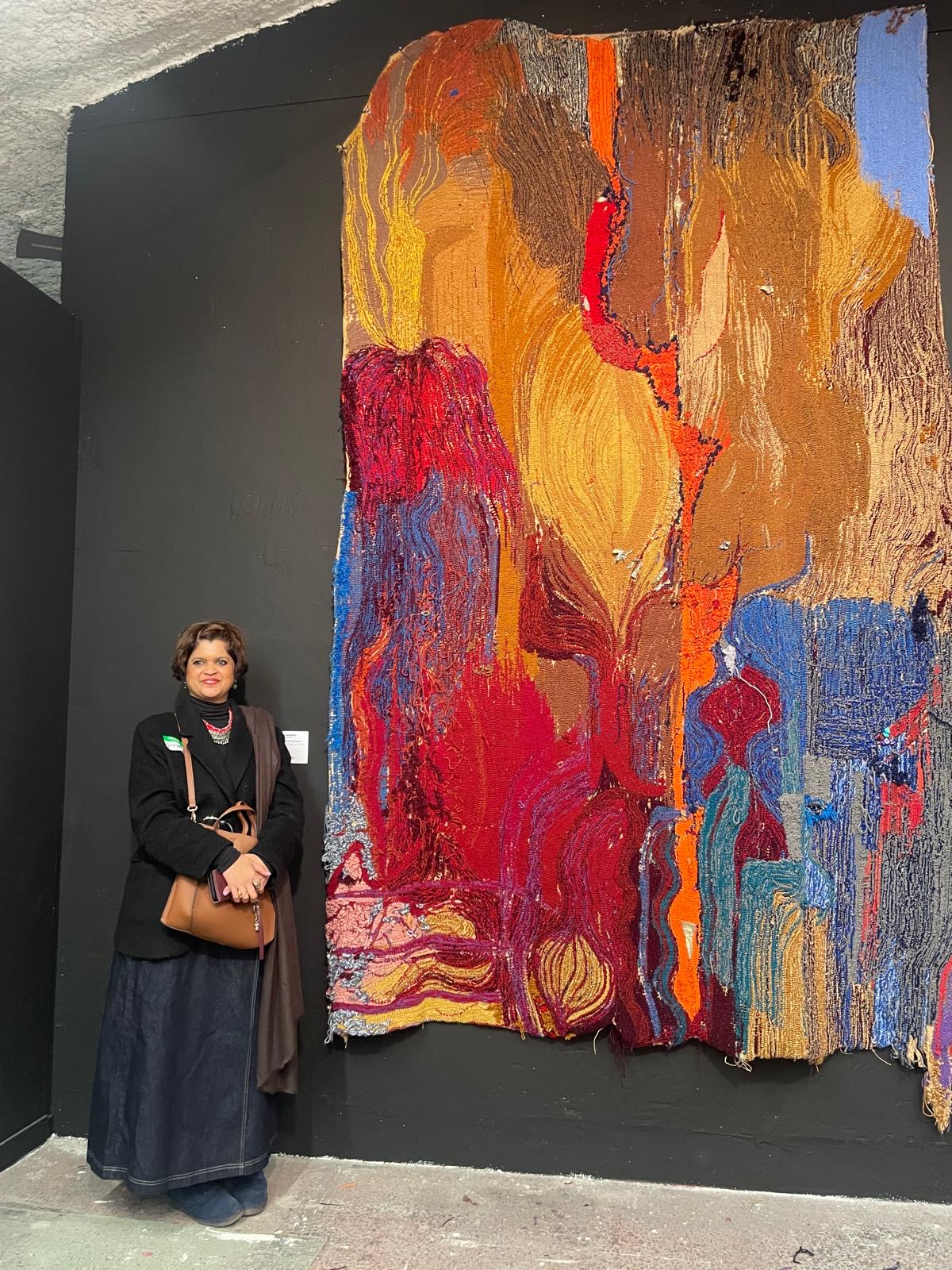
My large tapestries are aerial maps to an entire imaginary universe that can mirror our potential back to us. I want to reimagine living in the past as well as the future. Multidisciplinary British artist Tai Shani (joint winner of the 2019 Turner Prize) says in her interview that she was always interested in ‘epicness’ and how this affect has been often appropriated by fascists (spectacle is often associated with right wing politics) and was interested in how this could be reclaimed from a leftist perspective and a feminist position also. The labour and the physicality are a metaphor for my rebellion, and my tapestries are a vehicle for me to assert my individuality and personhood. It’s this way of trying to find a new language by weaving myths into my ideas of my past and future, create my own version of history and thus manifest my own version of an imagined hope-filled land. In a way I am creating anagrams of a new reality. I love the idea of circularity of time that aboriginal people conceptualise time as. It is not linear but like a continuum just like I think history is a continuum. We are part of the history for the future. We are the ancestors of the future.
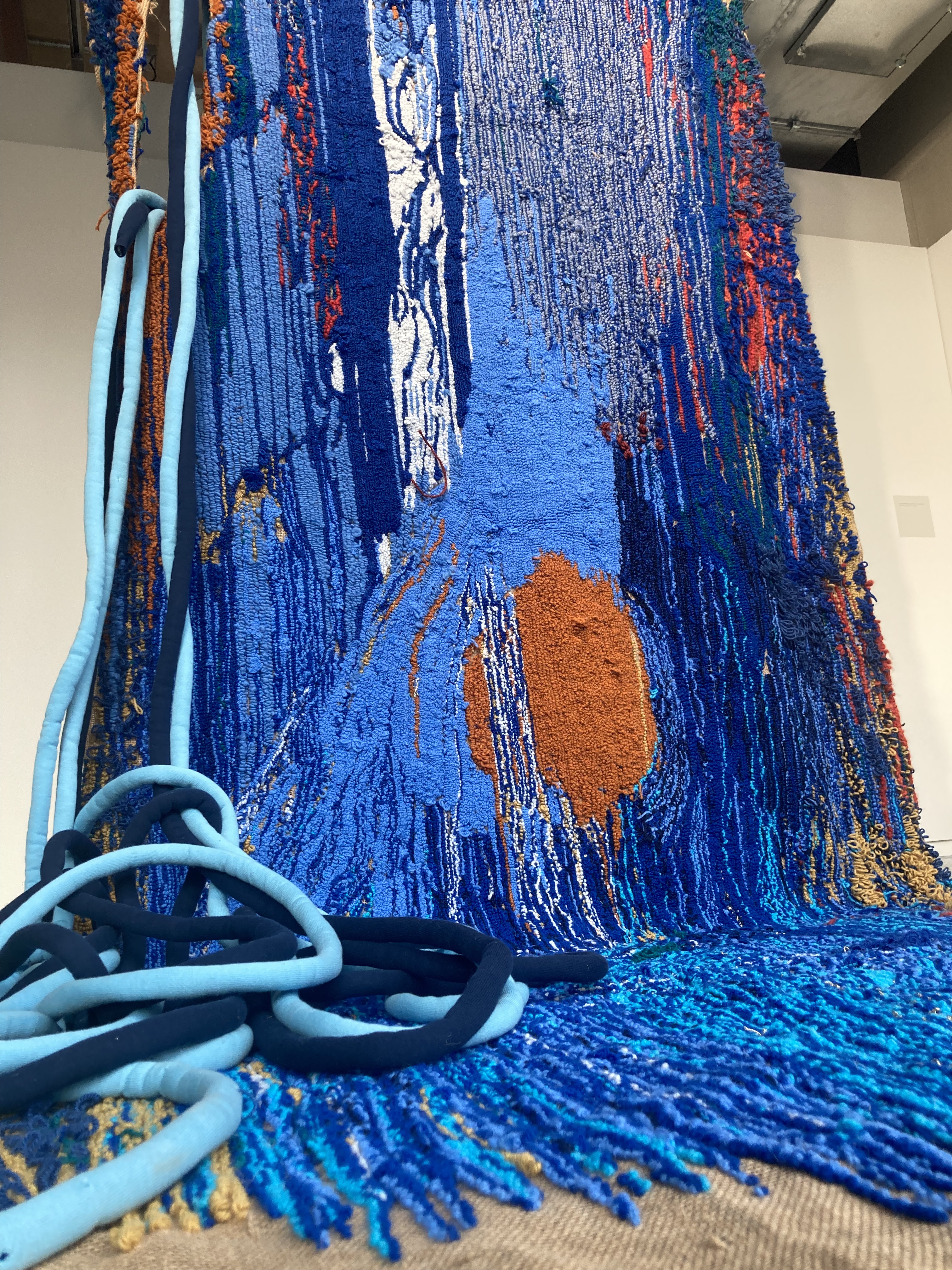
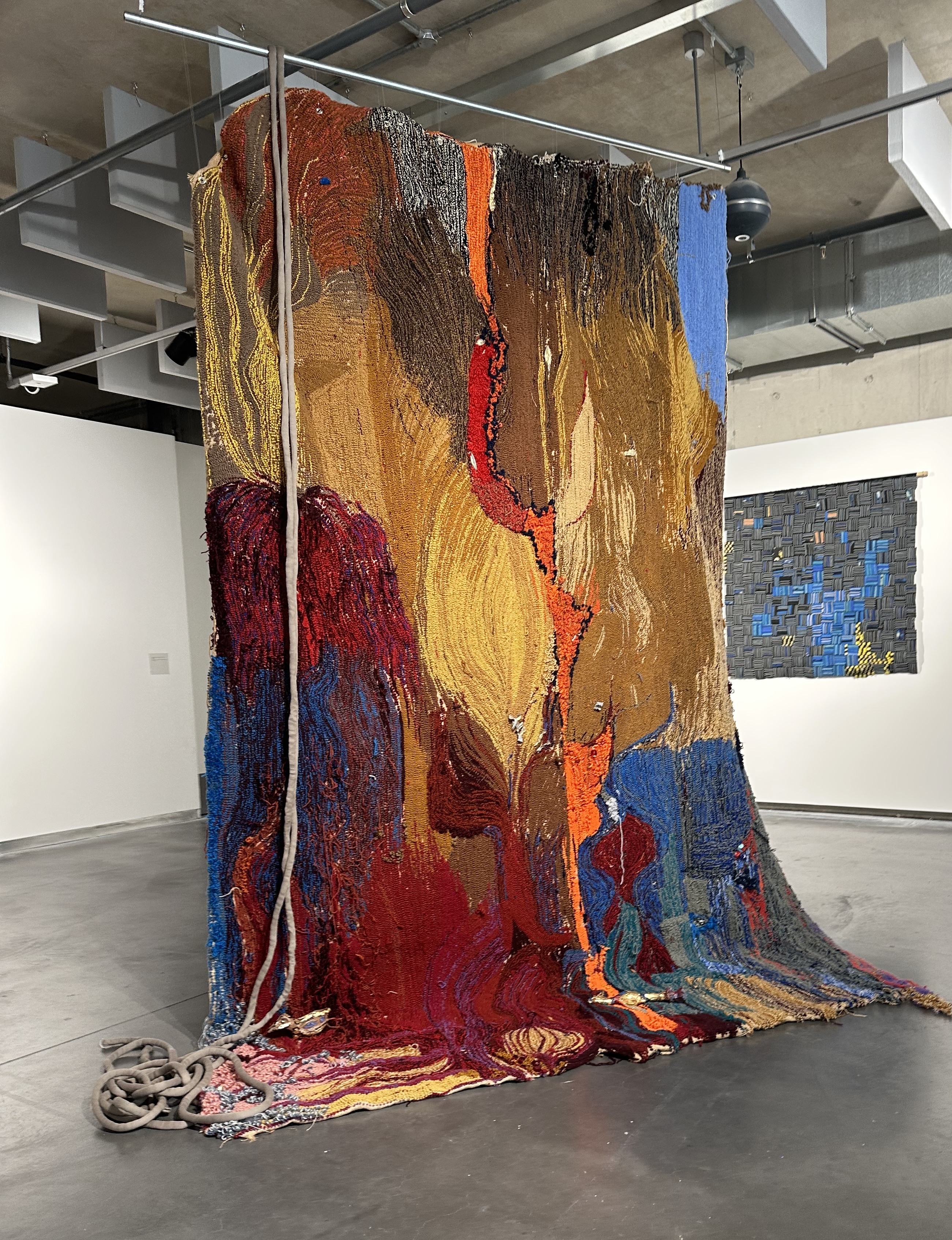
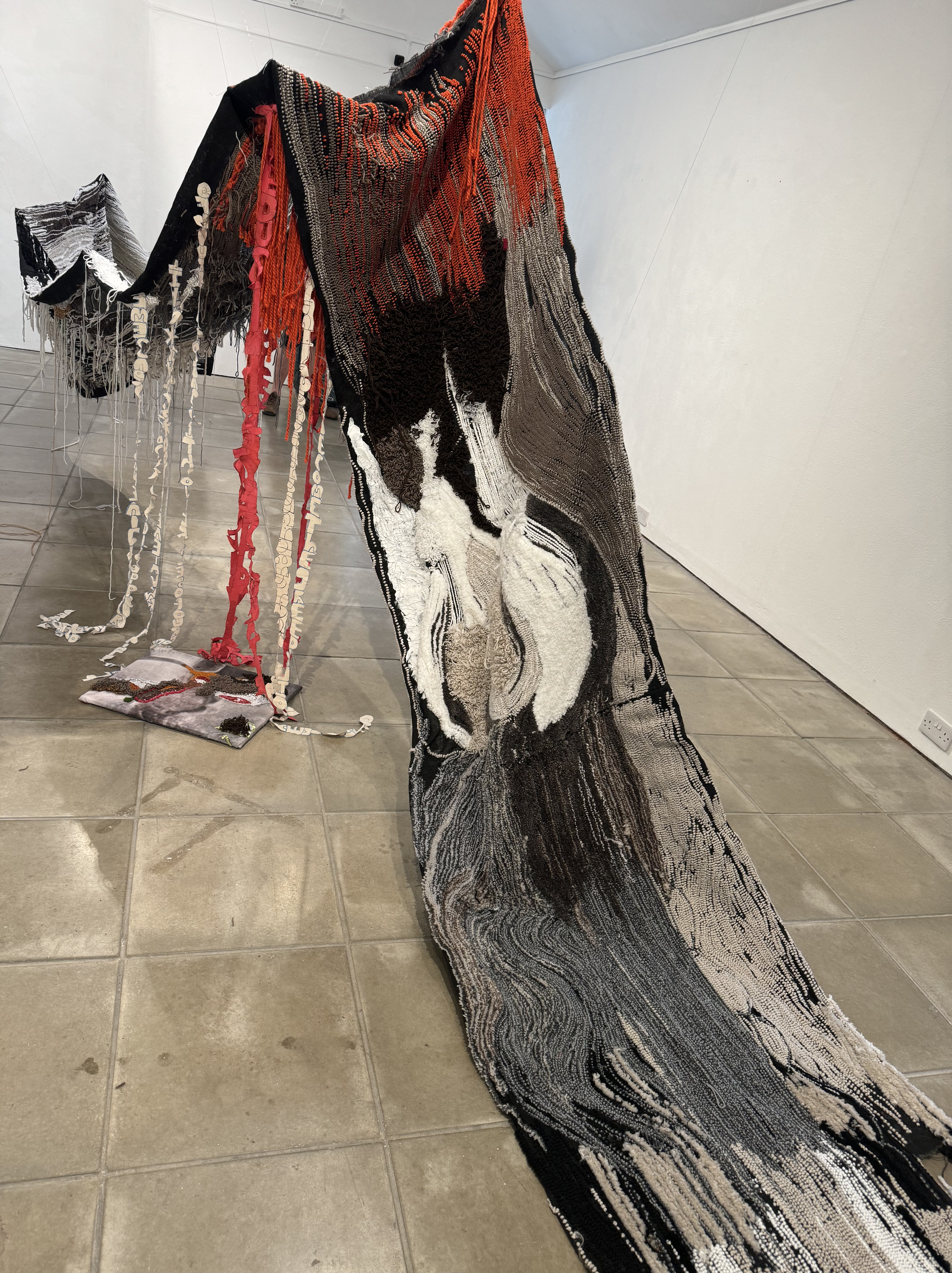
I am currently working towards the Knit and Stitch shows in London and Harrogate. I am part of the current cohort of the New Platform Art program, and my work has been selected to be displayed in the Clyde and Co offices for a year (till May 2027). When I am not in my studio, I work as a textile workshop facilitator and enjoy sharing my joy of working with fabric and thread through these workshops!
If you are interested in finding out more about me and my work, please do visit my website www.artbydivya.com and follow me on Instagram @divyasharmastudio for updates.
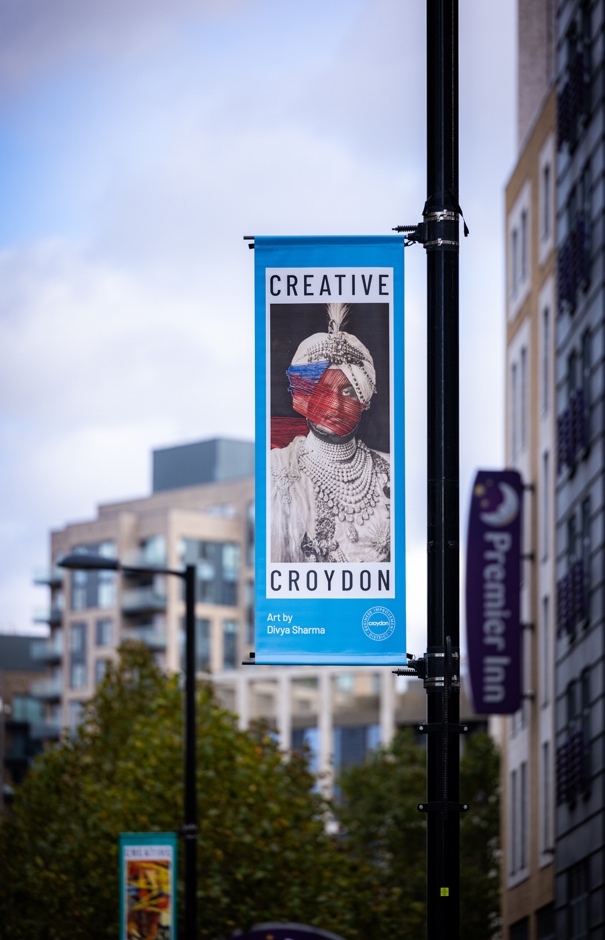
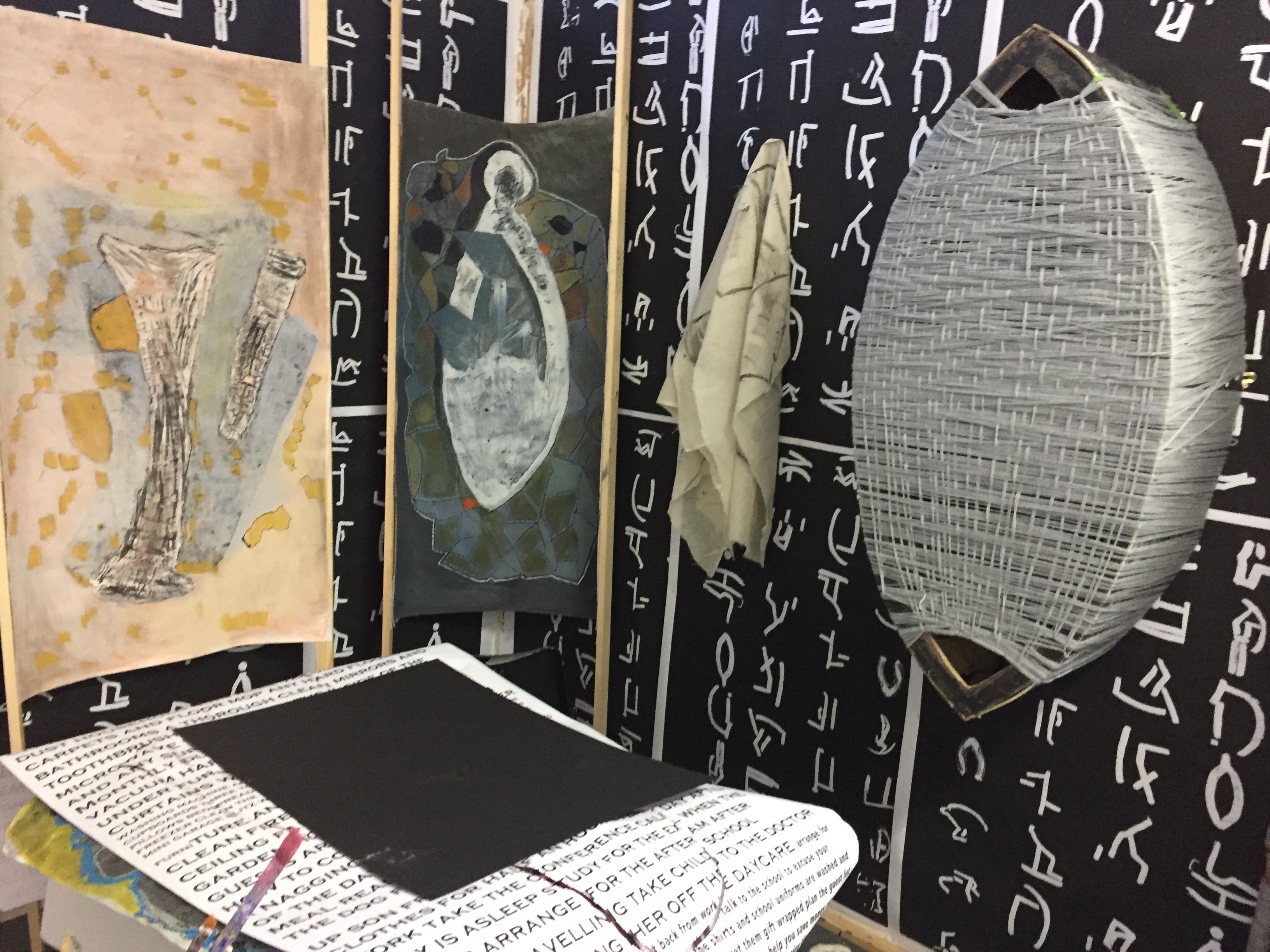
Divya Sharma

