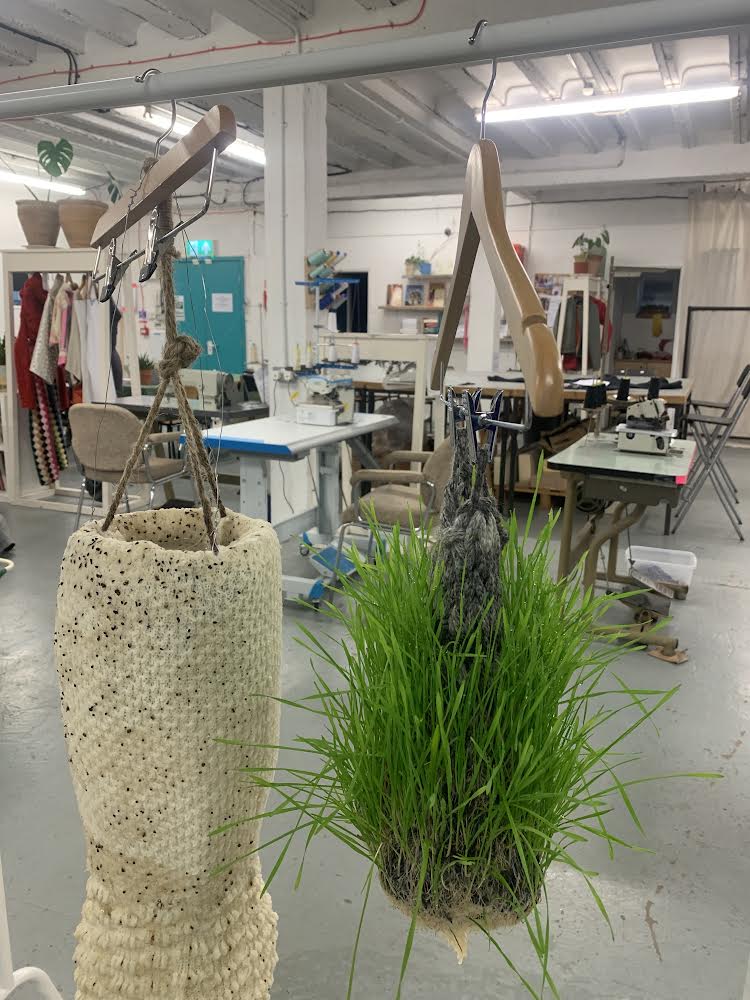
I’m Alice-Marie Archer, a multidisciplinary artist, scientist, and engineer. I craft living architectural-textile creations that invite us to contemplate how our human-made world co-exists with nature, to expand our imagining of how we might interact with the species and ecologies around us. Currently, my work is centred around textile scaffolds from which living entities such as plants, bacteria, and mycelium flourish.
I seek to challenge the modern notion of separation from our environment, with a focus on industrial soilless cultivation. Themes of feminism and sustainability weave through my work, exploring ideas like softness, the cyclical nature of life and death, and the ecological connections that bind us. My experience with pregnancy, birth, and motherhood during the pandemic has greatly influenced my current artistic direction.


In my current practice, I endeavour to infuse a craft sensibility into soilless farming, connecting, re-entangling soilless cultivation with landscape materially, poetically. I delve into the material qualities of knitting and its historical significance, drawing on traditional craft wisdom for designing soilless cultivation systems. Thinking-through-making, I follow an iterative process, swatches and larger cultivation artefacts are knitted by hand and machine with support from computer aided design and AI visualisation (I use Midjourney).
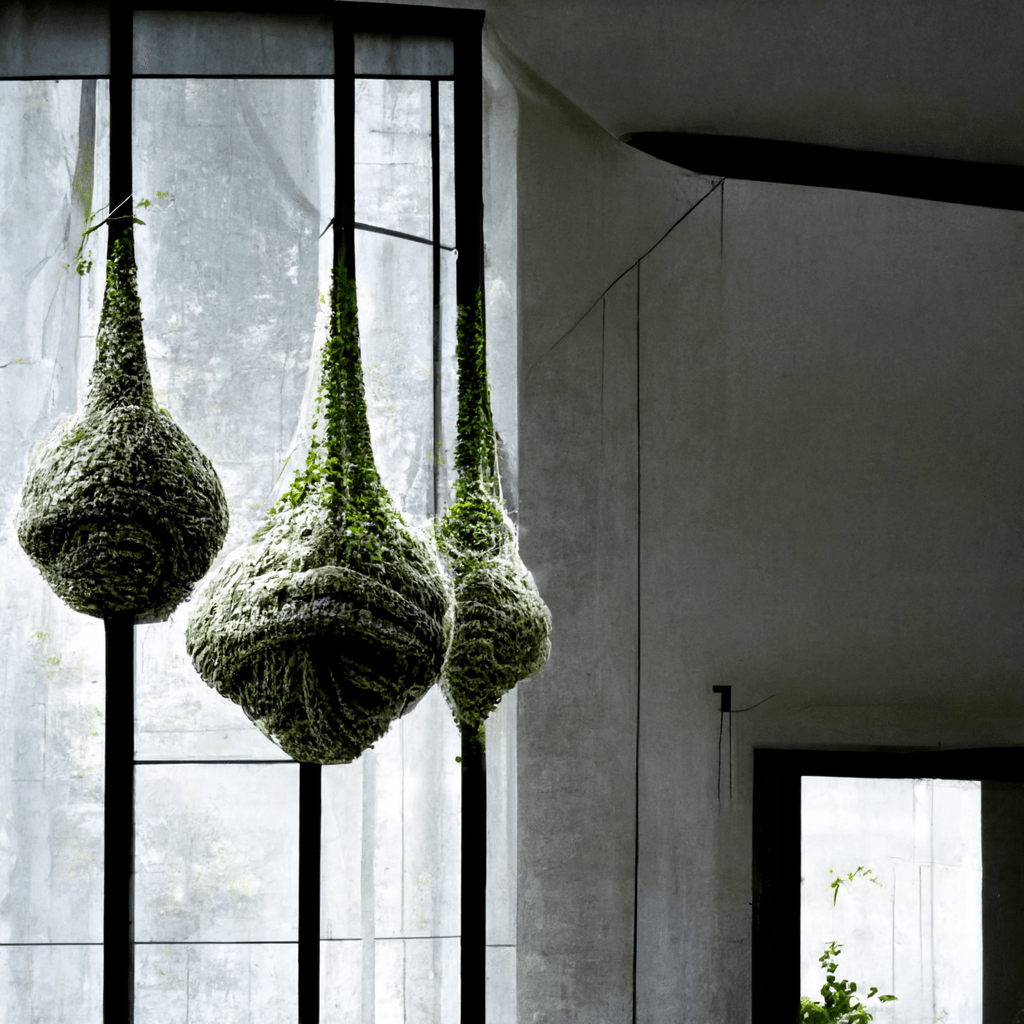

My educational background encompasses both sciences, with a BSc in Environmental Geosciences from the University of Bristol, and Leadership in Sustainability, through an MSc from the Blekinge Institute of Technology in Sweden. But, knitting has been a lifelong hobby, and I even worked with flatbed and circular knitting machines in my twenties, which I fondly recall.
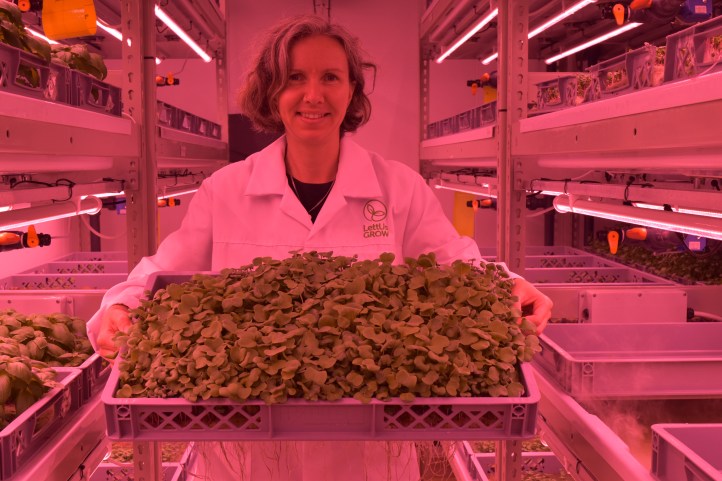
The fusion of textiles with my research journey began in 2018 when I embarked on a PhD in Architecture at the University of Portsmouth. This was a turning point that allowed me to combine my creative inclinations with my scientific foundation. I’m fortunate to receive guidance from mentors in the fields of Architecture, Textiles, and Ecology.
My creative influences are rooted in architects whose works embody deep attention to nature, such as Tomás Saraceno including his pioneering works made with spiders, Neri Oxman, known for her work at the intersection of biology and design, and Frei Otto, with his lightweight, sustainable architecture. In the realm of living textiles, I find inspiration in artists who explore innovative ways of combining textiles with living organisms.
I refer most frequently to the work of Jane Scott who works with architectural scale knitting combined with mycelium or bacteria, Teresa Murak who’s performance art of the 1970’s initiated the practice of plant-textile hybrids as artistic medium, Diana Scherer who really has led the modern scene of working with plant-textiles, and Svenja Keune whose deep research into plant-textile hybrids for interior architecture provided a foundation for my own research. I am currently transfixed by how Ruth Asawa and Cecilia Vicuña approach columnal textiles with an architectural scale.
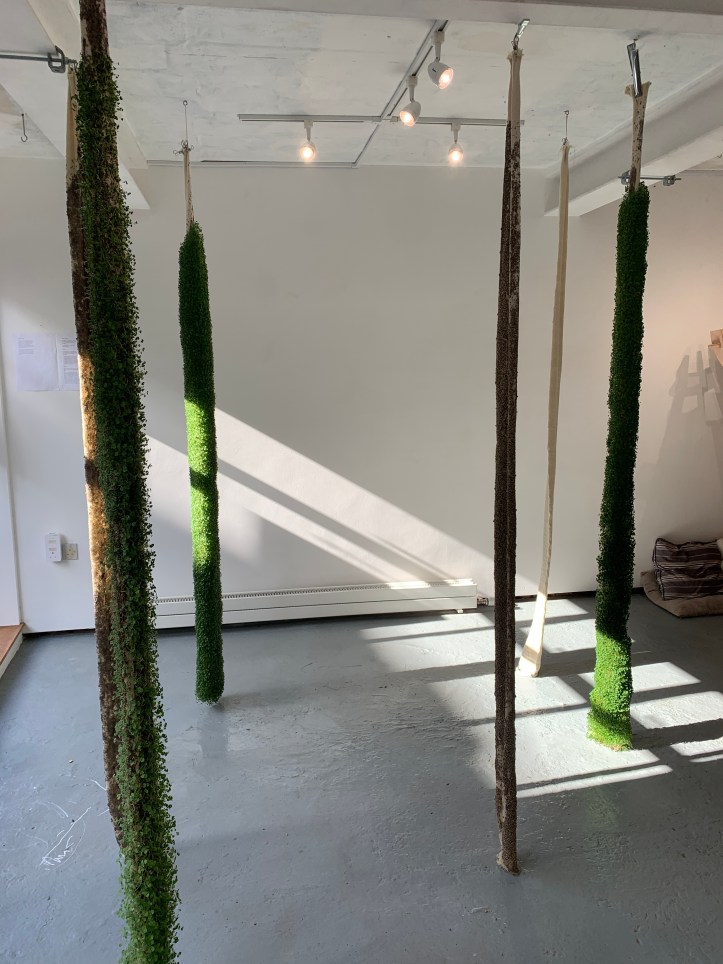
In my current projects, I’m honoured to be working on a commission from the Benton Museum of Art in Los Angeles: Stitch Field, on view from 14 February to 19 June 2024. Additionally, I’m on the cusp of embarking on an Arts Council England funded study (under Developing Your Creative Practice) that will incorporate ceramic vessels into my practice to support the care of my sculptures.
You can find me in my studio at Bristol Textile Quarter in Bristol, or follow my journey online at www.alicemariearcher.com and @alicemariearcherstudio on Instagram. I am also sharing my work through seam‘s touring exhibition A Visible THREAD.
Alice-Marie Archer




 seam
seam 