Julie Heaton is a Bristol-based artist who uses creativity to navigate traumatic loss. Always beguiled by fabric and thread, Julie creates narratives to hold unspoken stories with the hope to inspire conversations that might be difficult to have.
www.julieheaton.com
@julieheatonartist
Artist Statement for Warped and Wasted
‘Warped and Wasted began as an enquiry into my practice, how I could make with sustainability at the forefront of my mind. As an artist who stitches, I knew that I had to think beyond the thread. How could I create with environmental vigour, without buying new and without making waste? Concerned by the damage the textile industry inflicts on our landscape through making, consuming and disposal of the unwanted, I chose to create a fictional landscape. With my own shameful waste it was time to reflect what we can’t see and what we forget each time we buy more. To make space at home so that we can buy more, we donate to a shop of our choice. With a conscience cleared, our clothes left forlorn become the charity shop’s concern. A small percentage sold, what is left will be shipped overseas and a landscape once loved will see their unwelcomed demise.’
Details of individual work
How Can I Help It?, 2025
Materials: Unwanted clothing, stock yellow thread, rayon
Dimensions: Circular with a diameter of 2.2m

Ideas behind the work
I wanted the title to say several things – how can I change my shopping habit, or perhaps, how can I help it, we all need to wear clothes or how can I help make a difference?
I made the work to explore the theme of textiles being the second biggest consumer of water and is responsible for 10% of global carbon emissions. Across the globe, landscapes are being altered by the mountains of textile waste. Recycling and donating to good causes will not fix the problem, we need to wear clothes for longer and buy less often.
I also was also challenged by the project, my free machine embroidered artwork takes many hours to complete and the required longevity means that I have to work with colourfast threads.
How did I make the work?
I made the work by gathering all my unwanted and discarded clothes. With the theme of landscape proving to be the main focus, I constructed by own global landscape, stitching for hours to manipulate clothing with yellow thread, chosen for its international recognition as the colour to signpost toxic waste.
After Warped and Wasted
After the exhibition, I will store the work with the plan to exhibit it again in the future.
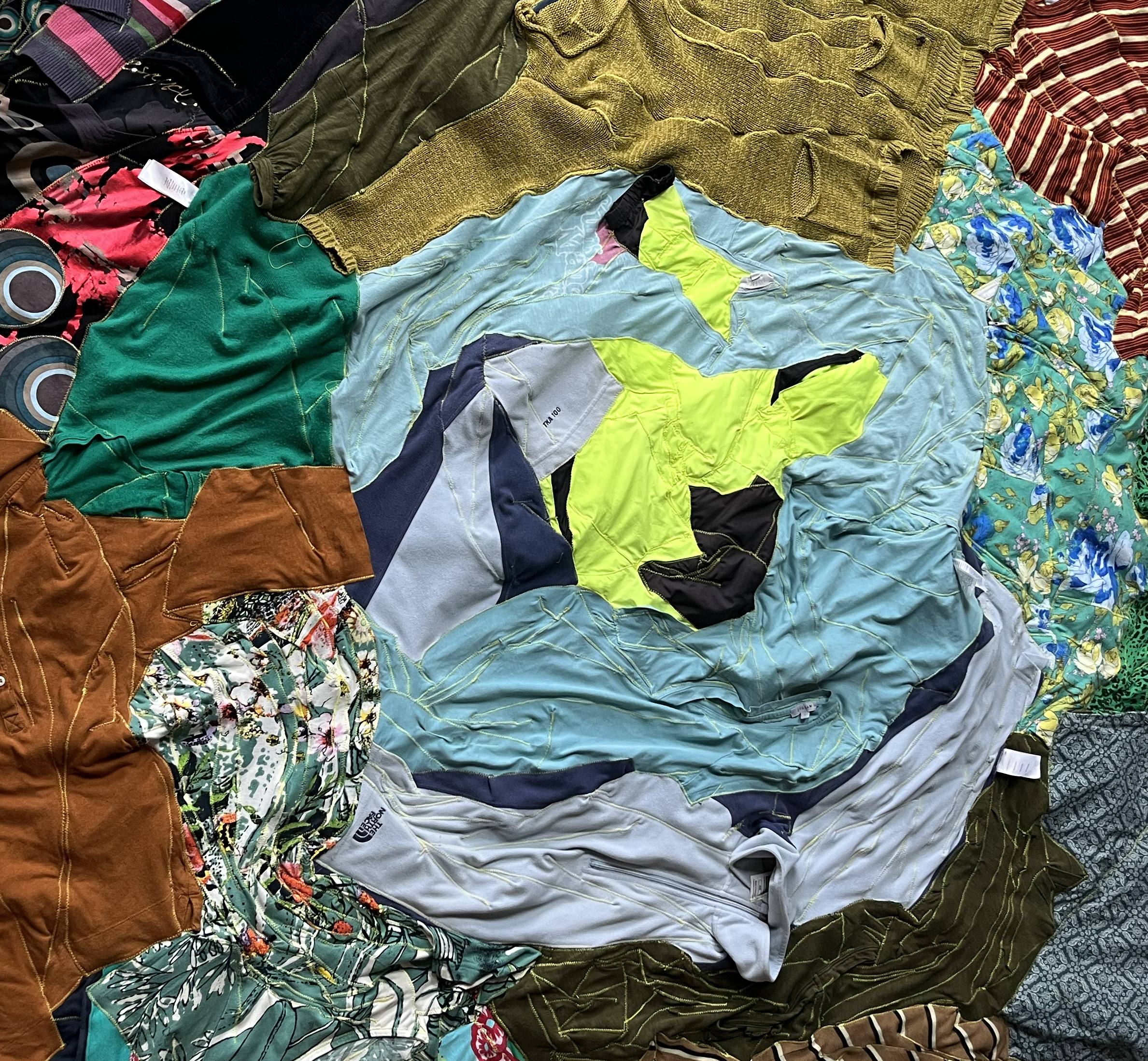


How Can I Help It? work in progress
Learning so far, August 2025
My learning from Warped and Wasted is both personal and creative, and currently stands as a series of questions not previously considered. Working on a project with my own waste clothes triggered a questioning of what happens to our clothes when we consider discarding them from our wardrobes. How much could the charity shop resell and what happened to the clothes unwanted by the public? What is the cost for the planet as the tons of rejected items lie abandoned, polluting and destroying landscapes oversea.
The questions brought me back to my textile based practice. I can’t work without using chemically dyed threads because they have to be colourfast for longevity. Whilst I can’t use biodegradable thread for my photorealistic drawings, I can take care to ensure that no harmful chemicals are used in the dyeing of my threads that I purchase.
My research has also opened my eyes to some scary facts and figures – textile waste is the third largest contributor to dry municipal waste, following plastics. It is also resource heavy. In 2020, the carbon footprint of textile manufacturing was 270g per person. Whilst my clothes are the biggest cost for the environment, I can’t dismiss my threads and fabric used for making. I always have waste threads and base fabrics. Could I reuse them in other work?
 seam
seam 