Helen MacRitchie is a textile artist based in Oxfordshire, exploring personal connections to the landscape and science, particularly medicine. Her practice generally uses hand felted wool, often naturally dyed and free machine embroidered with the inclusion of unusual mixed media to stretch our expectations of textiles in art.
www.helenmacritchiedesigns.com
@helenmacritchie
Artist Statement for Warped and Wasted
‘My pieces within this installation centre around the use of naturally dyed wool roving and yarn found in my stash and two sets of curtains from my home that were being replaced. It was important to me for this project that nothing was newly purchased, and that each material selected formed part of my developing narrative with sustainability. The wool roving (principally from Exmoor and Dorset Horn sheep, a local breed) was hand felted and hand spun before forming bindings around the curtain fabric or knitted into cords. Recycled horseshoes from my local riding school in Oxfordshire fit into this landscape, embedded in the felt.’
Details of individual works
Rolling Hills, 2025
Materials: Hand felted wool and yarn naturally dyed, polyester curtain fabric and rings
Dimensions: 160cm x 220cm
Rolling Hills reflects the patchwork nature of the local agricultural landscape in wool while the border rings retaining a connection to the domestic nature of the original curtain.
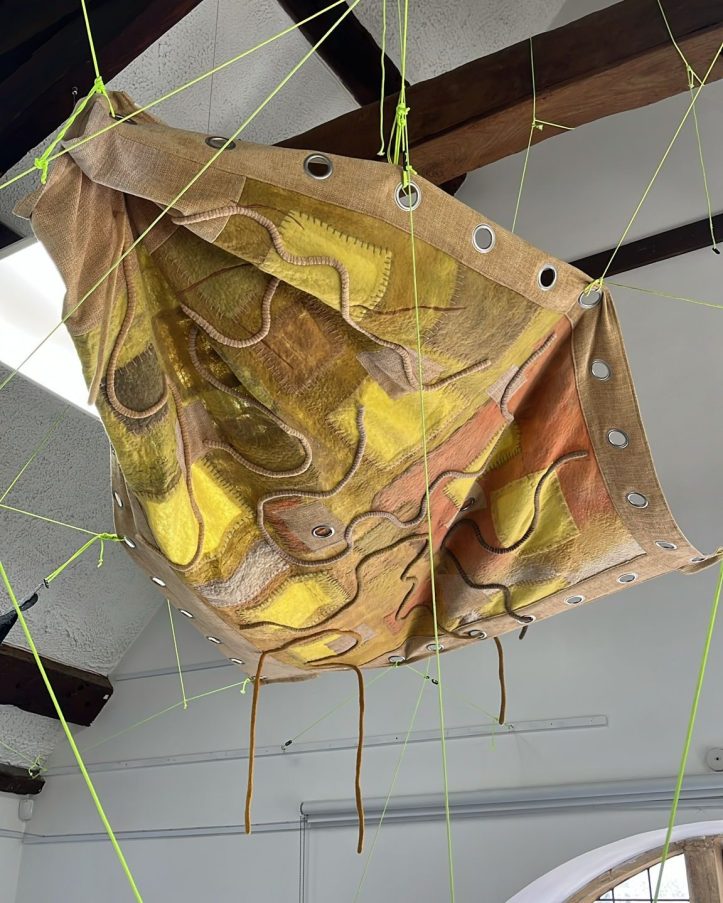


‘Rolling Hills’, 2025, work in progress
Warped Weavings, 2025
Materials: naturally dyed wool yarn, synthetic yarns and fabric strips
woven on a loom, then wet felted to distort
Dimensions: 90cm x 120cm
1 piece
Warped Weavings merges recycled synthetic fabrics with naturally dyed wool yarn in a densely felted distorted landscape.
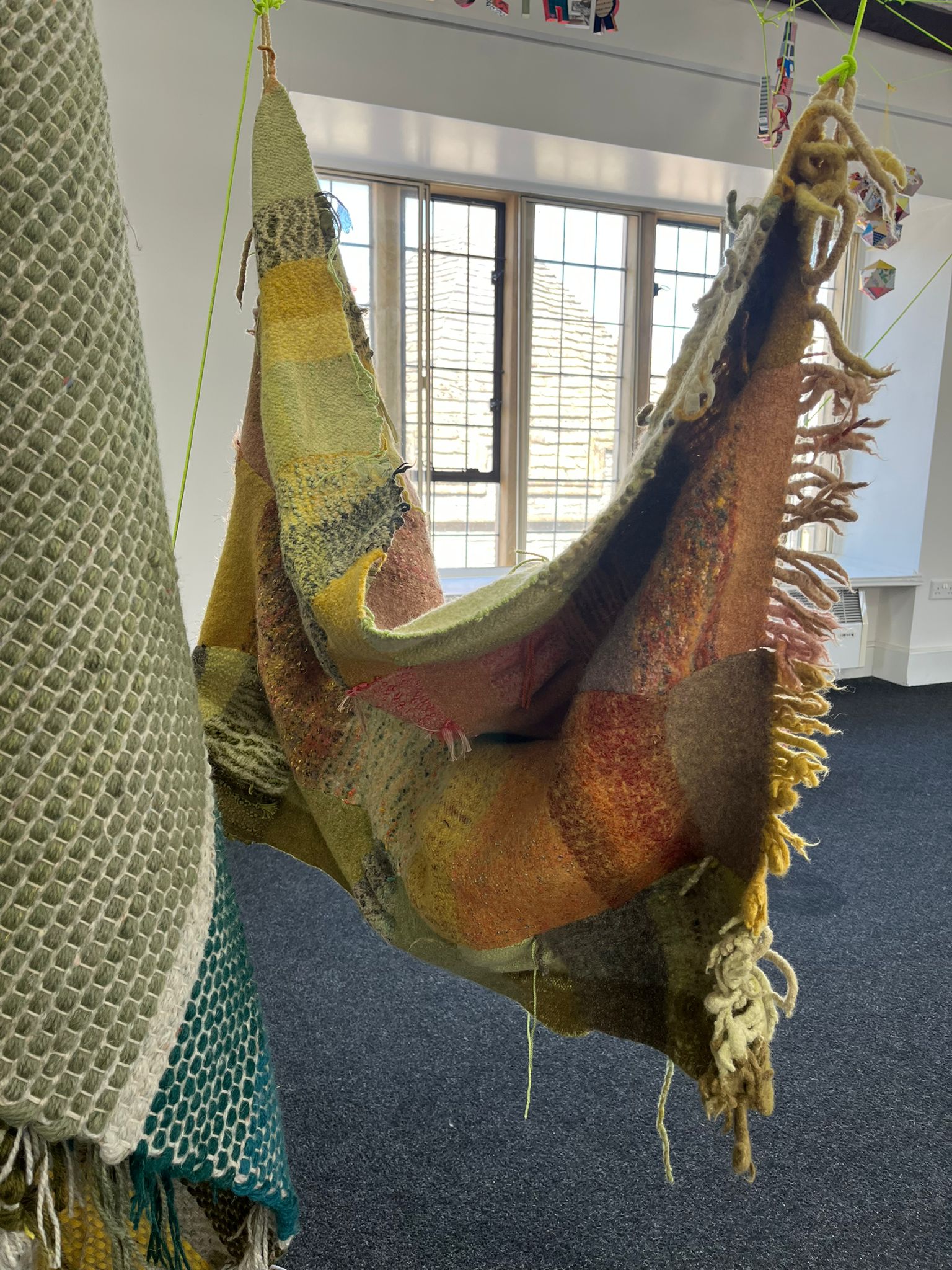
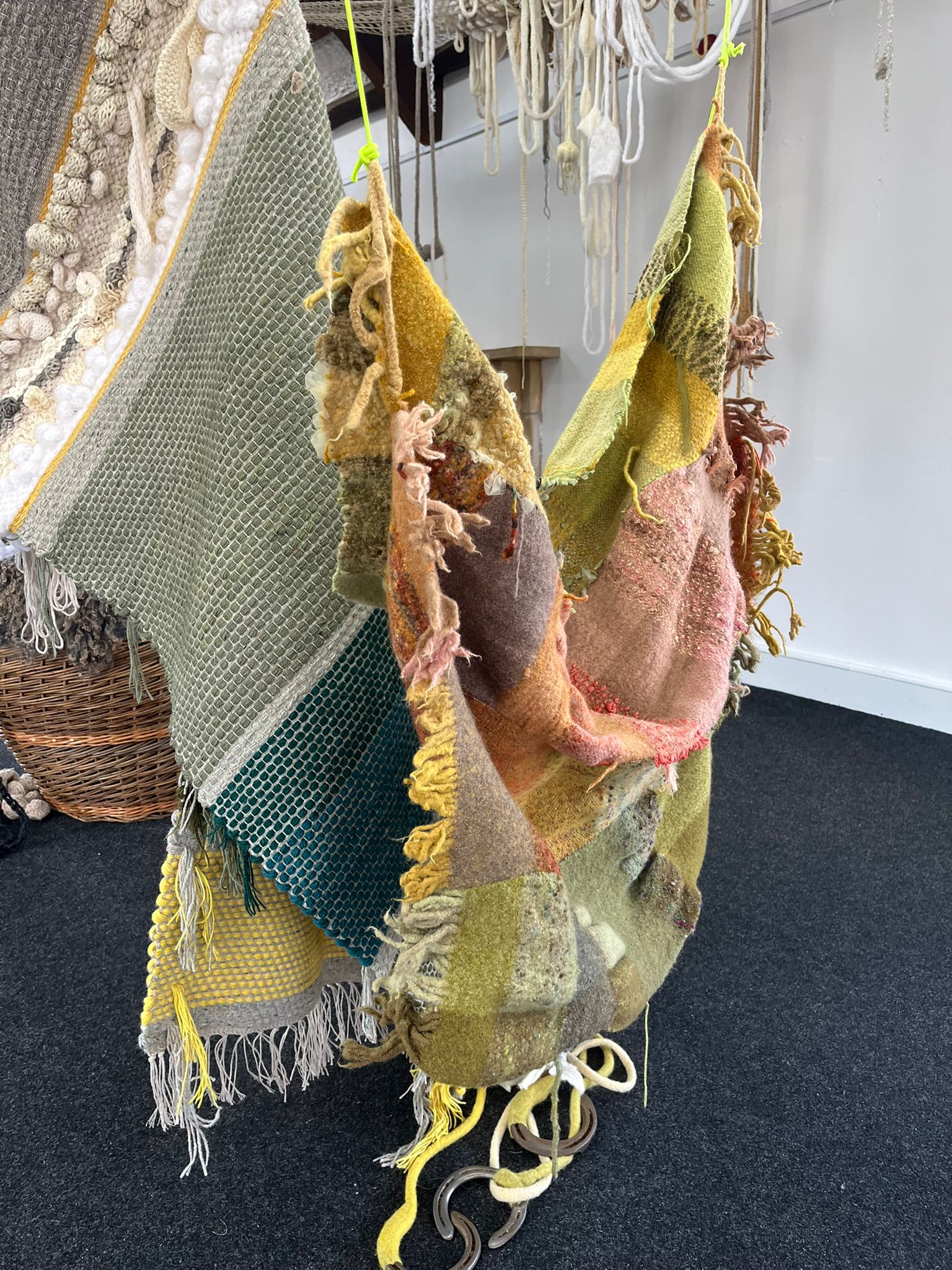
‘Warped Weavings’, 2025, installation views
Bindings, 2025
Materials: recycled polyester curtain fabric, naturally dyed wool, recycled curtain rings, recycled horseshoes
Comprises 20 bound ‘tubings’ hung together
Each tube is approx 170cm long and 20 of them hung together stretches to about 2.5m depending on how close they hang.
Bindings presents a reimagined open curtain screen with elements connected physically in colour and texture.
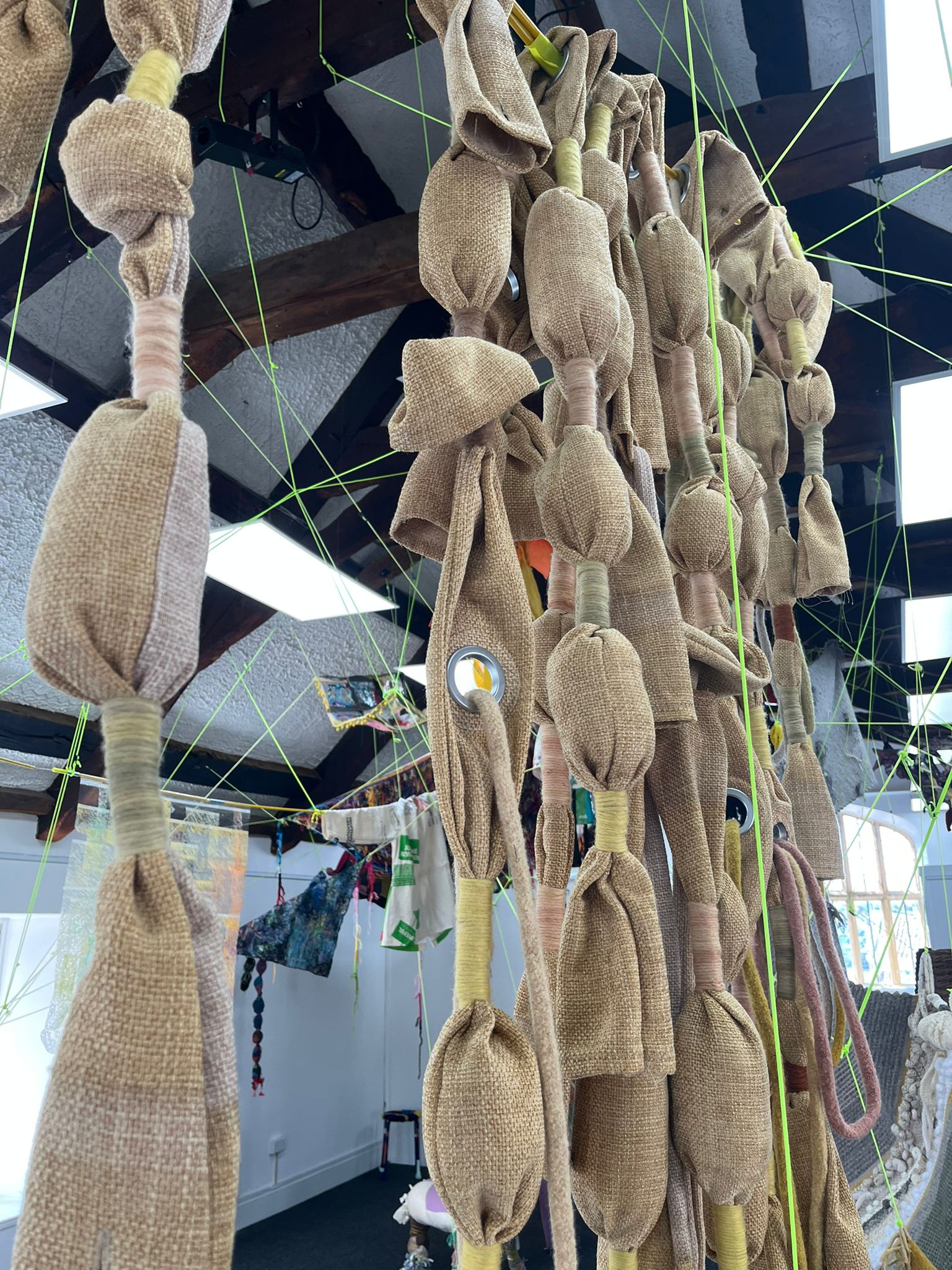

‘Bindings’, 2025 installation views
Natural dyeing of wool roving and yarn
Using natural dyes plays a significant part in my sustainability journey during this project. All the dyes were created from vegetation foraged in small quantities from my immediate surroundings in Waterstock over the last 18 months. Each batch of liquid dyed approximately 50g mordanted wool, and as I used each supply, its source was documented.
- Leaves – rosemary, walnut, elder, willow, fig, ivy, eucalyptus
- Blossom – blackthorn, hawthorn
- Bark – wild cherry, apple, oak, plum
- Flowers – fallen rose petals, cowslip, dandelions
- Walnut hulls
- Oak galls
- Avocado pits
- Onion skins
Some of the dyed wool was then modified with homemade rust water or copper water to alter the colour.
 seam
seam 