seam collective’s recent exhibition, Warped and Wasted at ACEarts, explored environmental themes through inventive textile art, and the response from visitors has been overwhelmingly positive. We recently held a series of focus group sessions to understand how audiences experienced the show, and we were delighted by what we learned.
Seeing Waste in a New Light
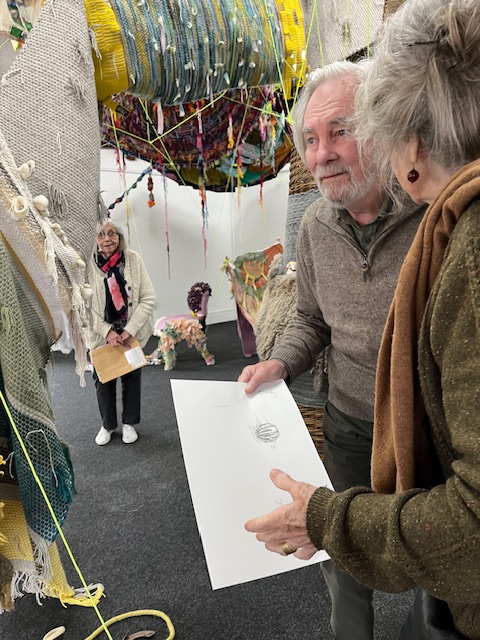
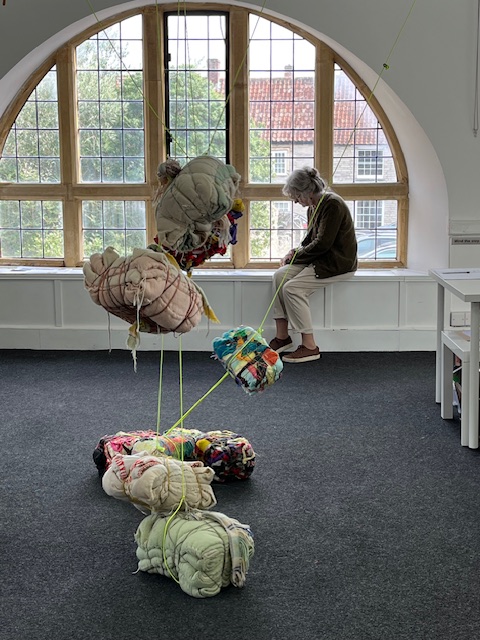
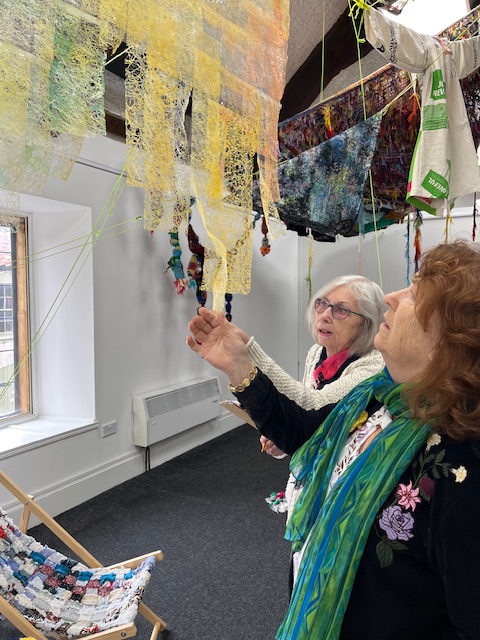
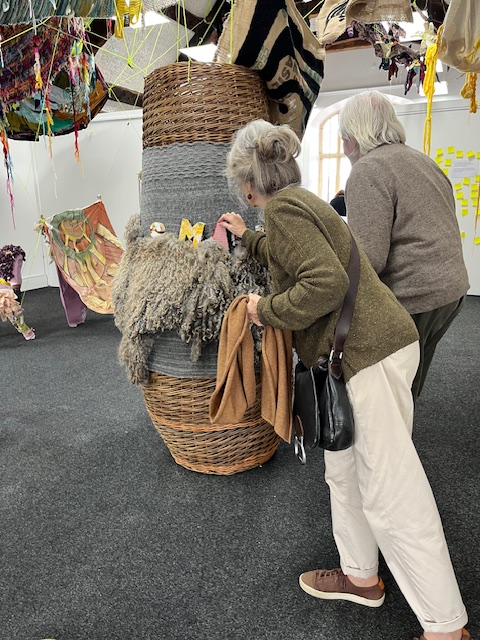
Participants were struck by the creative reuse of materials, particularly tent fabric from a local music festival. Many commented on the yellow string element, which tied the works together both conceptually and visually. Visitors told us it made them rethink everyday materials and inspired them to see “waste” in a more imaginative way:
‘I’ve been inspired to look at my fabric stashes in a totally different way.’
‘It makes you see waste and materials differently… there’s so many ways of reusing.’
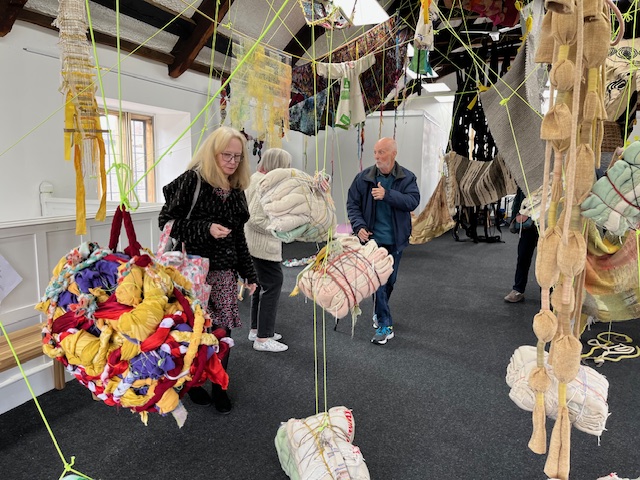
The exhibition’s playful and colourful presentation also made serious environmental issues approachable. Rather than leaving visitors feeling overwhelmed, it inspired curiosity, optimism, and a sense of agency.
Collaboration at the Heart
Our audience loved hearing about the collaborative process between artists and curators. They appreciated how individual works retained their integrity while forming a cohesive, connected experience:
‘It’s not the result but the process that was important.’
‘Some of that is to do with the individual works, and some is how the curators got the works to connect.’
Artist talks and conversations gave participants insight into the creative process, adding depth to their experience and sparking reflection:
‘It was really good to have an artist talk about their thinking and making process.’
A Joyful, Interactive Experience
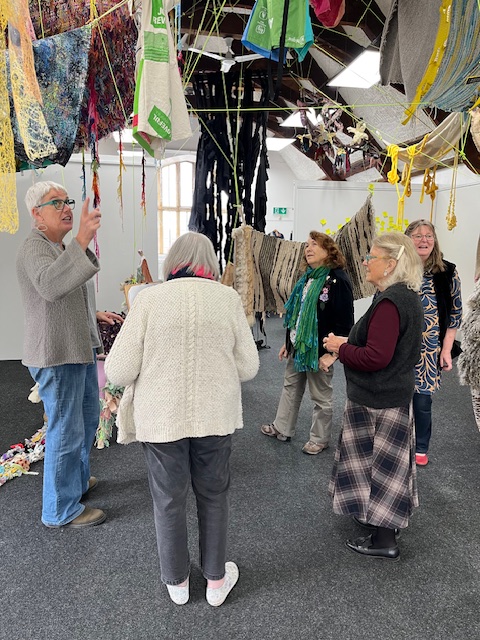
Visitors described the exhibition as ‘a joy to walk through‘ and praised the modular design, which could be reconfigured in different ways, a playful metaphor for adaptability and sustainability. People valued the variety of approaches and materials, noting how versatile textile art can be in exploring environmental themes.
‘The whole thing is such a joy to walk through.’
‘I’ve told lots of people they should attend.’
From Awareness to Action
Most importantly, the exhibition seemed to spark real reflection and action. Participants reported a shift from passive concern to active engagement with environmental issues, including microplastics, textile waste, and sustainable materials.
‘We all feel so impotent to do anything about the environment but everyone creates microplastics… retrofitting our washing machines to filter these out is something we can all do.’
Methodology Behind the Insights
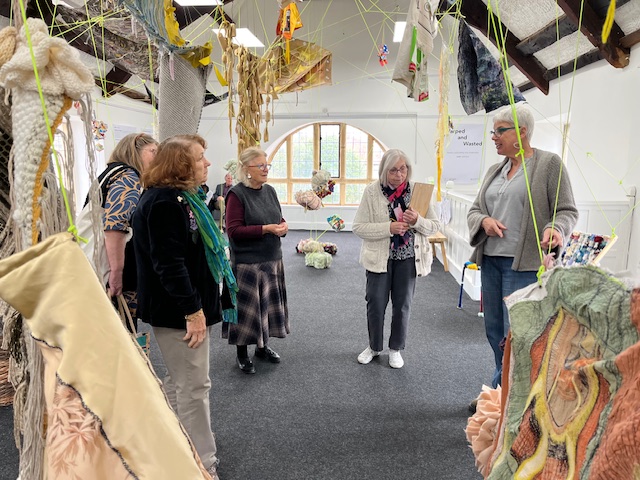
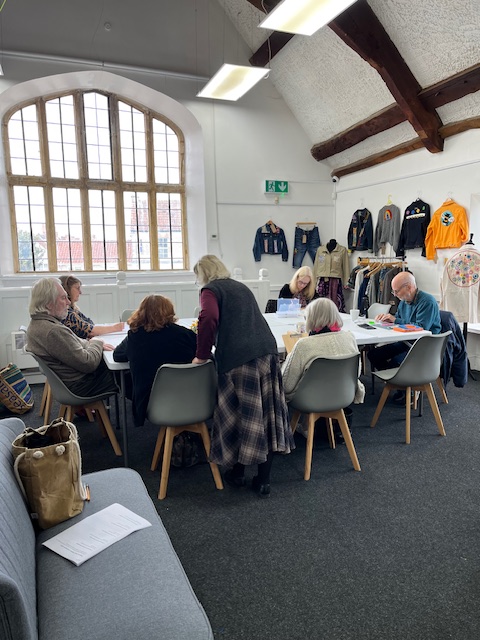
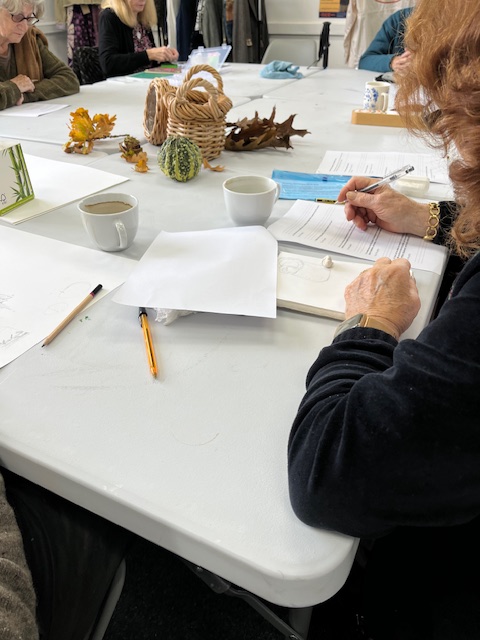
To gather feedback, we ran three focus group sessions with 6–8 participants each, chosen to reflect a mix of local community members and gallery visitors. Each session took place within the exhibition space, beginning with an introduction to the works and creative process. We provided questions on paper but encouraged open conversation, allowing participants to share thoughts freely and reflect together.
In Conclusion
Warped and Wasted achieved more than presenting art; it created a space for conversation, reflection, and empowerment. Through creative reuse, collaborative curation, and a playful approach, the exhibition inspired our visitors to see, think, and act differently about the environment. As one participant put it:
“It was an excellent response, you weave us all together.”
Nina Gronw-Lewis and Lydia Needle
 seam
seam 