‘ …change can start with just a needle and thread.’
Here at seam collective, we celebrate the fact that each member has their own unique style and distinctive methods of making. However, it does mean that the prospect of collaboration is quite an interesting challenge! We all work in different ways – some need to start with thinking through reading and developing ideas, others need to start with thinking through making and materials; some of us make largescale installations, others prefer the intimacy of small works; some make beautiful and functional objects, others make troubling sculptures. How do we find a way to work together to create something thought provoking and aesthetically pleasing, which also honours our individuality and our different practices?
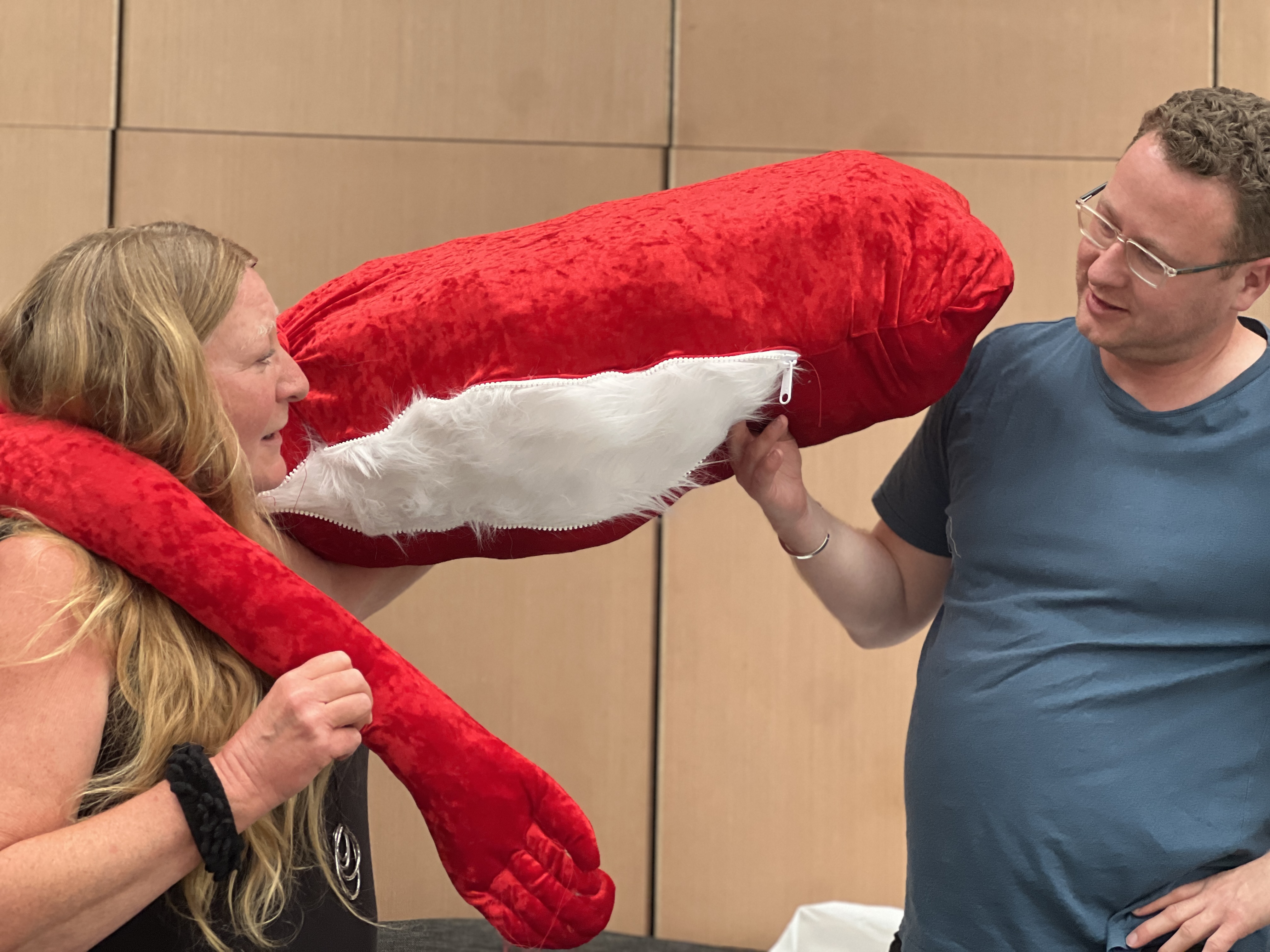
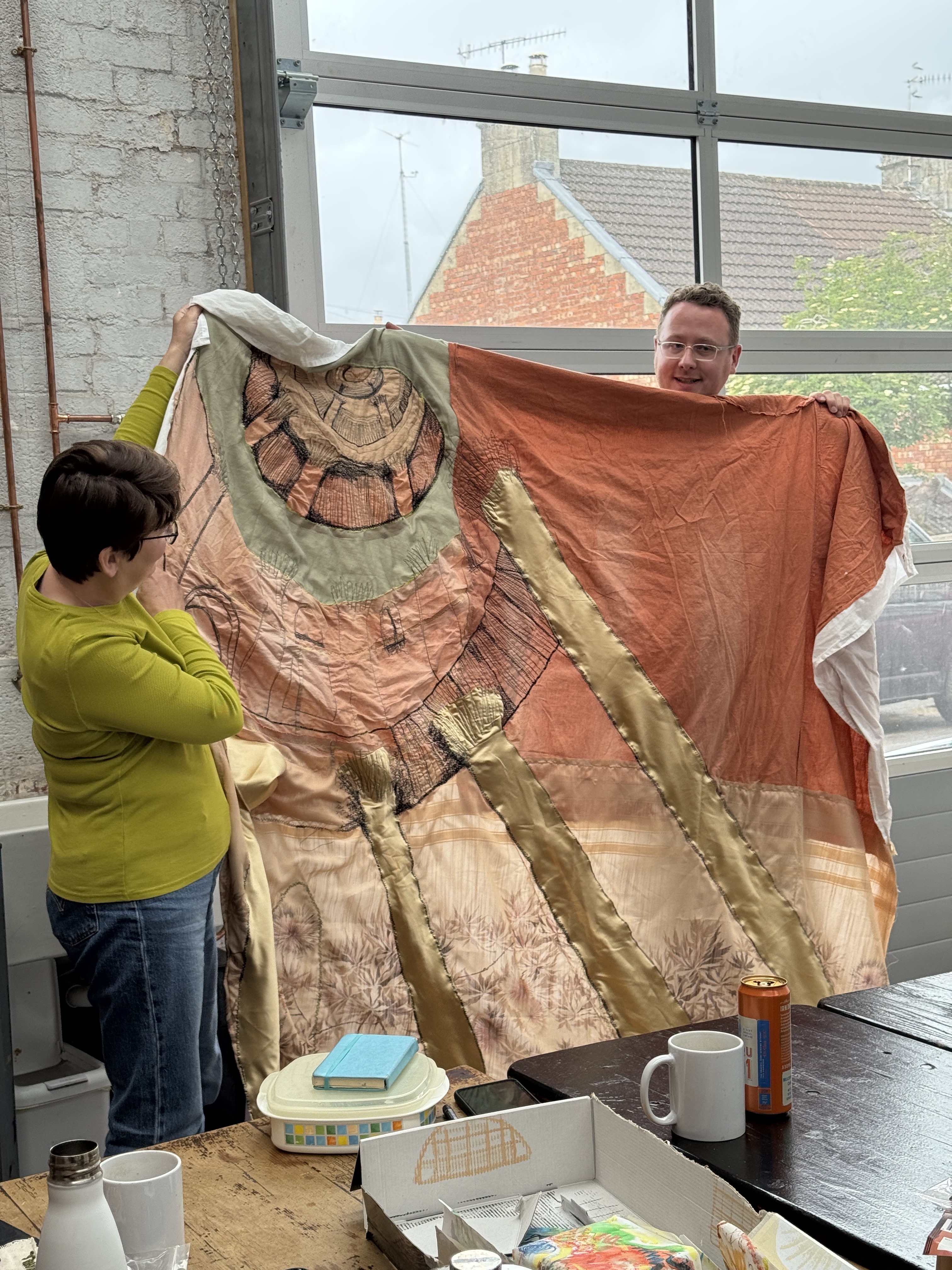
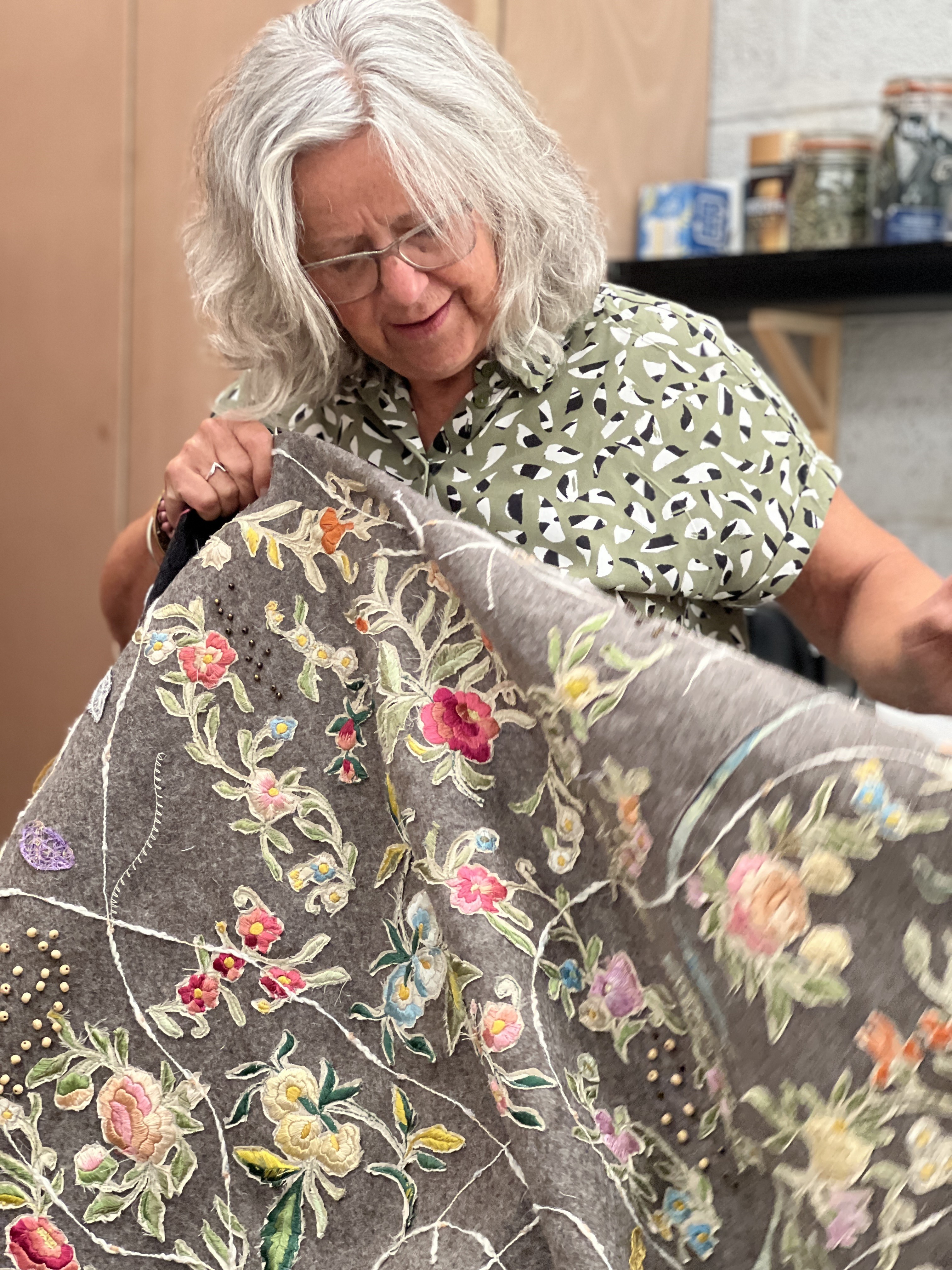
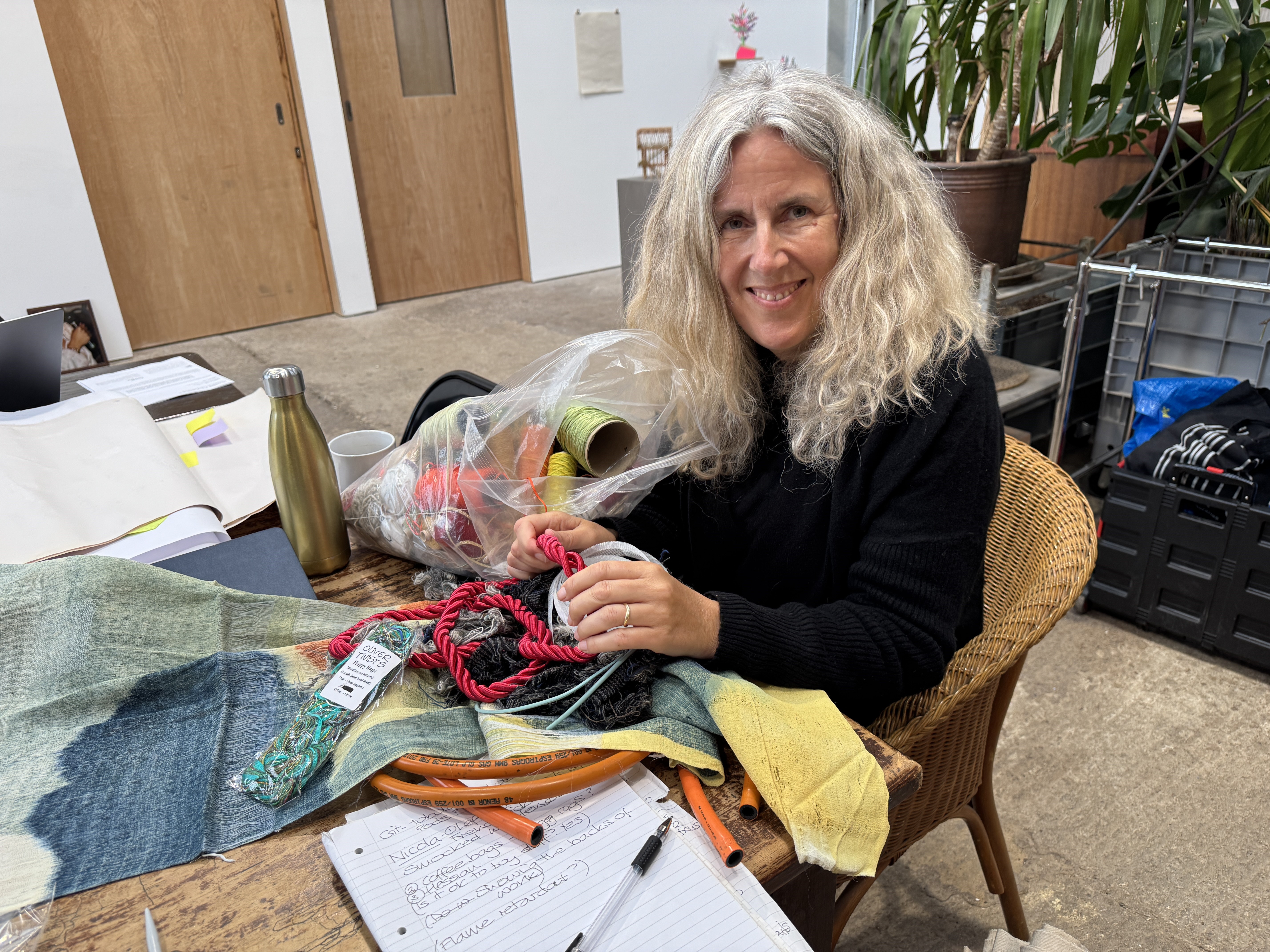
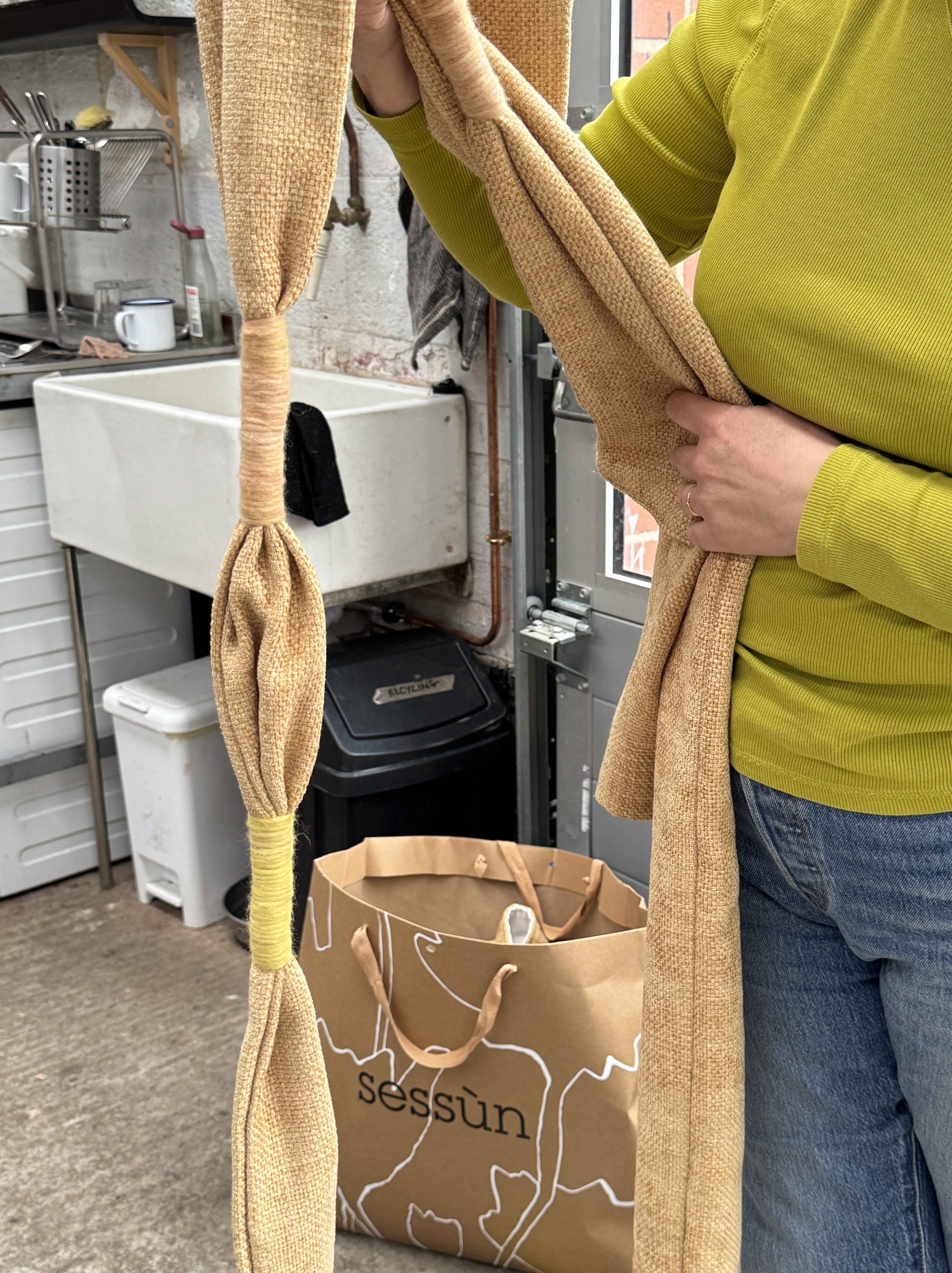

Just a few examples of the wonderfully diverse practices that make up seam collective!
After Collaboration Meeting 3, we still felt that we needed a clearer plan for Warped and Wasted, so we had an extra, online meeting before our final collaboration meeting to discuss what we were going to make and how we might bring everything together as a largescale installation. It was very helpful!
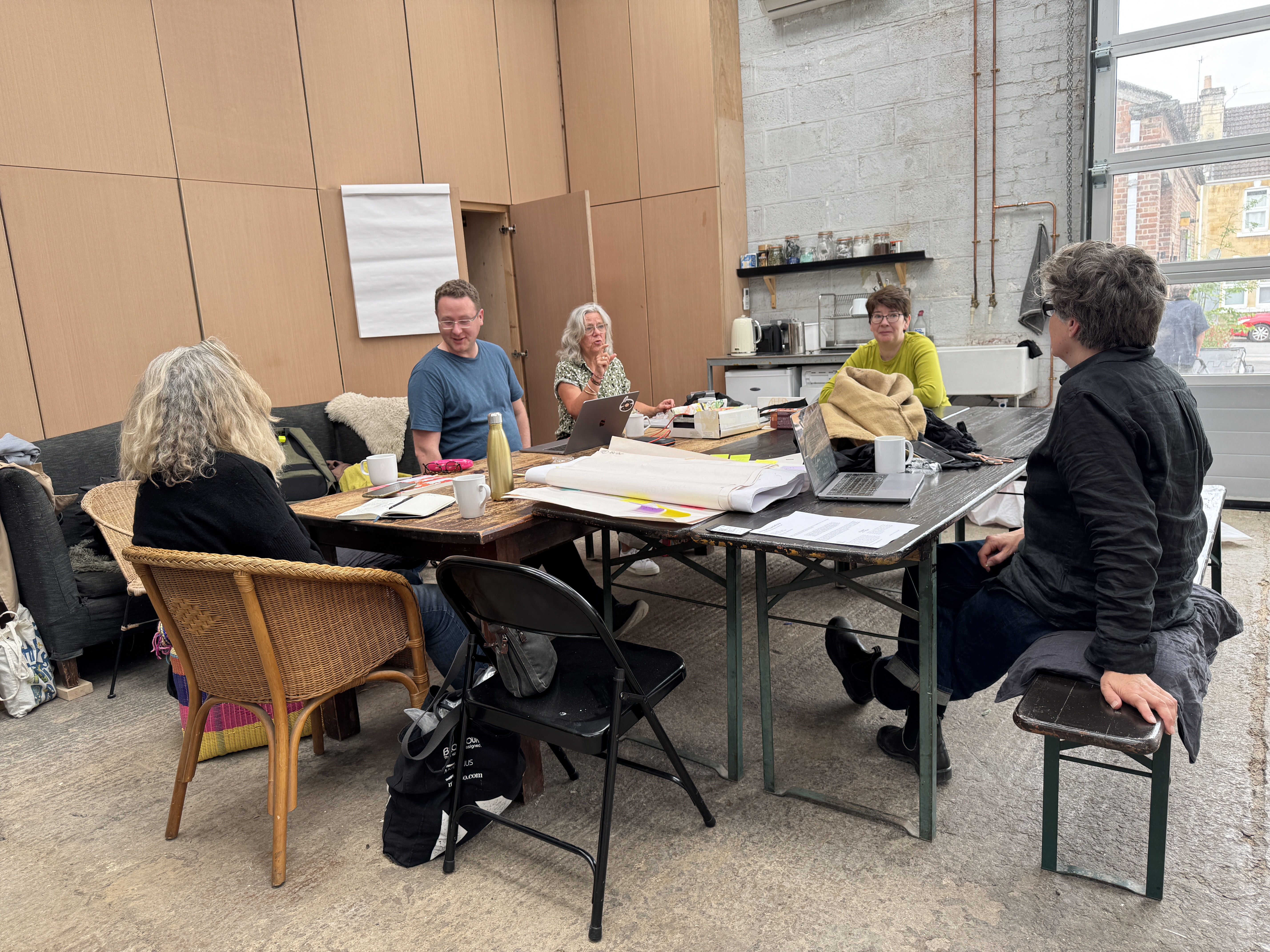
L-R Penny Wheeler, Oly Bliss, Joy Merron, Helen MacRitchie, Nicola Turner
(and Lou Baker took the photo!)
‘… learning together about sustainability and regeneration is the most important part of the Warped and Wasted collaboration – all our individual journeys combined become seam’s journey.’
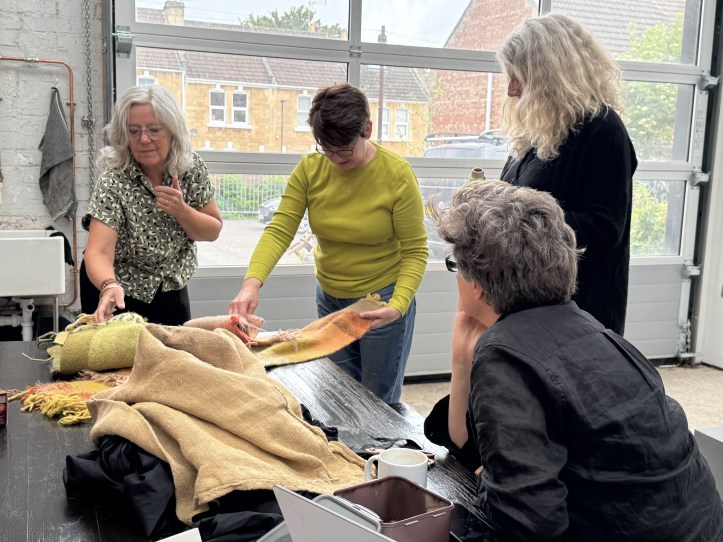
Helen describing her experiments with weaving together and then felting natural and sythetic materials from her stash
We are embroiderers, sculptors, knitters, weavers, dyers, fine artists, felt makers, book makers, installation makers, socially engaged artists… and more. We’re connected by our love of textiles, by being part of team seam, but also by our care for the environment. Through all our recent in-person and online collaboration meetings, we’ve come to the conclusion that learning together about sustainability and regeneration is the most important part of the Warped and Wasted collaboration – all our individual journeys combined become seam’s journey.
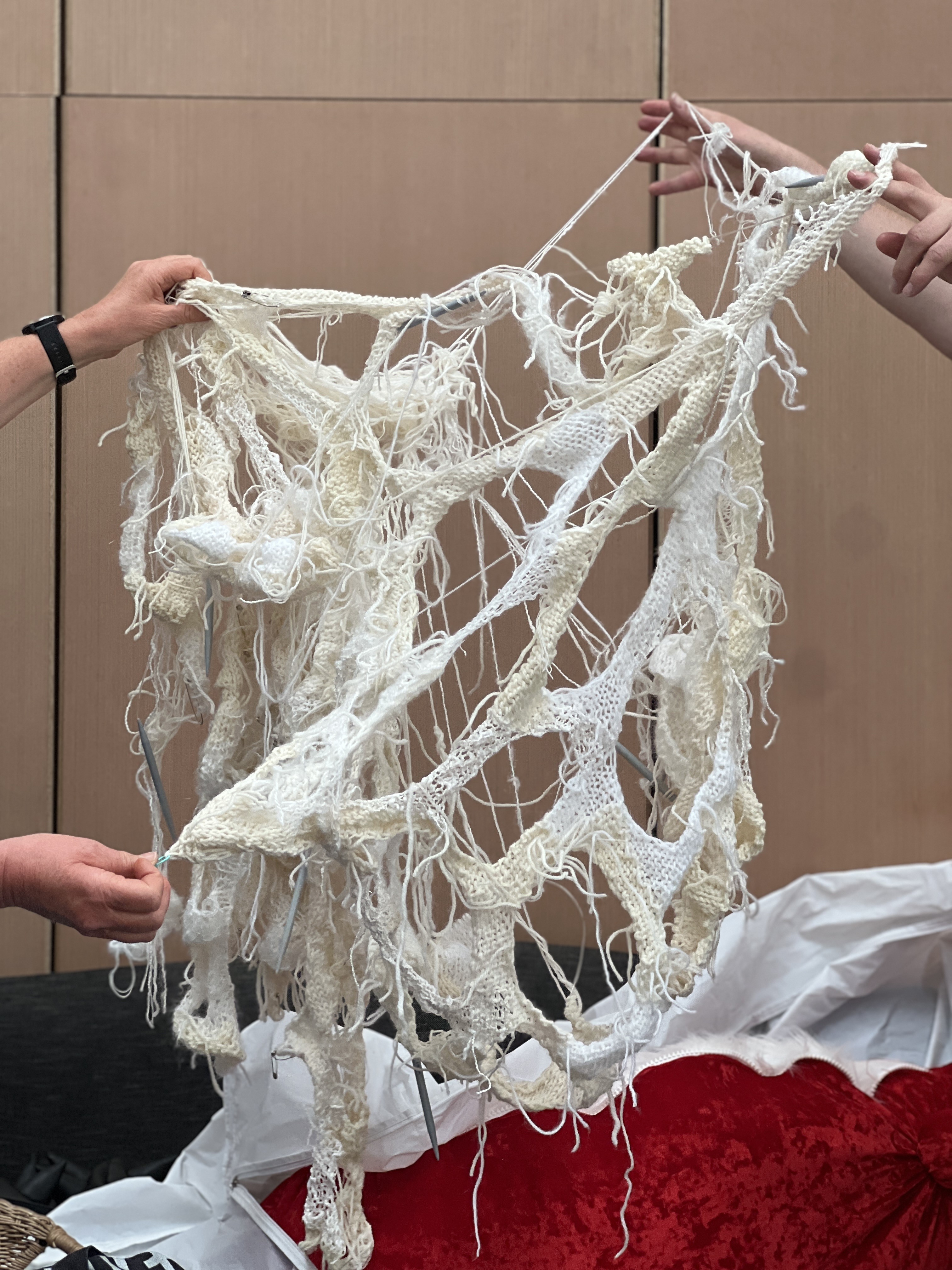

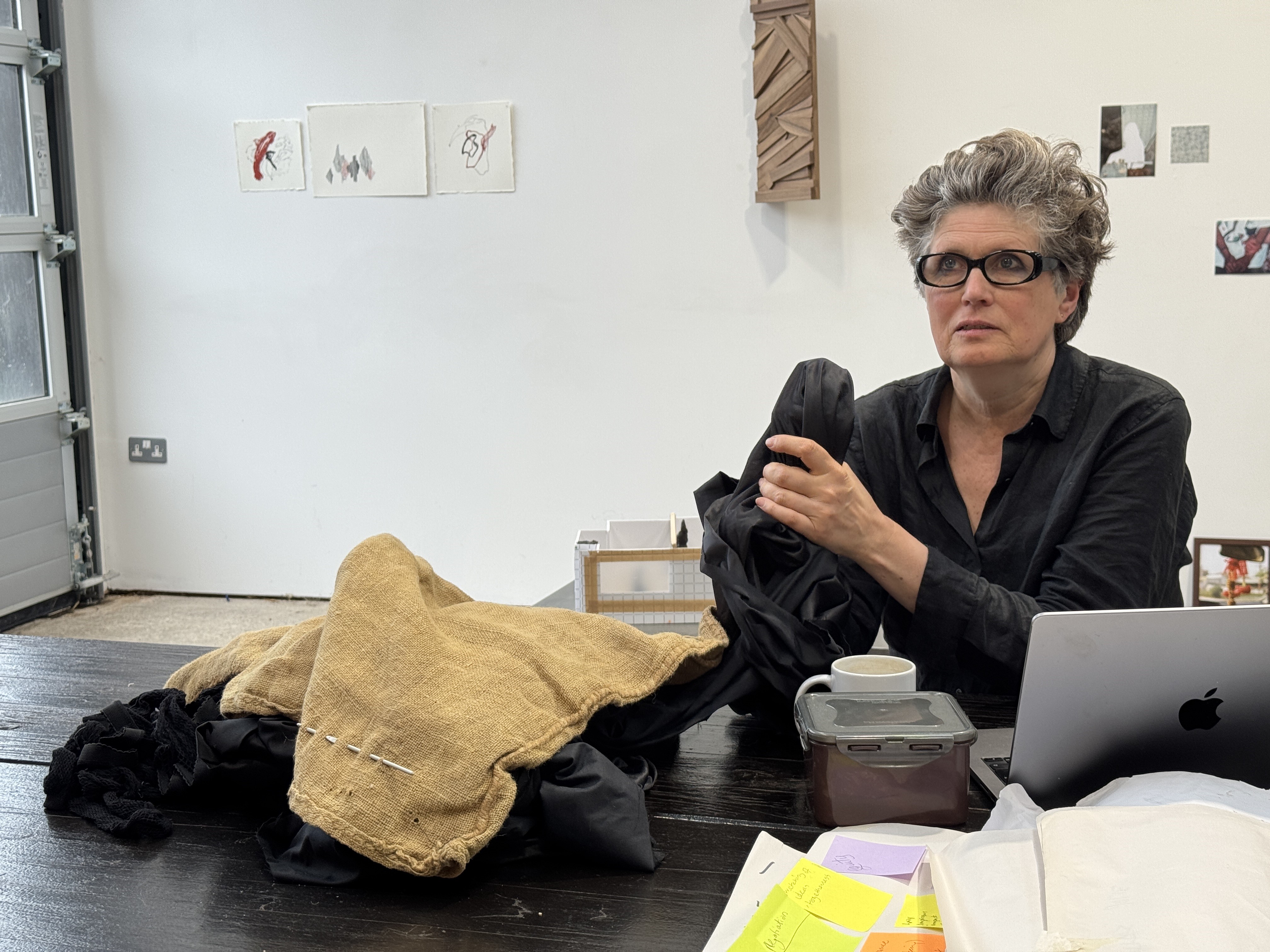
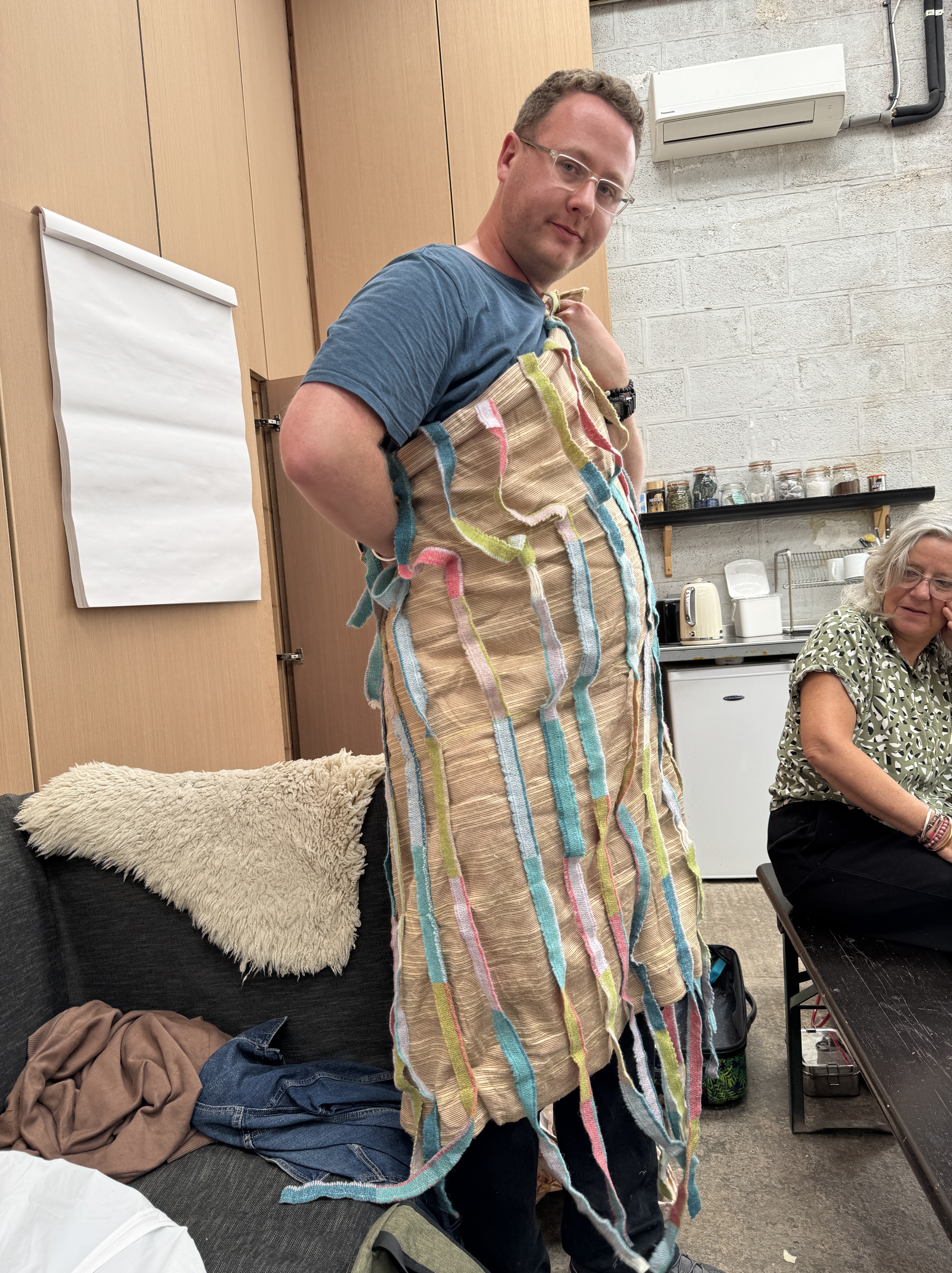
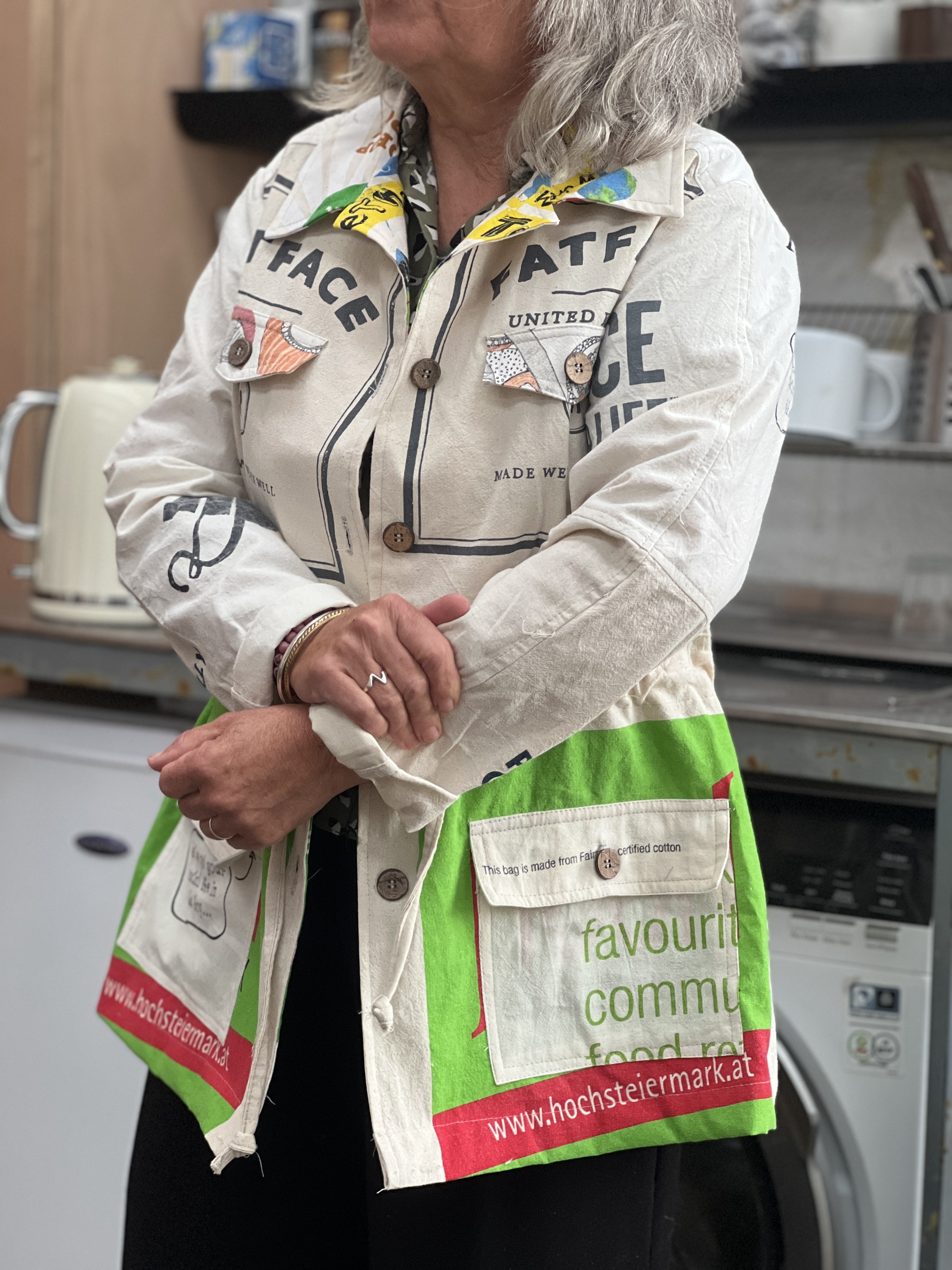

More examples of the wonderfully diverse practices that make up seam collective!
Consequently, we’ve decided that, for Warped and Wasted, each of us will focus on sustainability in our own practice, working in whatever ways suit us but in ways that will also move our practice forward in terms of sustainability. We’re hoping we can all make work that can have another life or that can be exhibited in another setting (after the Warped and Wasted world tour?)
A making manifesto
We’ve now come up with a ‘making manifesto’ for team seam for this next phase of the collaboration. It’s finally time for some making. Hurray!
- Take this opportunity to experiment, play. Be free!
- Make work that works for you – outside your comfort zone or within it, any size, multiples or whatever.
- Use your own stash, second hand or biodegradable materials. Where possible keep the synthetic separate from the natural fibres.
- Let’s buy as little as possible. If you need to buy something, consider its sustainability.
- Be flexible about how your work will be installed. Don’t worry too much about the final form at this point.
We decided that we’d each write down our intentions – ie what we think we’re going to make or what we’d like to make – to share with everyone. It all might change, but sometimes it helps to tether your thoughts. Everyone’s intentions will be different and it’ll be interesting to look back at them. It’s certainly been inspiring to read what everyone is planning so far!
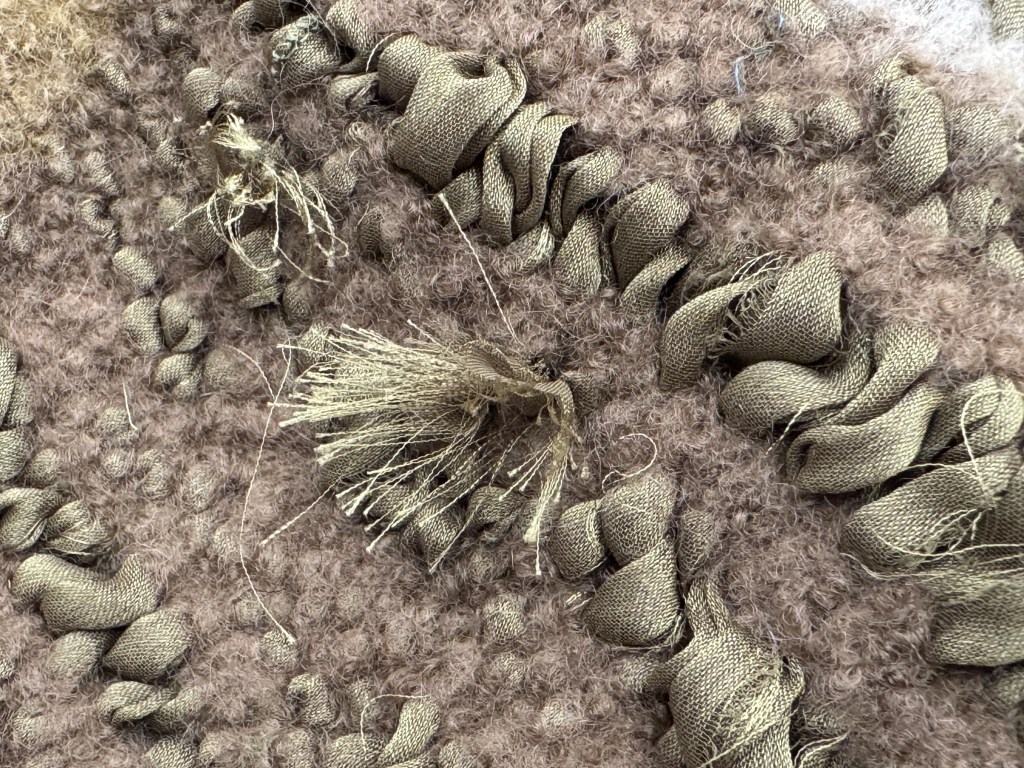
Helen MacRitchie – felted weaving with natural and synthetic materials from her stash, detail
‘Each person’s journey to a more sustainable practice will be different, but there will almost certainly be common threads.’
As we’re making, each of us will document the materials we use and any related dilemmas and questions too and we’ll find a way to share that as part of the final exhibition. Each person’s journey to a more sustainable practice will be different, but there will almost certainly be common threads. We’re looking forward to finding out what they are!
We also now have a small team of curators – Nina, Nicola, Joy and Lou – who will work with one of our external mentors, Judith van den Boom, to plan, create and set up the final installation. We want Warped and Wasted to be quite different from our recent touring A Visible THREAD exhibition, where each artist showed their own work separately. The issues surrounding textile waste are overwhelming, so, for Warped and Wasted, presenting our individual works as a highly tactile, large-scale installation seems appropriate. The curators will find ways to make the different works connect and ‘hold hands’, transforming the gallery at ACEarts into an intriguing, walk-through installation.
Connecting textiles and the environment through care
In the middle of the last century, American philosopher and conservationist, Aldo Leopold’s visionary ‘land ethic’ was a call to action, for humans to ‘simply care’ for the natural world (The Aldo Leopold Foundation, 2025). seam collective sees important connections between the associations with care in our use of textiles, and the way we care for the environment. Cloth provides our bodies with care from the moment we’re born until the day we die; it clothes us, protects us, warms us, comforts us and more. Many textile processes are slow labour and involve care; so with these processes and materials we want to also care for our planet.
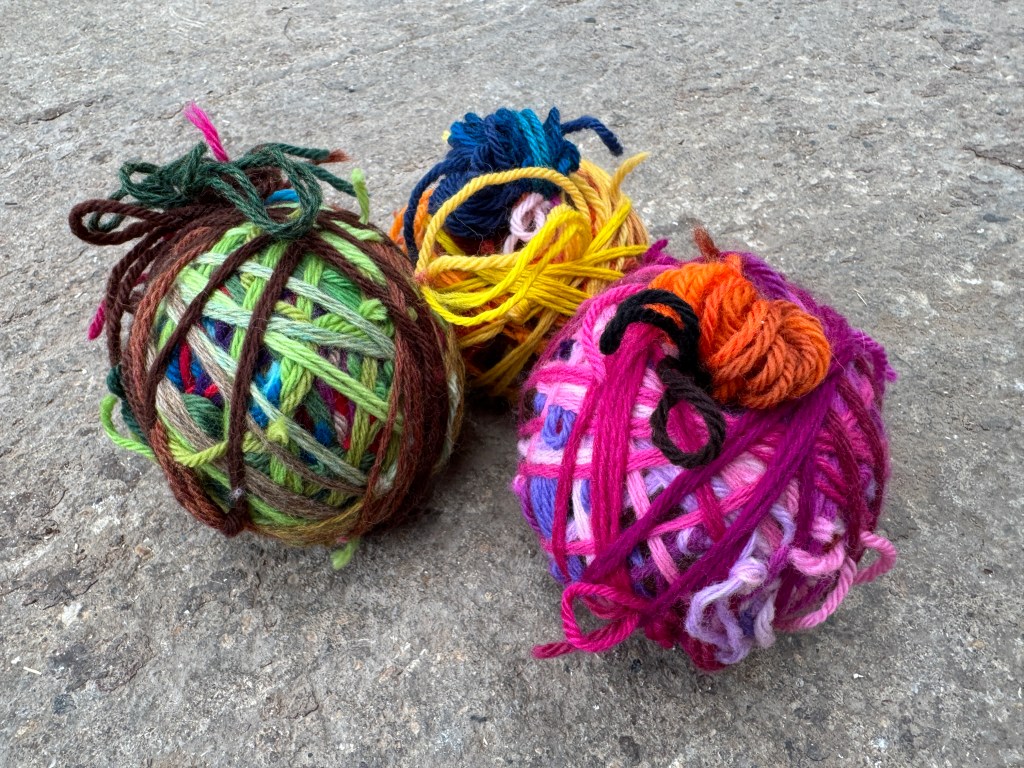
Lou Baker – making ‘new’ yarn with loose threads cut off her knitting over the past 15 years or so (and collected, of course!)
‘ …change can start with just a needle and thread.’
Rose Marcario
Rose Marcario, former CEO of the clothing company, Patagonia, says that ‘ …change can start with just a needle and thread’ and suggests that ‘Repair is a radical act… and so is making when deeply contemplating the fibres and materials used and the layers of meanings from their history and origin that they bring to a work’ (2015).
Let the making begin!
During our final in-person Collaboration meeting we had a very inspiring and enjoyable time talking through our intentions for Warped and Wasted. Some of us had already started making, so we showed these works in progress; others talked about what they were planning to make. It’s amazing how differently each person is approaching this project and the results are really exciting.
‘Transforming waste materials into art is about reuse, care and regeneration.’
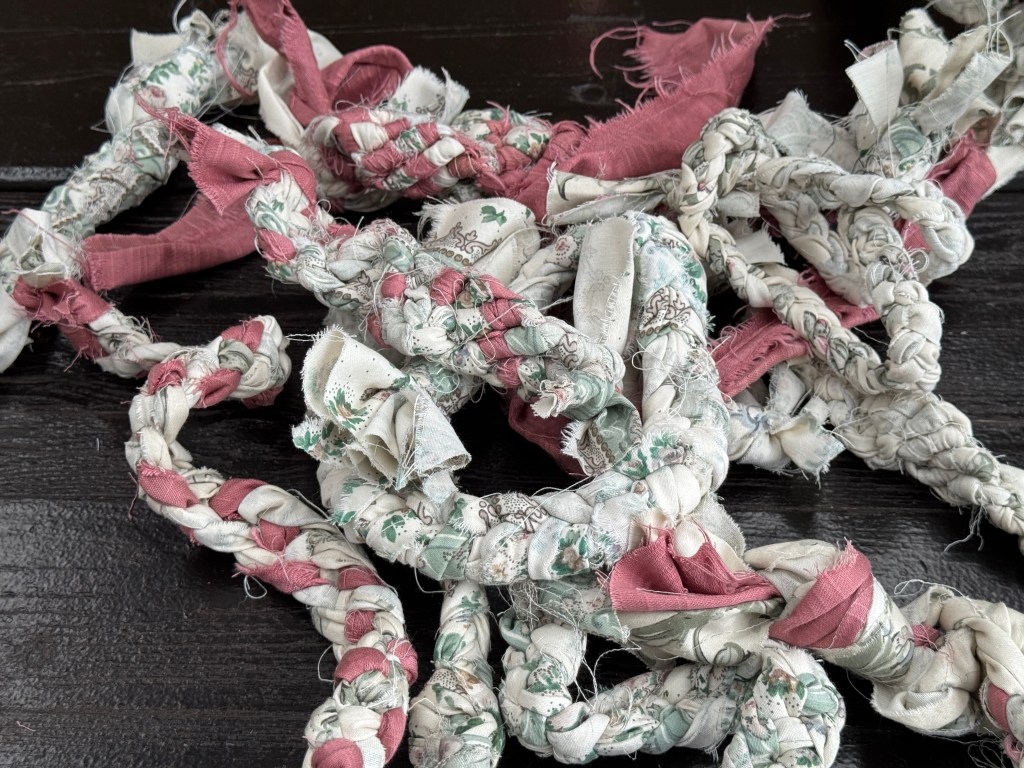
We did have a long discussion about our stashes too. Is it an issue that we’re potentially calling our stashes waste, especially as most of us are women? There sometimes seem to be negative connotations with women and hoarding. However, we all regard our stashes as potential or treasure. Transforming waste materials into art is about reuse, care and regeneration. It extends their life. In parallel with this, though, we do acknowledge that parts of our stashes possibly aren’t biodegradable, so in time will be problematic in terms of disposal ie it will become textile waste. If we transform what we have now, maybe our new stashes will be more consciously sustainable after Warped and Wasted?
‘… the history of activism shows us that relatively small actions can make big changes.’
It’s clear that Warped and Wasted won’t solve the overwhelming issue of textile waste. However, the history of activism shows us that relatively small actions can make big changes. We hope that by sharing seam’s collaborative Warped and Wasted journey – what we are learning and what we make – through the installation and the accompanying day of Textile Talks, we can highlight some of the problems and provoke thought, conversation and action. Come and join the conversation!
Follow us on Instagram @seam_collective for regular Warped and Wasted updates and more.
Warped and Wasted – the exhibition:
Saturday 23 August – Saturday 11 October 2025,
ACEarts, Market Place, Somerton, Somerset, TA11 7NB,
Tuesday 11-5, Wednesday -Saturday 10-5. Free entry.
Warped and Wasted – meet the artists:
Saturday 30 August 2025, 11am-1pm,
ACEarts, Market Place, Somerton, Somerset TA11 7NB. Free entry.
Warped and Wasted- Textile talks, Textiles, sustainability and collaboration:
Friday 3 October 2025, 10am-4pm,
Somerton Parish Rooms + ACEarts, Market Place, Somerton, Somerset, TA11 7NB
Tickets will go on sale soon. Sign up to seam‘s newsletter for exclusive access.
Lou Baker
Select references:
Marcario, R. (2015) Repair is a radical act, Available at: https://eu.patagonia.com/gb/en/stories/repair-is-a-radical-act/story-17637.html?srsltid=AfmBOoobJEJu2f-u3QCdUnPgDZTgIxhgjChtNBQiTLr3gLB502zz1bC3
The Aldo Leopold Foundation (2025) The Land Ethic, Available at: https://www.aldoleopold.org/about/the-land-ethic
 seam
seam 