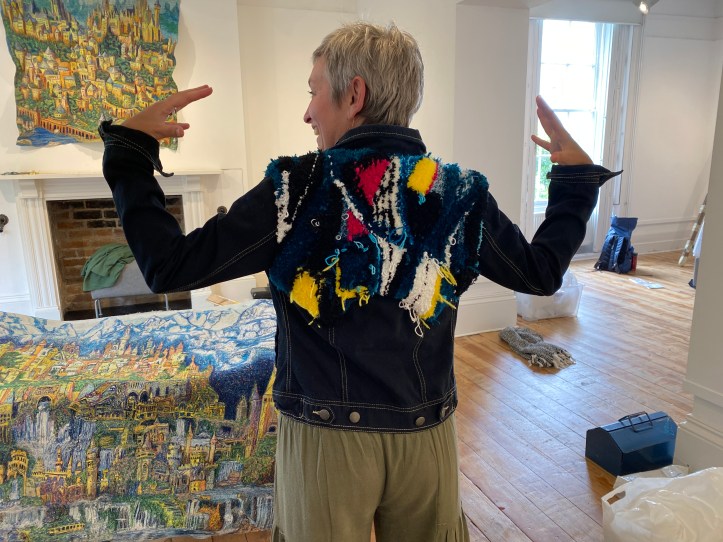
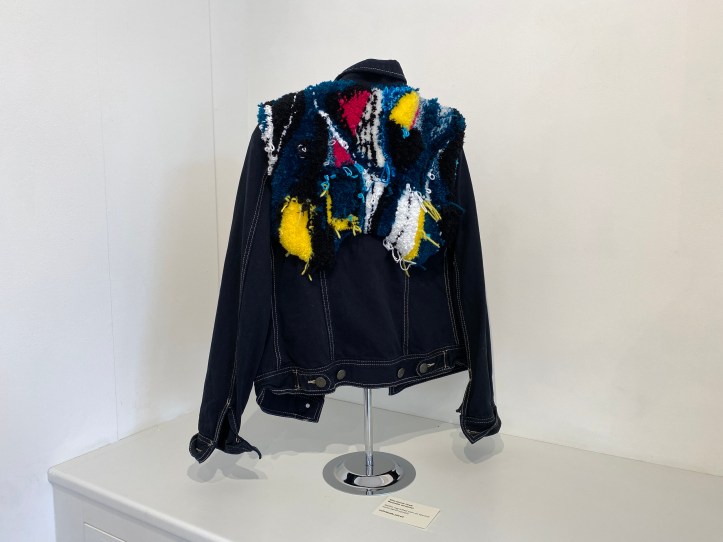
Nina wearing her art – a second-hand denim jacket embellished with tufted, waste acrylic yarn.
‘Art has a powerful voice, and today, many artists are using their creativity to raise awareness about sustainability.’
Cosimo
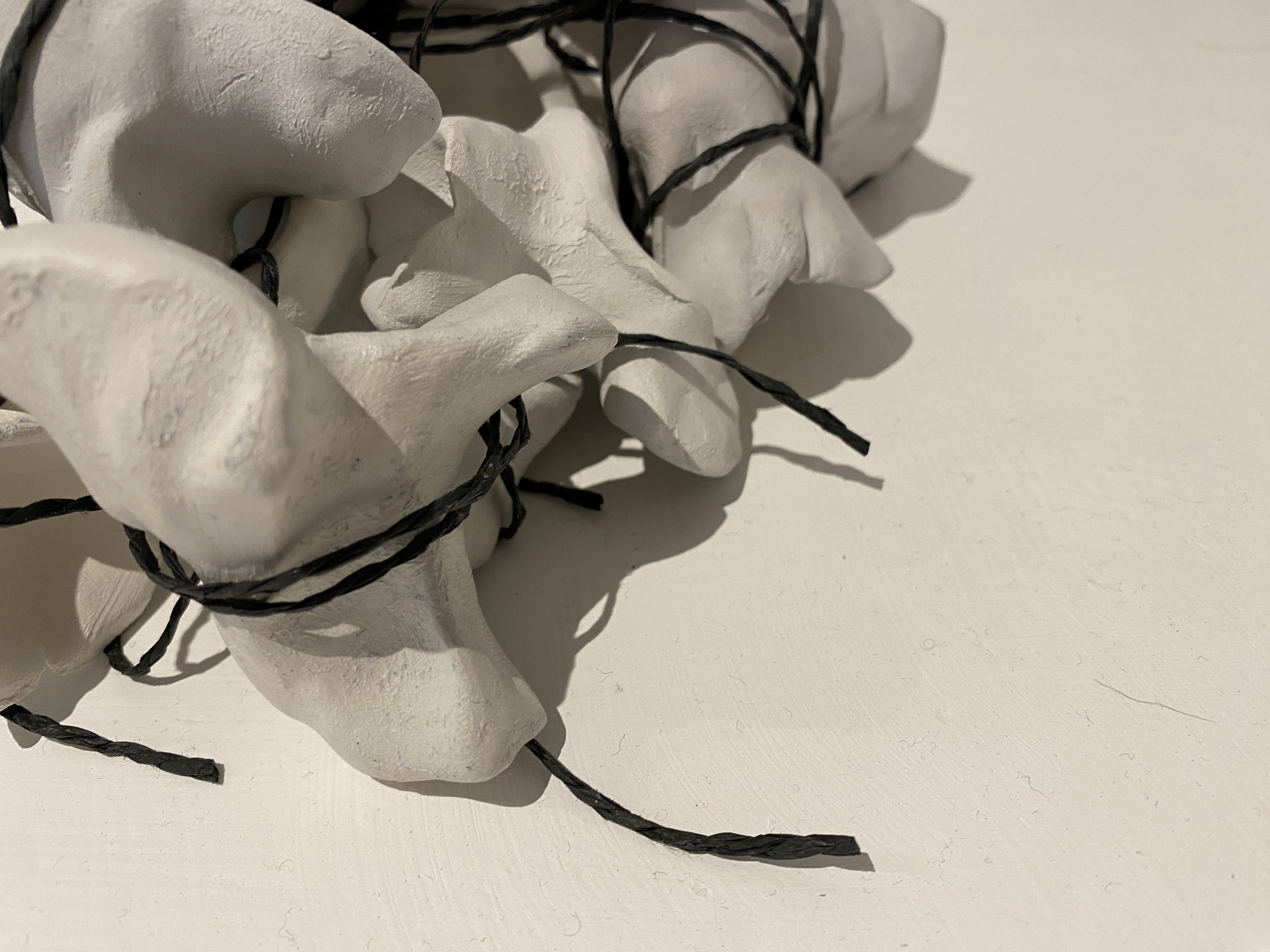
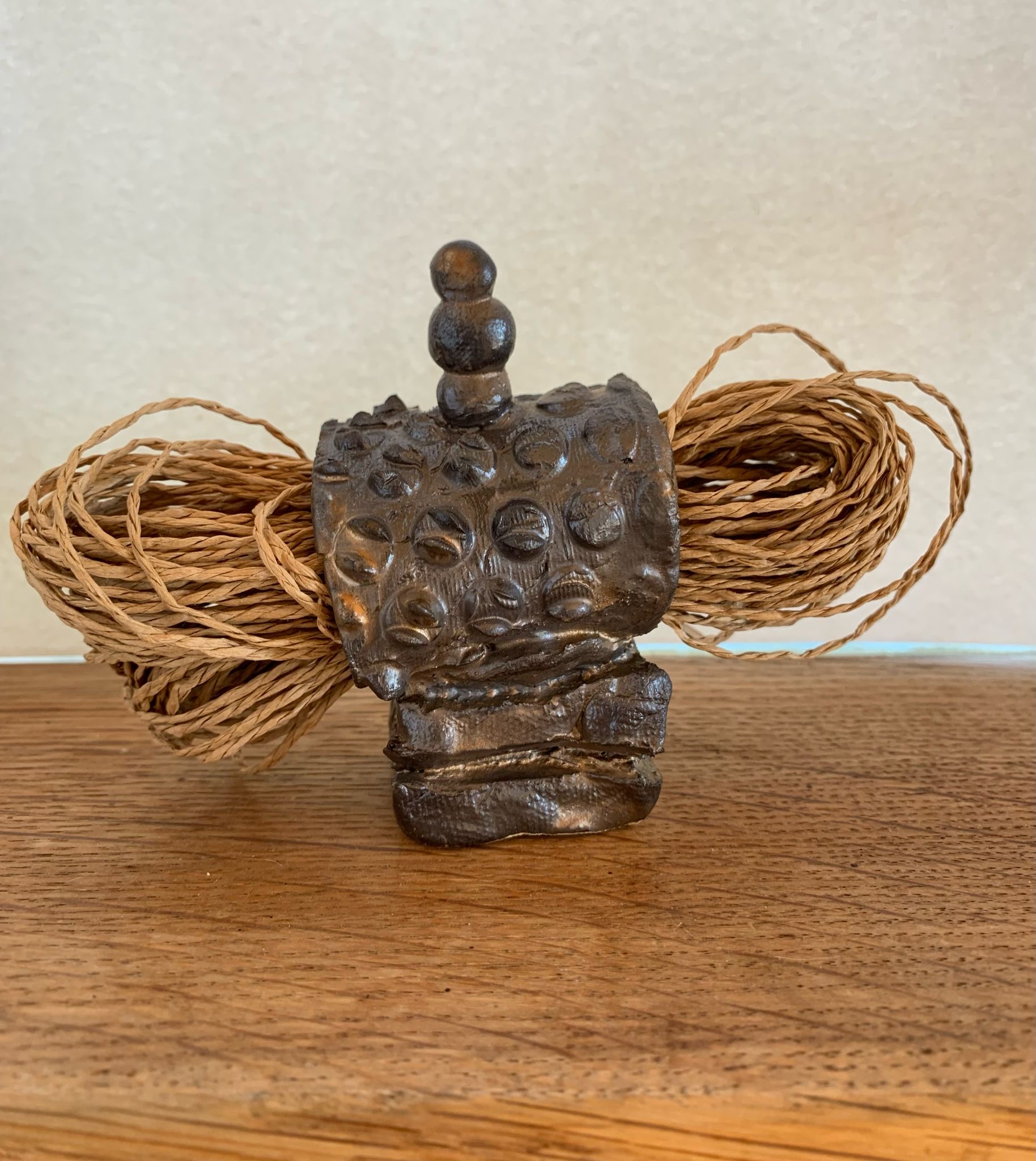
Nina Gronw-Lewis, ‘Gathering’, detail, clay and paper string
seam collective’s A Visible THREAD exhibition tour served as a significant platform for fostering interdisciplinary dialogue surrounding sustainability in artmaking. My contribution to this project involved working with two primary materials: waste acrylic yarn and clay, which were used to craft sculptural works. These materials were not chosen for their aesthetic qualities alone; rather, they were selected with the deliberate intent to underscore the broader mission of the project—an exploration of sustainability in artistic practice.
‘In the UK, approximately 350,000 tonnes of clothing waste are sent to landfills each year. This not only wastes valuable resources but also adds to the environmental impact through landfill pollution and greenhouse gas emissions.’
Waste Managed
Cloth…
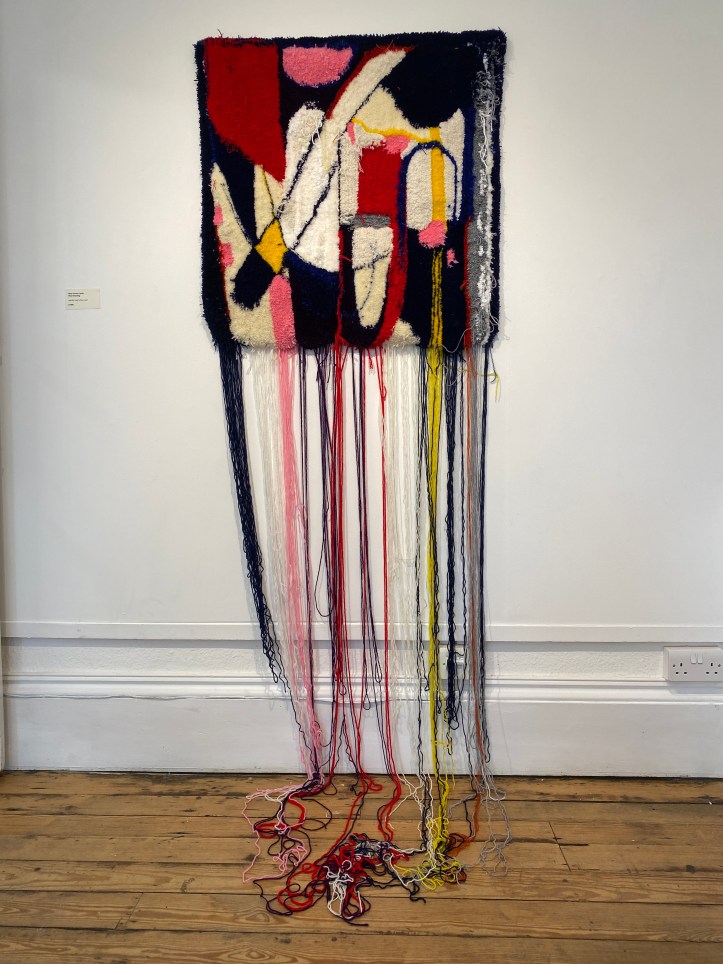
As an artist within the framework of seam collective, I was committed to ensuring that the materials I utilised were in alignment with the collective’s core values of environmental consciousness and resourcefulness. Waste acrylic yarn, a by-product sourced from unwanted stashes, was chosen as a symbol of excess and transformation.
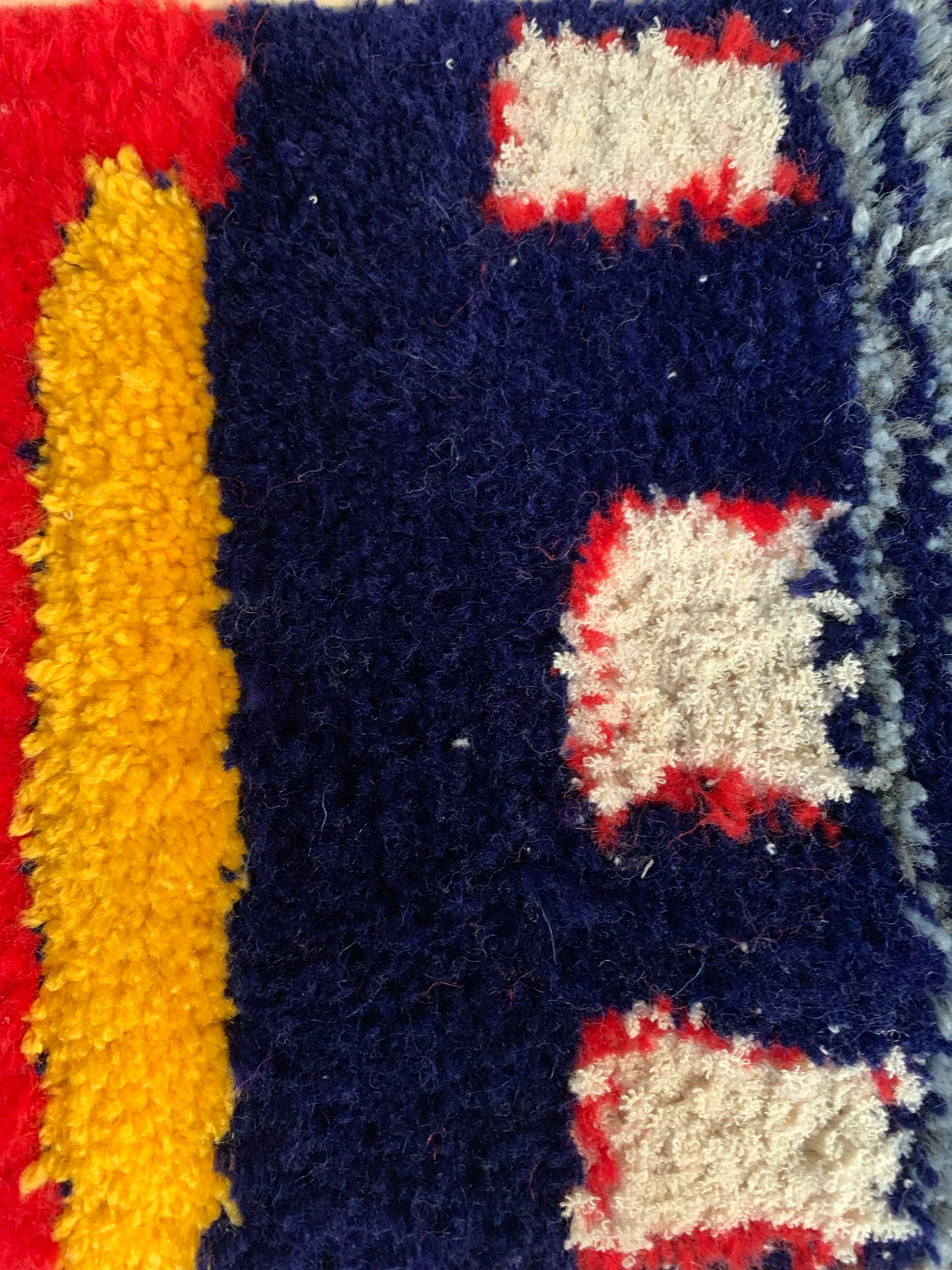
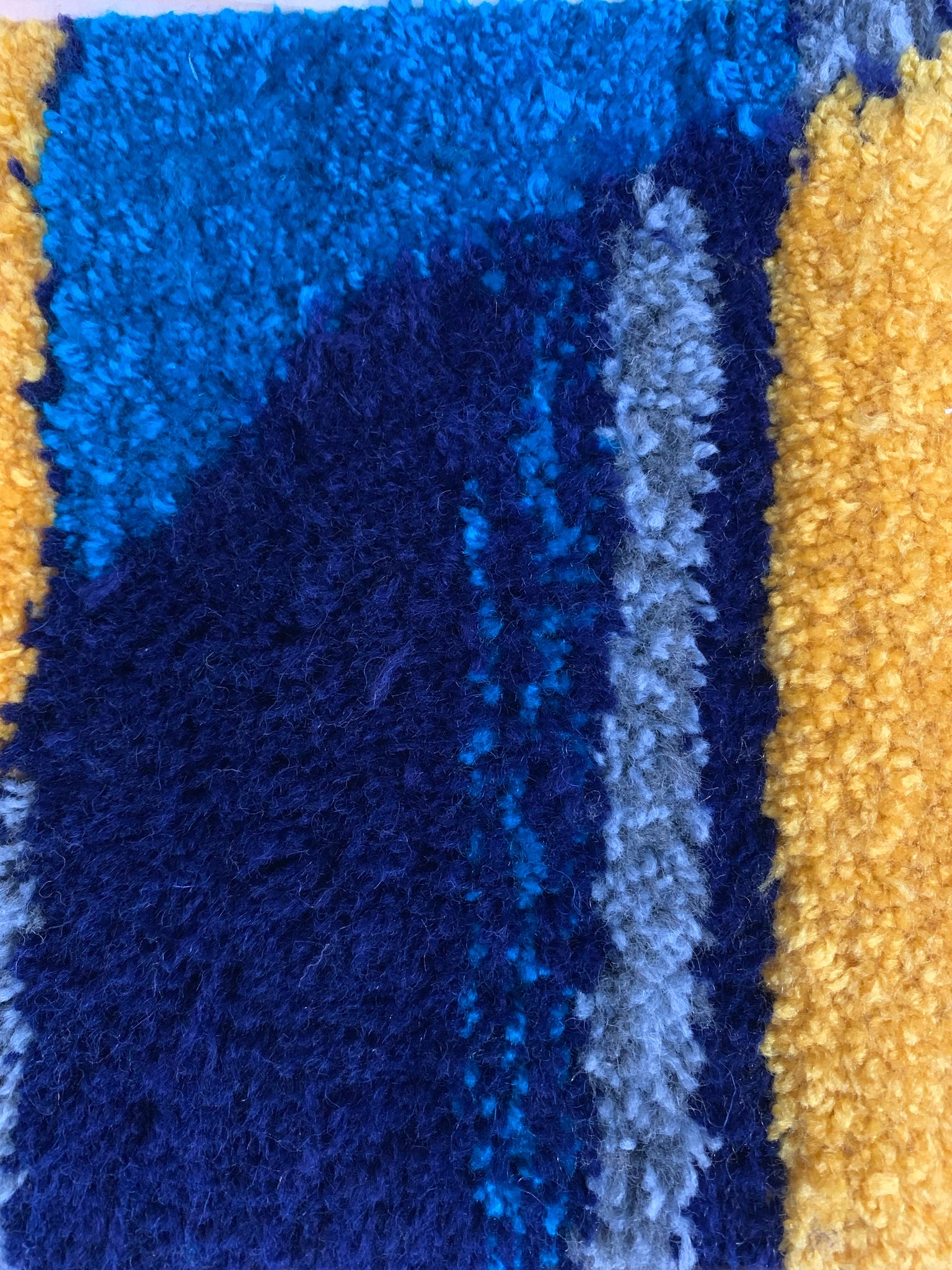
Nina’s tufted wall hanging made with waste acrylic yarn, installed at seam‘s A Visible THREAD exhibition at Thelma Hulbert Gallery, Honiton, 20 July -31 August 2024
‘I’m fascinated with the reconstruction, change and transformation of an item and breaking down the materials from its original purpose and function into something new. I am curious about the process and discovery that happens as the new work starts to reveal itself.’
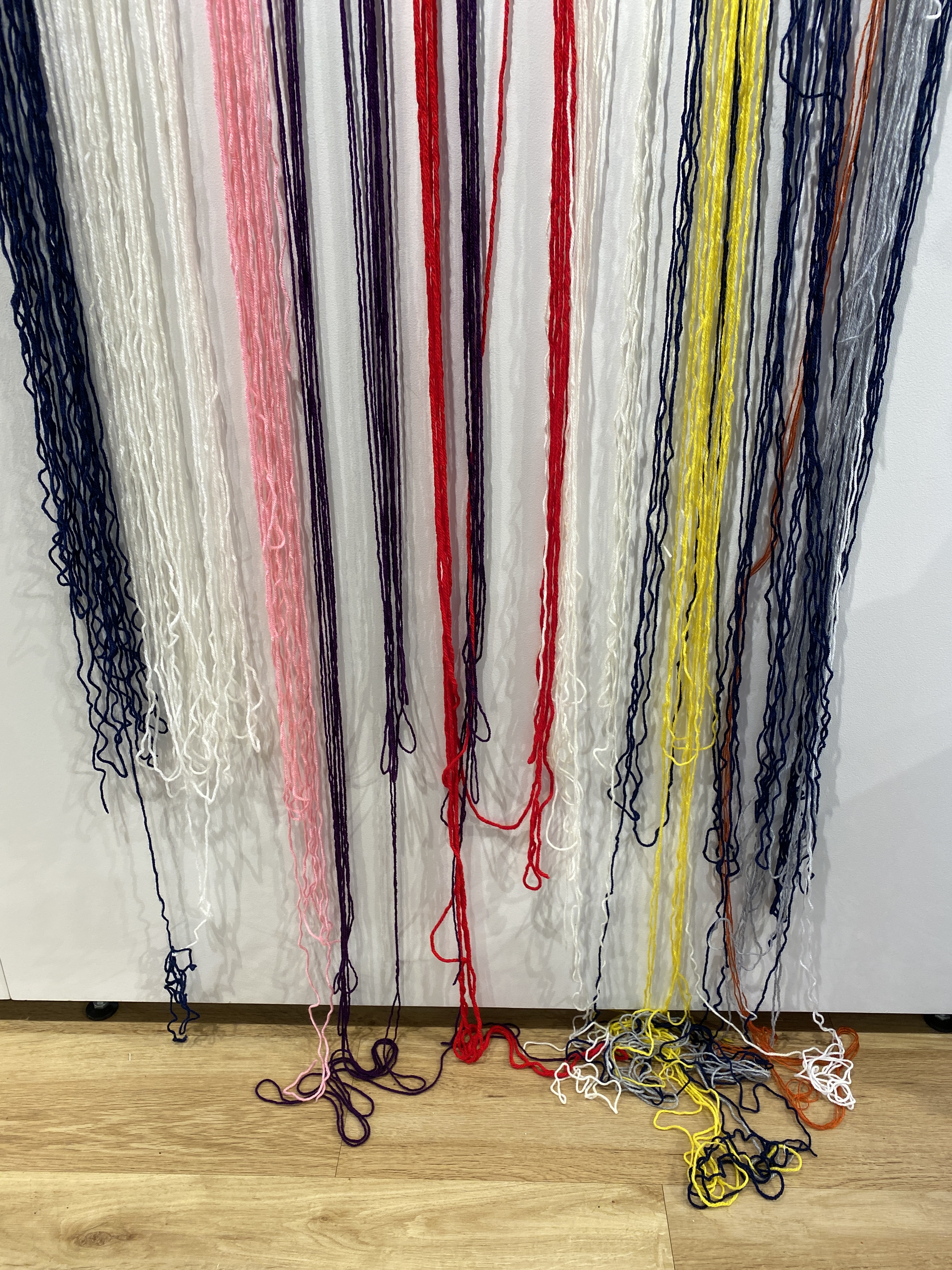
The bright, vivid colours of the yarn—unnatural and synthetic—immediately catch the eye, drawing attention to the contrast between the natural world and the artificiality of mass-produced, disposable materials. In the context of A Visible THREAD, for me, the yarn transcended its role as a mere material; it became a commentary on the cyclical nature of waste and the possibility of reinvention. The vibrant hues of the man-made acrylic yarn are a visual marker of the material’s unnatural origins, heightening awareness of its place in consumer culture and industrial production. Its synthetic nature is in stark contrast to the labour-intensive, hand crafted processes involved in my tufted artworks.
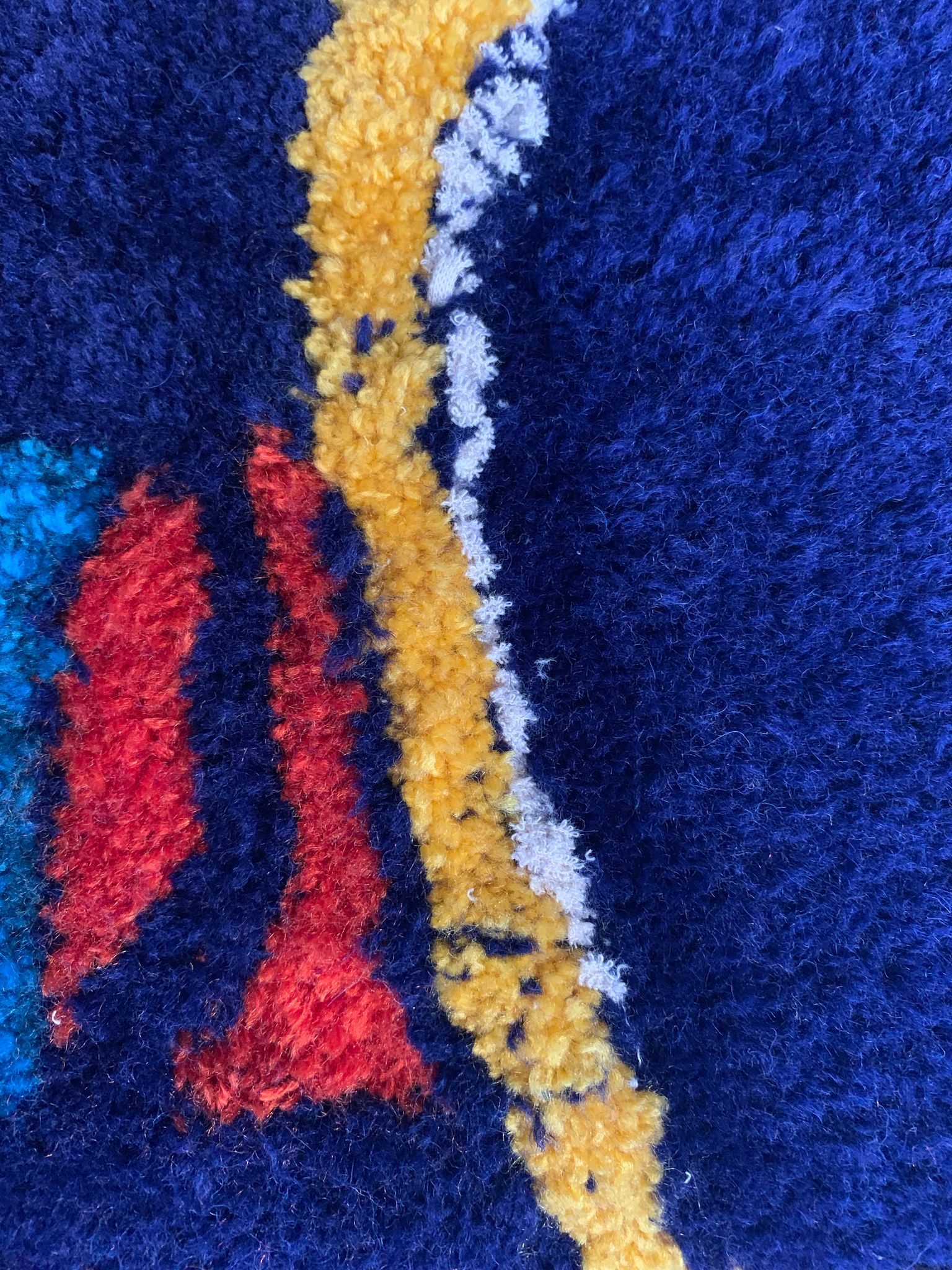
Here are some details of the wall hanging:
… clay …
‘Clay is important because it supports and is the foundation for life on earth, both physically and culturally. Civilizations are built from a very particular group of minerals that are less than 2 microns in size…’
Suellen Meltzer
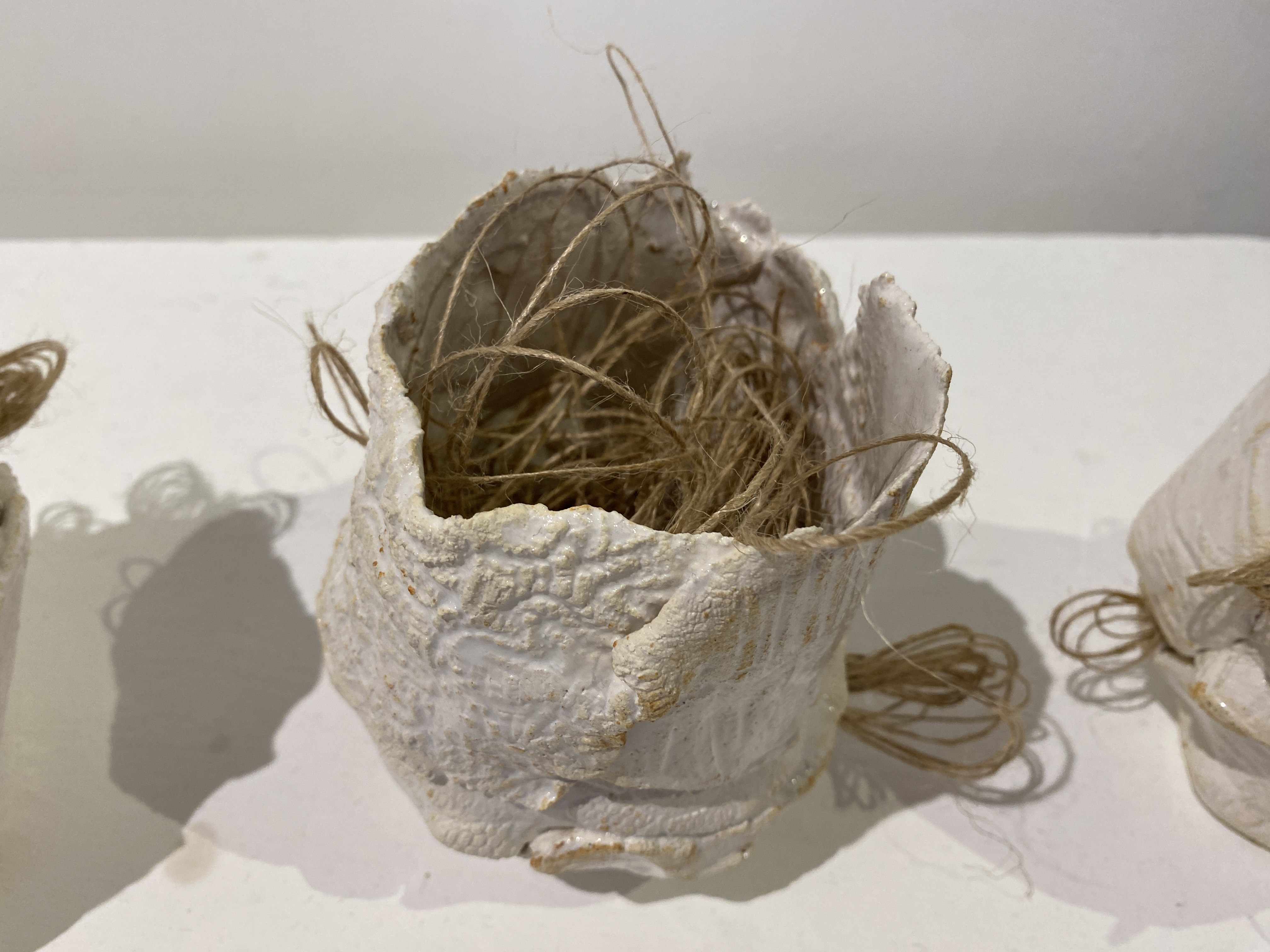
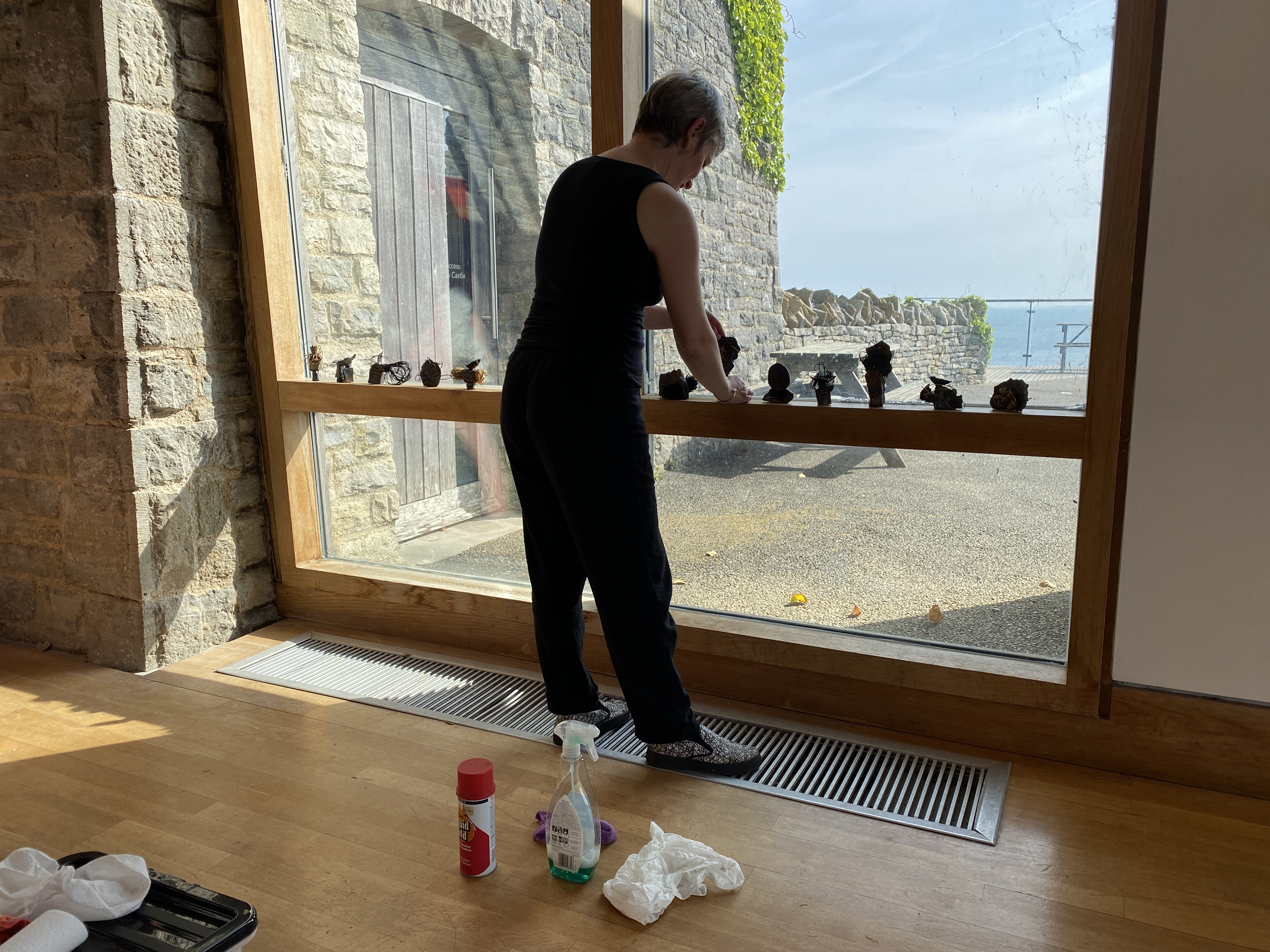
More of Nina’s explorations with clay stitched with paper string, installed at A Visible THREAD, Llantarnam Grange, Cwmbran, 17 February – 4 May 2024
Similarly, clay—a material with millennia of use in art—was employed in the creation of sculptures that functioned not only as temporary expressions but also as enduring relics. These works, grounded in the timelessness of clay, embodied a connection to both the ephemeral and the eternal, offering a contrast to the impermanent nature of some contemporary art.
‘Despite appearing vastly different at first glance, textiles and ceramics have much in common. They share the same haptic aesthetic language that shifts between hard, unwieldy, soft, and flowing.’
Mousse Magazine
‘…sustainability in ceramics is a growing movement that is gaining momentum in the art and craft world. From using sustainable materials to adopting low-waste and low-energy production methods, many artists, makers, and studios are now making a conscious effort to minimize their impact on the environment.’
Anke Buchmann
Through the juxtaposition of acrylic yarn and clay, I aimed to challenge conventional perceptions of waste and what textile art can be, always questioning what it means to create art sustainably and responsibly.
… and sustainability
Nina’s wonderful embellished jacket installed at A Visible THREAD, Thelma Hulbert Gallery
The focus on sustainability extended far beyond our material selection, we undertook comprehensive sustainability audits, critically examining our processes, material sourcing, and overall environmental impact. These audits were integral to ensuring that every stage of the project—from conceptualization to installation—was aligned with our collective commitment to eco-consciousness. This approach necessitated an ongoing assessment of our practices, ensuring that we minimized waste, sourced materials ethically, and carefully account for the carbon footprint of our work.
‘Sustainable art practices are those that minimise environmental impact throughout the entire lifecycle of an artwork, from creation to display. This includes using eco-friendly materials, reducing waste, conserving energy, and promoting ethical labour practices. By adopting sustainable practices, artists and art institutions can contribute to the preservation of natural resources and the protection of the planet for future generations.’
Eclectic Gallery
In addition to the material and process-driven aspects of sustainability, the spatial design and curation of the exhibition also played a crucial role in aligning with the ethos of the project. The venues we collaborated with were diverse, each presenting its own unique challenges and opportunities. Working closely with the curators and gallery teams, we created site-responsive exhibitions that could adapt to the different layouts of each venue and changing artworks, while maintaining visual and conceptual coherence across the entire tour.
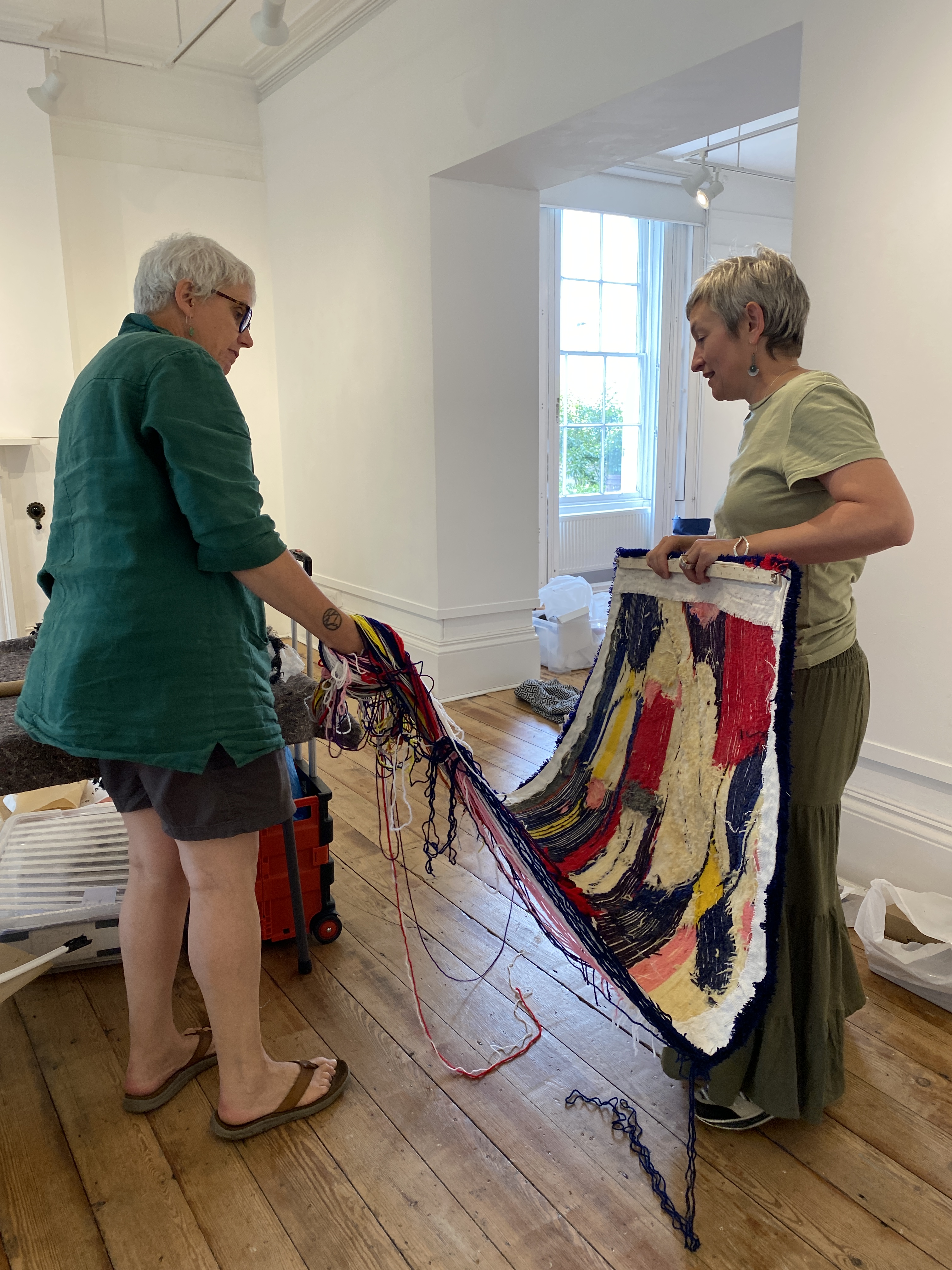
Nina curating A Visible THREAD with Gemma Girvan, the Thelma Hulbert Gallery curator (with Julie Heaton and the gallery technician, Malcolm)
In reflecting on the A Visible THREAD tour, I am reminded of the crucial role that art and textiles can play in shaping discourse around sustainability. The integration of repurposed materials, the commitment to site-specific exhibitions, and the implementation of sustainability audits all contributed to creating art that not only occupies physical space but also contemplates the impact it leaves on the world. This project reinforced the notion that art is not merely about creation but also about responsibility. The choices we make as artists ripple outward, influencing not only our immediate environments but also the broader ecological and cultural landscapes we inhabit.
‘Art has the power to create positive change. However, it first must start in the studio.’
Hannah Pomante
Ultimately, the success of A Visible THREAD lay not just in the completed sculptures and other works or the thoughtful curation of the exhibition but in the collective commitment to ethical and sustainable practice. Through these conscious efforts, art becomes a powerful vehicle for change, urging both artists and audiences to reconsider not only how we create but, more profoundly, why we create.
Nina demonstrating tufting at A Visible THREAD, Thema Hulbert Gallery
Watch this space for seam collective’s next exciting project, Warped and Wasted. Over the next few months, team seam will be working together to create a collaborative installation. Reflecting on what we’ve learned through A Visible THREAD, we will continue our research into ways to be more sustainable in our practices, exclusively using recycled and biodegradable materials. Our research will culminate in an exhibition at ACEArts in Somerton, Somerset, UK from 23 August -10 Oct. 2025.











 seam
seam 