Ever thought that a walnut looks a lot like your brain?
Well, you might not be the only one.
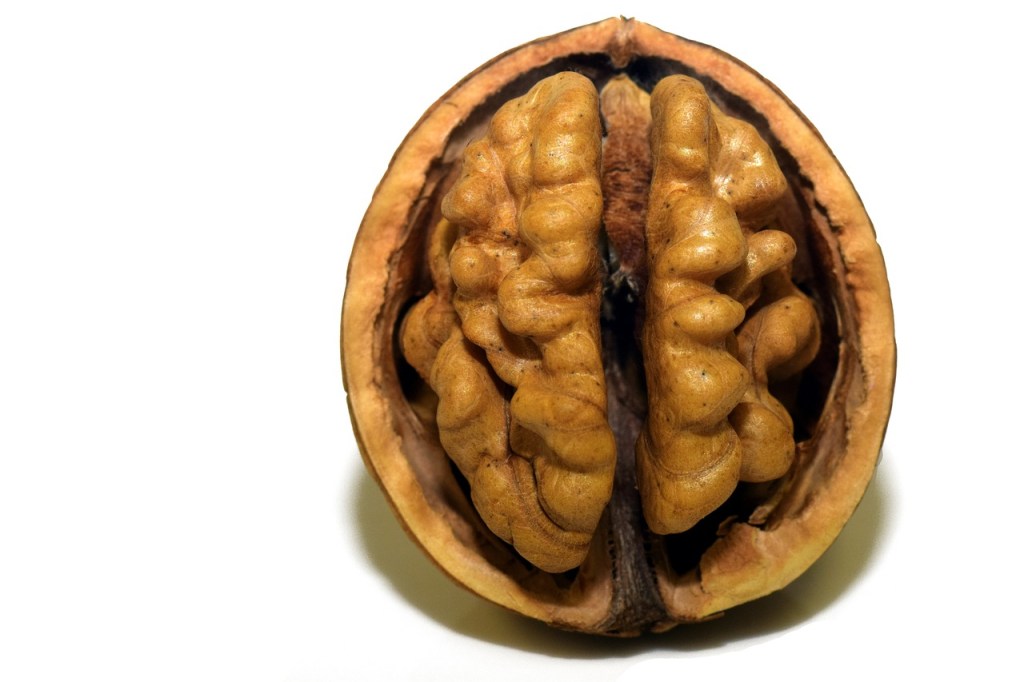
As far back as the 1st century AD, it was believed that plants and natural objects were marked by God with signs or ‘signatures’ of their healing potential. It was not until the 1500s that this medical philosophy was documented and practised as the Doctrine of Signatures.[1] The Doctrine detailed that an aspect of the natural object, perhaps its colour, shape or texture pointed to the human organ it could treat.[2] The resemblance of a walnut to the human brain resulted in it being used in the treatment of all manner of head ailments during the Middle Ages.
With a personal background in pharmacy, science plays a significant part of my current art practice. I often portray medical subjects in my art textiles, linking human conditions and their therapy in a pictorial narrative. Research into the Doctrine of Signatures, particularly the walnut, piqued my interest and became the ‘visible thread’ running through my work with seam collective’s recent travelling exhibition, A Visible THREAD.
While the Doctrine has no bearing in modern science and medicine, it is interesting to discover that there might be a little bit of truth to the claims of the humble nut.
Walnuts contain a particularly high concentration of a type of omega-3 fatty acid among other antioxidants that may help against brain decline [3]. Their consumption has been associated with improvements in cognitive performance and memory [4], and improved focus and attention in adolescents with ADHD symptoms [5].
A progressive impairment of cognitive function is sadly exhibited in patients with dementia. And while there is no cure, cognitive stimulation therapy (CST) has been shown to positively support dementia sufferers and improve their quality of life [6]. This kind of therapy might include craft activities, brain games or fine motor tasks.
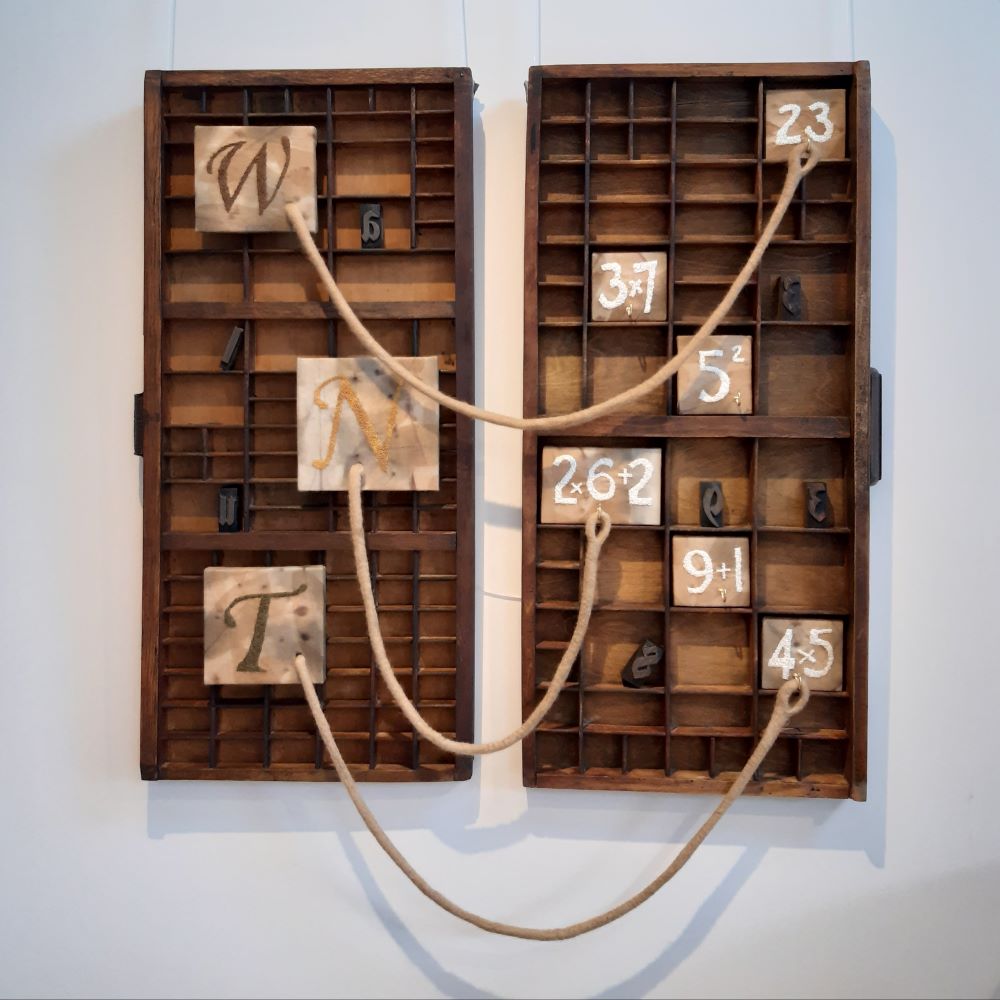
With this connection in mind, I decided to create the work (Can you Crack the Walnut?) that presents a cognitive puzzle and encourages physical interaction with the audience to solve. Hanging on a backdrop of vintage letterpress printing trays, lettered panels on the left board have to be connected using a code to their appropriate number on the right board via felted cords. Arithmetical problems to decipher some of the numbers, add to the challenge of working out just what that code is – a challenge that has tested some!

The visible connection with walnuts has to be apparent in the work, so all wool felt, yarn and fabric in the work has been naturally dyed from walnut leaves, or from walnut hulls. The hulls have a high tannin content and when modified with iron water the brown dye darkens considerably. As this dye is lightfast, it has been used extensively throughout history as an ink.
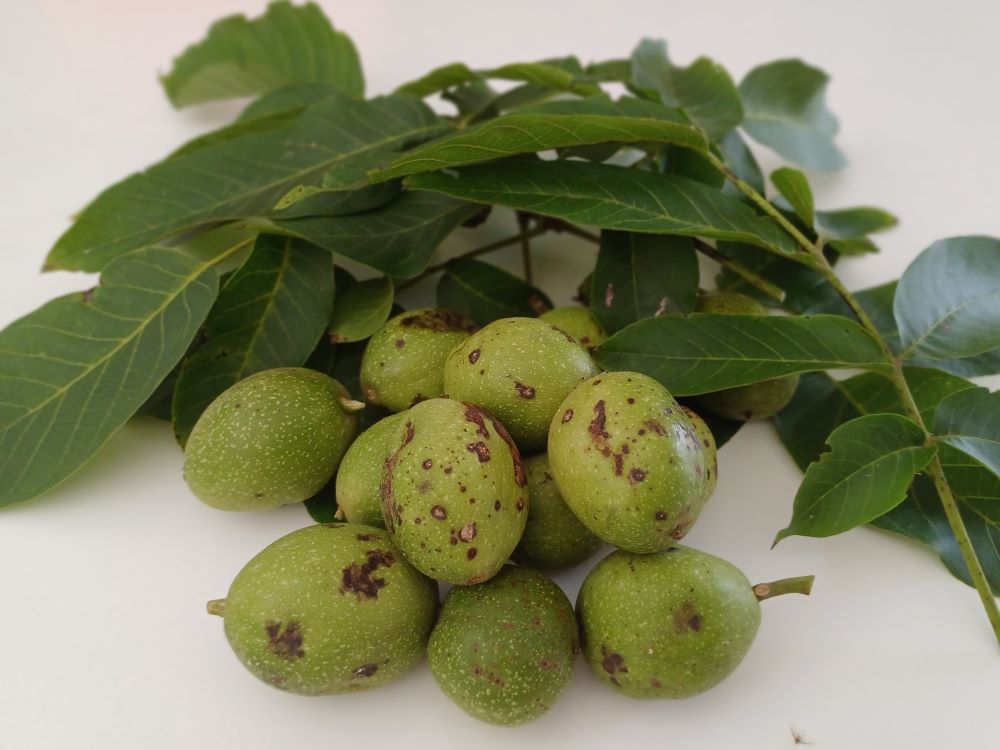

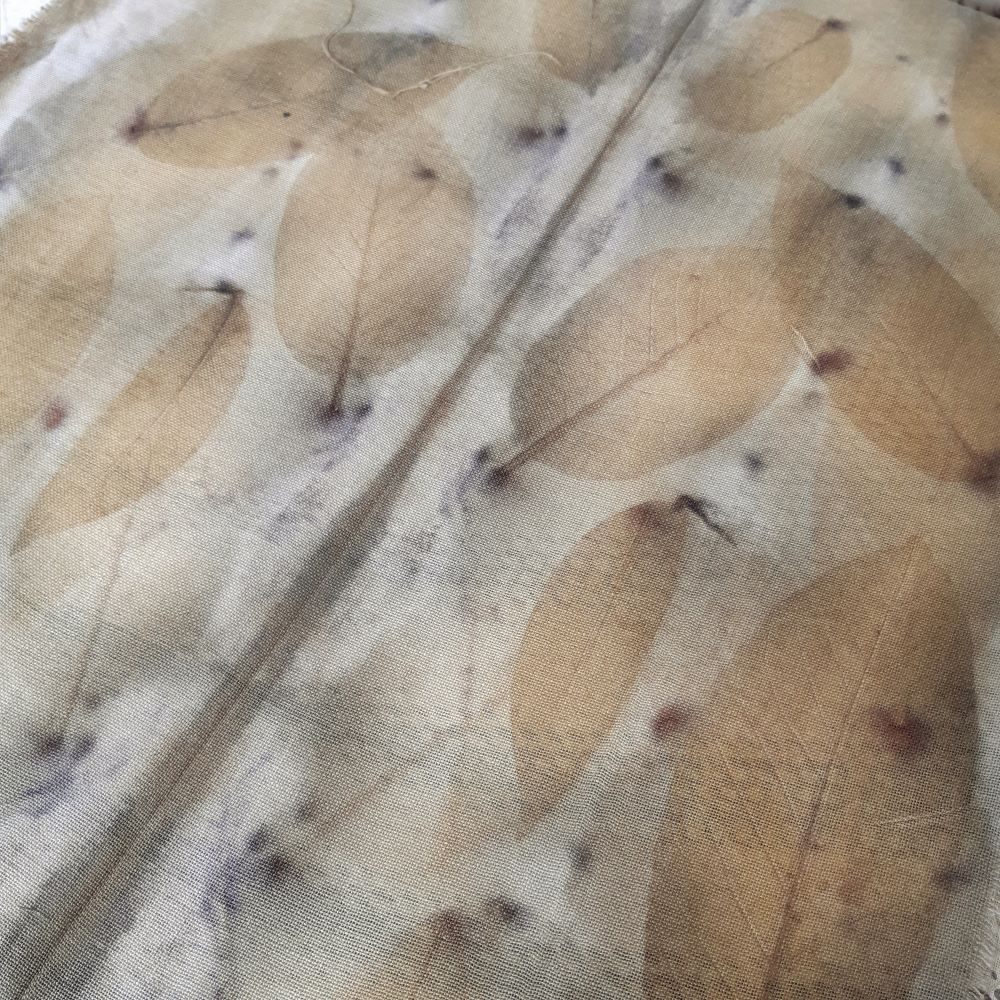
Wool has been used both unmordanted and mordanted with alum, dyed, then modified with iron water to generate colour variation, from yellow to dark brown. Walnut leaves have been also contact printed onto the wool fabric using a bundling technique, and this eco-printed fabric hand embroidered for the letter panels.
This is my first time creating an artwork that requires audience involvement to be fully enjoyed, and I was eager to see the response when exhibited in A Visible THREAD first at ACEarts gallery, Somerton and then Fine Foundation Gallery, Durlston Country Park, Swanage. It turns out children are more than happy to play, but despite the invitation, adults take a little more encouragement. Once they start thinking about the puzzle, however, they’re determined to complete the challenge – particularly in front of their children!
My thread in the exhibition continues into Walnut Connections, a felted hanging, where my love of bobbin lacemaking is featured.

This is one craft that requires a degree of fine motor dexterity and concentration, but one which I find rather meditative and relaxing. Exercising one’s fine motor skills has been found to re-educate the brain and improve neural connections within certain brain areas [7]. Mentally, I could not be without activities like sewing or felting in my life and completely understand how taking part in these activities might improve brain health.
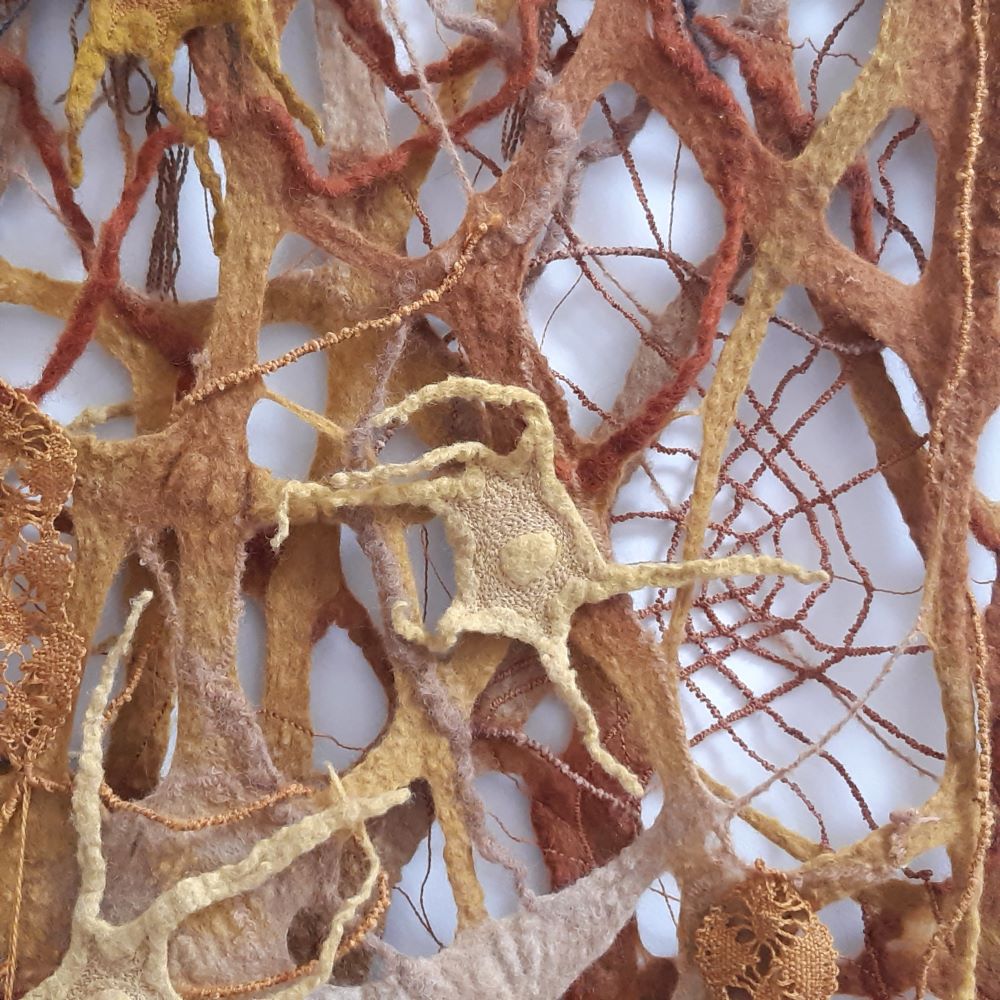
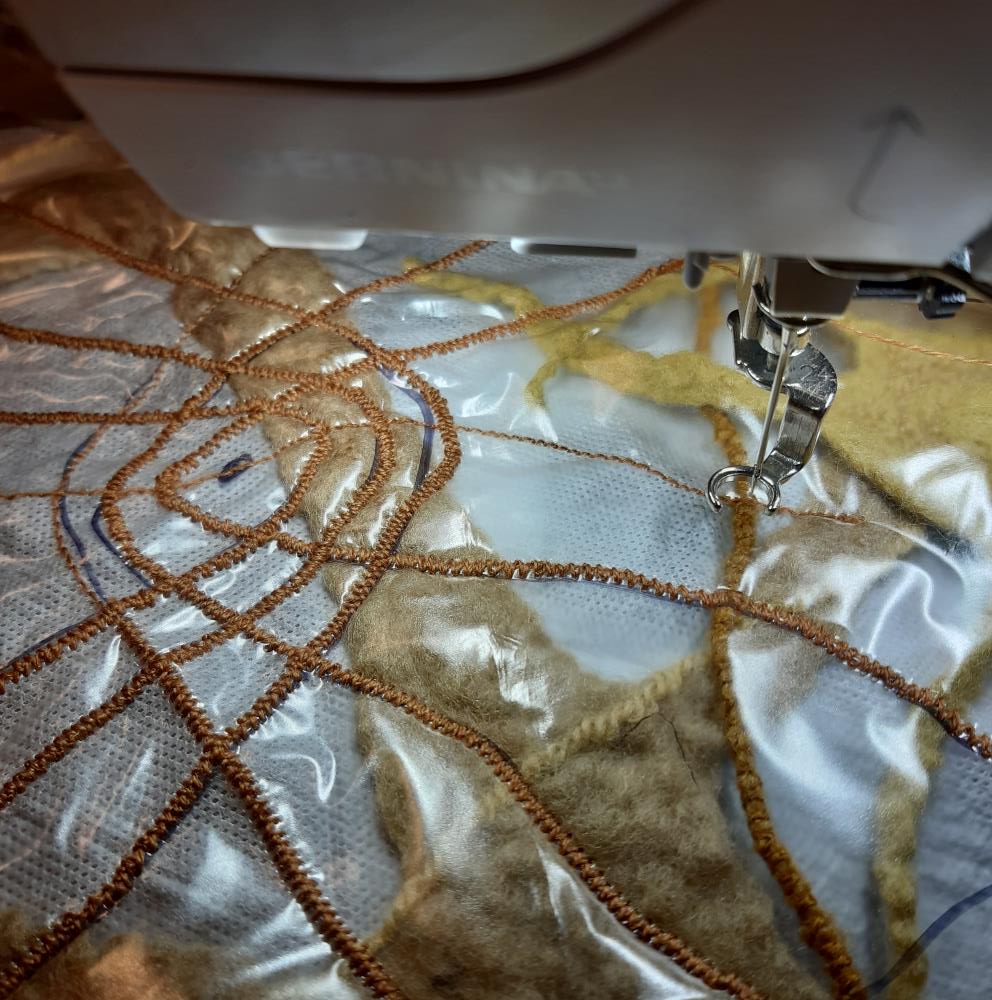
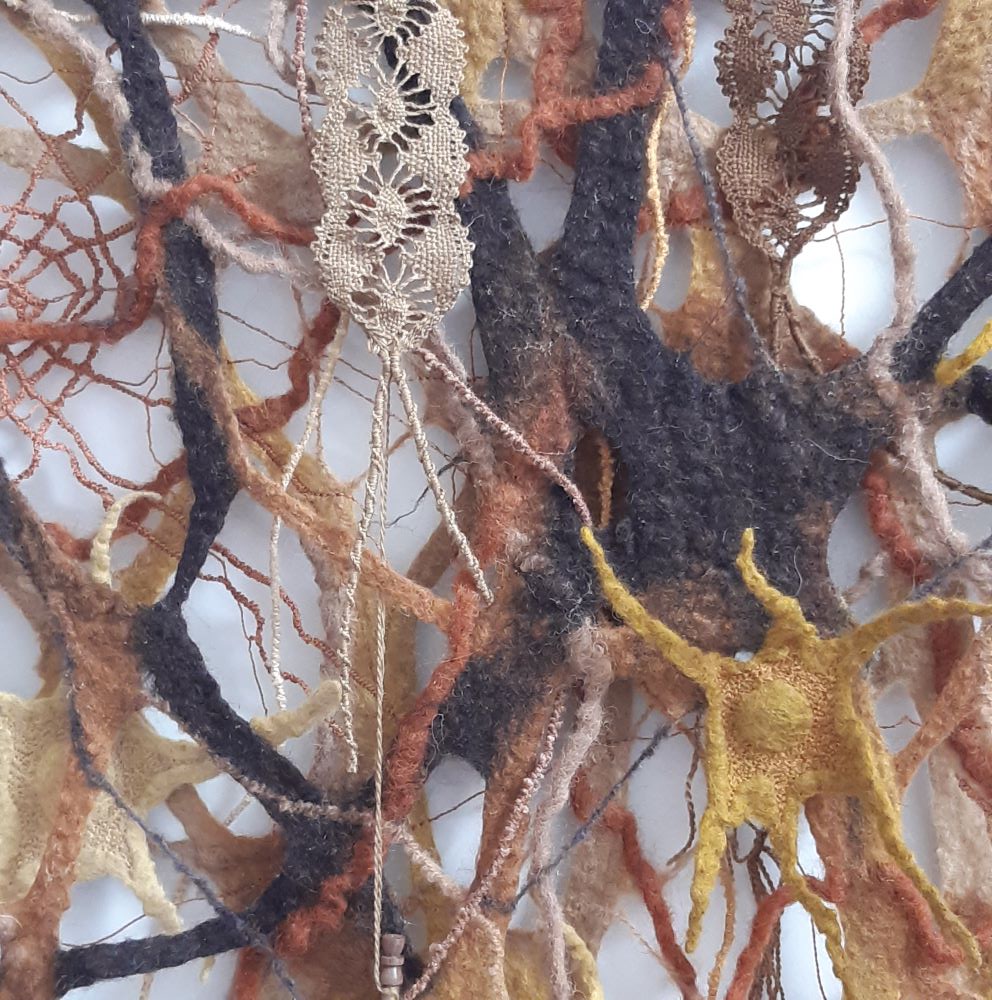
Bobbin lace is customarily made using fine cotton or linen thread for strength, but I have chosen to make lace motifs in walnut dyed wool yarn. These motifs are incorporated into a double layered felt lace hanging with webbed cording that echoes the lace spider web weavings. Walnut wood lace bobbins hang throughout like a work caught mid process, reminding us of its origins.
As I write this A Visible THREAD exhibition will be moving to
- Black Swan Arts, Frome: 16 September – 29 October 2023 and then on to
- Llantarnam Grange, Cwmbran: 17 February – 4 May 2024 and
- Thelma Hulbert, Honiton: 20 July – 31 August 2024
and I hope you have the opportunity to catch it at one of these venues and have a go at cracking my walnut code!
If you would like to hear more about my work and ask me questions join seam collective and The Loom Shed for a collaboration of informal making and conversation during our Instagram challenge #SeptTextileLove! The Loom Shed will host an hour’s online session via Zoom with a few seam artists. We’ll be making together as we talk about the previous week’s #SeptTextileLove prompts, seam’s A Visible THREAD exhibition and our shared love of textiles. Bring your stitching, knitting, weaving, crochet or whatever you’re working on at the moment… and join the conversation on:
- Friday 22 September, 10 – 11am with Lydia Needle, Helen MacRitchie & Desiree Jeans
- Saturday 30 September, 7 – 8pm with Lou Baker, Nina Gronw-Lewis & Joy Merron
The sessions will be FREE but places are limited. We will share the link for the sessions on @seam_collective and @the_loom_shed on Instagram.
See seam collective’s website and Instagram for full details of A Visible THREAD tour, workshops and participatory events and sign up for seam’s newsletter for regular news and updates.
Helen MacRitchie
Walnut – copyright free image by Pixabay.com
All other photos credited to H MacRitchie
References
- Boehme J. The Signatures of All Things: With Other Writings. Dutton and Co; London, UK: New York, NY, USA: 1912.
- Bennett B. Economic Botany (2003) Vol 61 (3), 246-255 Doctrine of Signatures: An Explanation of Medicinal Plant Discovery or Dissemination of Knowledge?
- Harvard T.H. Chan, The School of Public Health, Omega-3 Fatty Acids: An Essential Contribution
- Chauhan A, and Chauhan V, The Beneficial effects of Walnuts on cognition and brain health Nutrients. Feb 2020; 12(2): 550
- Pinar-Marti A. et al. Lancet May 2023, Vol 59, 101954
- Spector A. Br J Psychiatry, Sep 2003;183:248-54. Efficacy of an evidence-based cognitive stimulation therapy programme for people with dementia: randomised controlled trial
- https://neurosciencenews.com/fine-motor-skills-brain-14222/ Jun 2019, Learning fine motor coordination changes the brain
 seam
seam 